

What is sitting the month?
Sitting the month (坐月子, zuo yue zi) is a cultural practice that provides a system for how to rest and what to eat in the first 4-6 weeks following childbirth to optimize recovery. It’s also called sitting the moon, as the Chinese used a lunar calendar. In Traditional Chinese Medicine, birth depletes a woman’s Qi and Blood, and zuo yue zi helps build them back. Those who practice zuo yue zi believe that what you eat in the first 4 to 6 weeks can shape your health for decades. This concept is far from exclusive to Chinese culture. Across the globe, women are honored with variations of the restorative month.
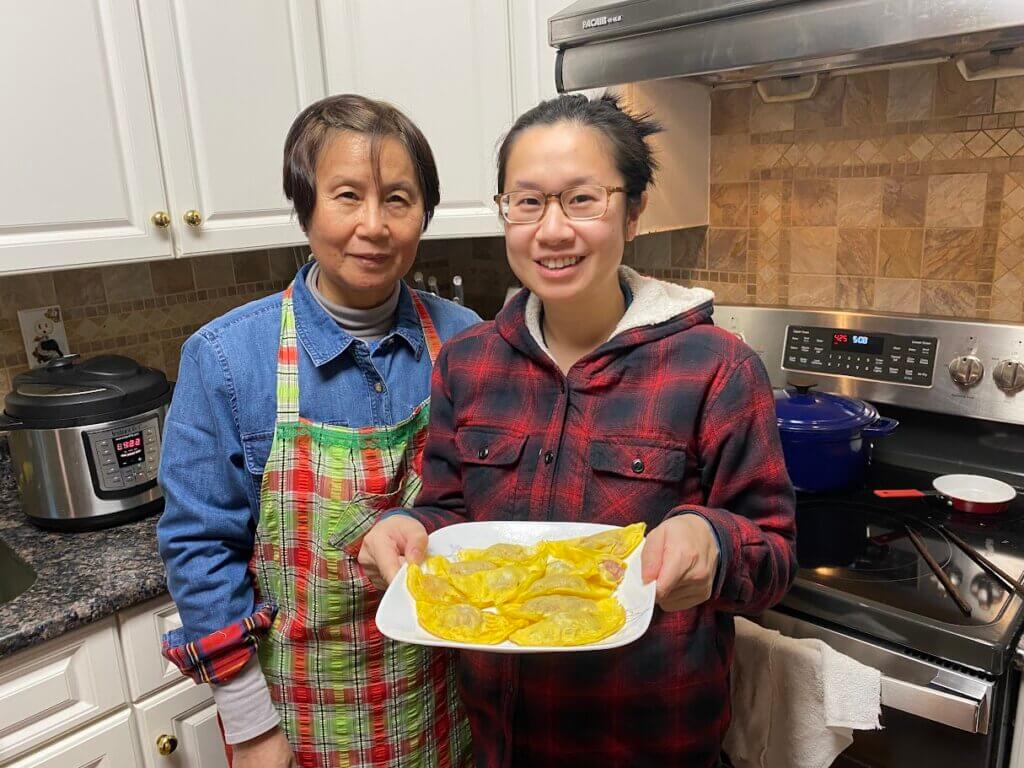
When each of my babies was born, my mom stayed with our family for the first 4 weeks.
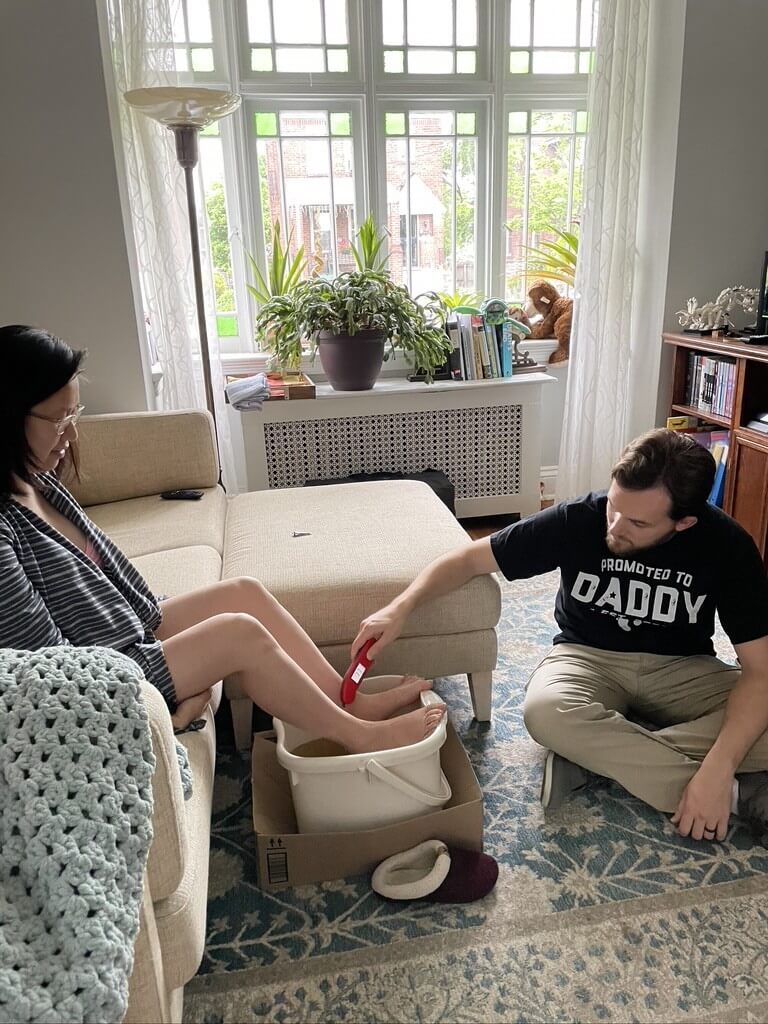
Each day, she cooked me herbal whole chicken soups for my meals, steamed egg for my afternoon snacks, and made sure I stayed hydrated with red date tea and nut milks. She took care of the dishes and laundry, tried to convince me to stay indoors, and allowed me to just exist in my new-mom bubble, snuggling and feeding baby.
My mom believed that the food I ate in the sacred month could even reverse prior ailments. Shockingly, the uncomfortable bloating I felt in my stomach for nearly 8 years disappeared. I thought, maybe she’s on to something (though, honestly, stopping hormonal birth control probably also contributed).
I’ll always be grateful to my mom for taking care of me during this time (and my dad, in-laws, and husband as well!). I know not everyone has the support. The Western world has a shocking lack of guidance on how to do postpartum recovery, and Eastern traditions may feel foreign to Westerners. I created Sit the Moon to bridge that gap, to help expecting and new moms plan a restorative and nourishing postpartum experience, with simple recipes and guidance. You just experienced a major life event physically and emotionally, and your rest and recovery matter!
How Sitting the Month Relates to the First Forty Days, the Fourth Trimester, and Other Postpartum Concepts
Sitting the month is one tradition among many that protect the same fragile window: the weeks right after birth. You’ve probably heard it called other things — the first forty days, the fourth trimester, confinement. These terms overlap, but they don’t mean the same thing. Some describe a cultural practice, some describe a medical timeline, and some are marketing. Here’s how they fit together, and where sitting the month sits among them.
Zuo yue zi (坐月子) is the specific practice
Zuo yue zi is the Mandarin term for the traditional Chinese postpartum confinement period. It’s not just a length of time — it’s a full system of rest, warmth, food, and care, with its own rules and its own logic rooted in Traditional Chinese Medicine. When I talk about sitting the month, this is what I mean: the Chinese version, specifically. “Sitting the month” is simply its direct English translation. “Sitting the moon” is a poetic variation of the same thing, reflecting the lunar calendar the timing follows.
Traditionally it runs 30 days, though families and regions stretch it anywhere from 28 to 42. That flexibility matters, because it’s where zuo yue zi starts to overlap with the other terms below.
The First Forty Days is the same idea, told for a Western audience
The First Forty Days refers to a roughly six-week window of rest, healing, and maternal nourishment after birth. It was popularized in the West notably by author Heng Ou, and if it sounds a lot like zuo yue zi, that’s because it draws directly from these traditions. The forty-day timeline isn’t unique to China, either. Many global postpartum practices land on a similar length — long enough for real recovery, short enough to be sustainable.
So think of “the first forty days” as sitting the month’s cousin: the same core belief — that the postpartum body needs weeks of protected rest and warm, restorative food — packaged in language that travels beyond Chinese culture. If the tradition drew you here but the Chinese framing feels far away, this is the on-ramp.
The Fourth Trimester is a medical timeline, not a practice
The Fourth Trimester describes the first 12 weeks after birth. It’s a modern clinical term, coined by pediatrician Dr. Harvey Karp to describe a newborn’s need for a womb-like environment in those early months. The maternal wellness community then borrowed it to describe the mother’s own intense 12-week recovery.
Here’s the key difference: the fourth trimester is a timeline, not a tradition. It tells you when — the window — but it doesn’t tell you what to do. Sitting the month tells you what to do. That’s why the two work well together. You can think of zuo yue zi as one culturally specific answer to the question the fourth trimester raises: how do you actually care for a mother during those first vulnerable months? The fourth trimester names the need. Sitting the month fills it, at least for the first stretch of it.
By the way: the timelines don’t line up exactly, and that’s fine. The fourth trimester runs a full 12 weeks; sitting the month covers the first four to six. The tradition front-loads the most intensive rest into the earliest, most fragile part of that longer arc.
Confinement and postpartum are the broad umbrella terms
Confinement is the general English term for staying indoors and resting after childbirth. It’s descriptive rather than cultural — it names the “staying in” without pointing to any one tradition. Postpartum is broader still: it’s the general medical term for the entire period following birth, whether or not anyone is observing a rest practice at all.
So the terms nest, roughly, from broadest to most specific: postpartum is the medical period, the fourth trimester is a named 12-week slice of it, confinement is the general practice of resting through part of it, and sitting the month (zuo yue zi) is the specific Chinese tradition of how to do that resting — with the first forty days as its Western-facing translation.
The principles of zuo yue zi, i.e., can I really not wash my hair?
You can wash your hair! Some of the rules of sitting the month are outdated, as they were designed centuries ago to protect a new mother from the elements in an agrarian society. There are people who still adhere strictly to the traditional rules, but by understanding their purpose and context, we can adapt them sensibly to fit our modern lives.
1. No washing hair or bathing
The ancient context: Traditionally, a new mother avoided washing and all contact with water for the full month (Pillsbury, 1978). In an agrarian society, bathing meant hauling unpurified well water and undressing in a drafty room, posing a risk of infection and chilling.
Modern zuo yue zi principle: Daily hygiene is important for modern recovery and mental health. That first shower after birth feels so good! Take warm, comfortable showers, but dry off immediately. Use a blow dryer on your hair right away. The goal is to avoid catching a chill while your body’s temperature regulation is still recovering.
2. Stay inside for the month, in bed when possible
The ancient context: This rule stopped new moms from working (often intense agricultural labor) and protected them from communicable diseases and harsh weather elements. Anthropologists who studied postpartum traditions across cultures found that mandated rest, seclusion, and help with household tasks are core protective features of these rituals worldwide (Dennis et al., 2007).
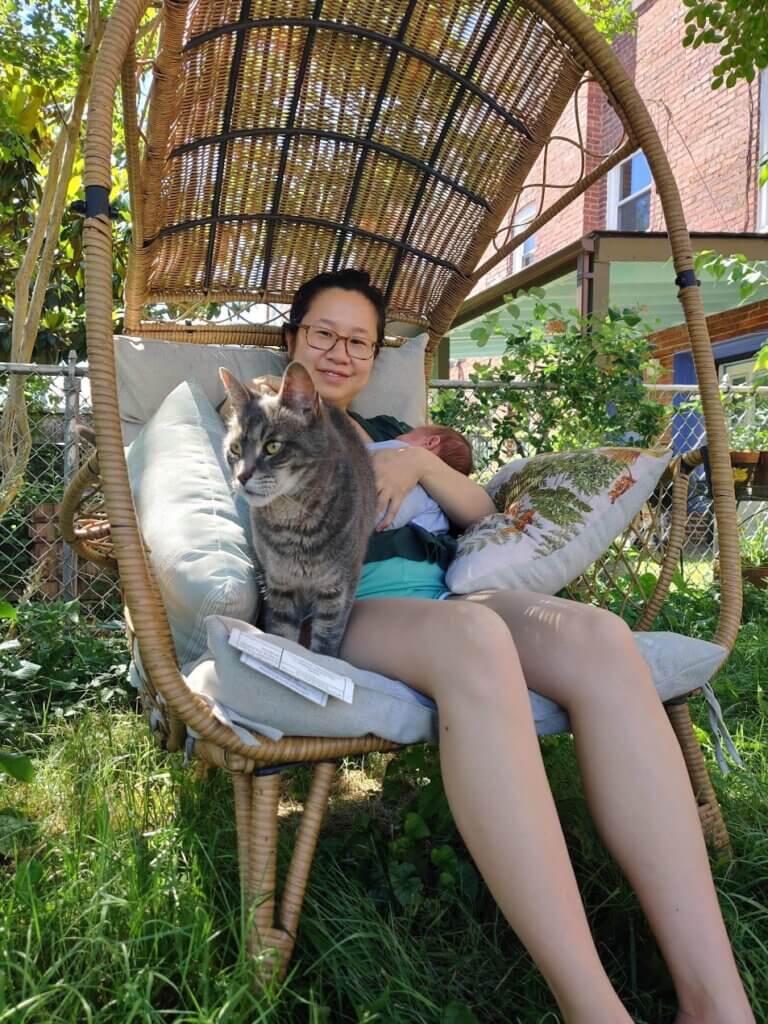
Modern zuo yue zi principle: You should prioritize rest, but movement is important too. The American College of Obstetricians & Gynecologists (ACOG) encourages light-to-moderate exercise postpartum to help strengthen abdominal muscles, boost energy, prevent postpartum depression, promote better sleep, and relieve stress (ACOG, 2023). Let your support system handle the household and older siblings. Let your partner take the baby to their first well visit (a suggestion from my midwife that I took up!). Fresh air is great if the weather is warm. The first few weeks with my first baby, I sat outside in a comfy chair reading or catching up with friends while holding him. Around 2 weeks, I walked around the block, and around 4 weeks, I went for my first walk around the neighborhood. Your recovery might be different; listen to your body!
3. No cold or raw foods or drinks
The ancient context: In Traditional Chinese Medicine, pregnancy and childbirth are believed to deplete the body’s yang (warmth) and leave the postpartum body highly vulnerable to “cold” (Pillsbury, 1978; Yang et al., 2023). Consuming cold or raw food and drinks during the zuo yue zi period is believed to dampen the digestive fire necessary to absorb nutrients and rebuild blood. Furthermore, before modern sanitation and refrigeration, boiling water and thoroughly cooking produce were the only reliable ways to protect from deadly waterborne illnesses and foodborne pathogens.
Modern zuo yue zi principle: The goal is to be gentle on your sluggish postpartum digestive tract and protect your vulnerable immune system. Cooked vegetables are preferred over raw salads. You can eat fresh fruit if your tummy feels up to it. Note that although it’s much less common nowadays, outbreaks of foodborne diseases do occur. For instance, imported frozen berries eaten uncooked have been linked to outbreaks of norovirus and hepatitis A (FDA, 2023).
4. Stay warm and out of the wind
The ancient context: Traditionally, a new mother avoided all contact with wind, kept her head and feet covered, and didn’t touch cold water (Dennis et al., 2007; Pillsbury, 1978). In TCM terms, the postpartum body has lost yang and its protective defenses are down; wind and cold entering the body during this window were believed to cause lifelong problems like joint pain, headaches, and chronic chills.
Modern zuo yue zi principle: Dress comfortably, and avoid having a fan or air conditioning vent blowing directly on you, especially while sleeping or nursing. Warmth applies to food too, which is why so much of the confinement repertoire is soup.
5. Don’t strain your eyes
The ancient context: Traditional rules prohibit reading, needlework, and anything that strains the eyes — and crying, too (Dennis et al., 2007). In the traditional view, the body’s blood and energy reserves are severely depleted after birth, and overworking the eyes drains precious energy that should be directed toward physical healing; straining them in this vulnerable state, whether through close work or through tears, was believed to cause lasting damage to eyesight (Pillsbury, 1978).
Modern zuo yue zi principle: Endlessly scrolling on your phone or staring at bright screens, especially late at night, disrupts the deep sleep architecture you desperately need to heal. Instead of straining your eyes with heavy reading or bright screens, switch to audiobooks or gentle podcasts. This keeps your mind engaged and entertained while allowing your body and eyes to physically rest. Peruse your Libby library for audiobooks from your local library!
By the way: crying will not damage your eyes. Tearfulness in the first two weeks is common and expected. But, if you find yourself crying most days past the two-week mark, or feeling persistently down or anxious, tell your provider. This is the kind of thing your recovery month should make space to address.
6. No visitors during the month
The ancient context: Before modern vaccines and an understanding of germ theory, keeping the mother and newborn strictly isolated was a literal matter of life and death. It protected their highly vulnerable bodies from outside pathogens. It also served a secondary, vital purpose: it prevented the mother from expending energy “hosting” or serving guests when she should be entirely focused on recovery and nursing. Seclusion and freedom from social obligations show up again and again as protective features of postpartum traditions around the world (Dennis et al., 2007).
Modern zuo yue zi principle: I’m sure we can all understand this, having gone through COVID-19, and don’t we all have family members who stress us out? Some things don’t change! I recommend thinking about boundaries for visitors before you have the baby, both in terms of your comfort level of having germs around the baby and in terms of your mental load. If you’re not comfortable having people around your newborn indoors, perhaps they can visit with you in your backyard. If a certain family member expects to be hosted rather than being helpful, they can wait 4 weeks before visiting you. Think about how you want overnight visitors to help (do you want them to cook food, fold laundry, or hold the baby?) and let them know ahead of their visit so they know what to expect.
This tradition can also become a source of pressure.
Because the window is so tightly defined, some women feel that any misstep — a cold drink, an early shower — will cause lifelong harm, and researchers who reviewed postpartum traditions across more than 20 cultures noted exactly this weight on new mothers (Dennis et al., 2007). If the rules are making you more anxious, not less, that’s your signal to loosen them.
Do the modern rules of sitting the month seem practical to you given your lifestyle and support system? Let me know in the comments below!
What should I eat while sitting the month?
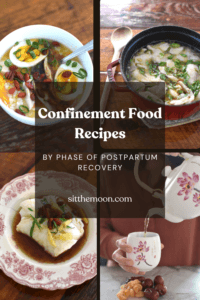
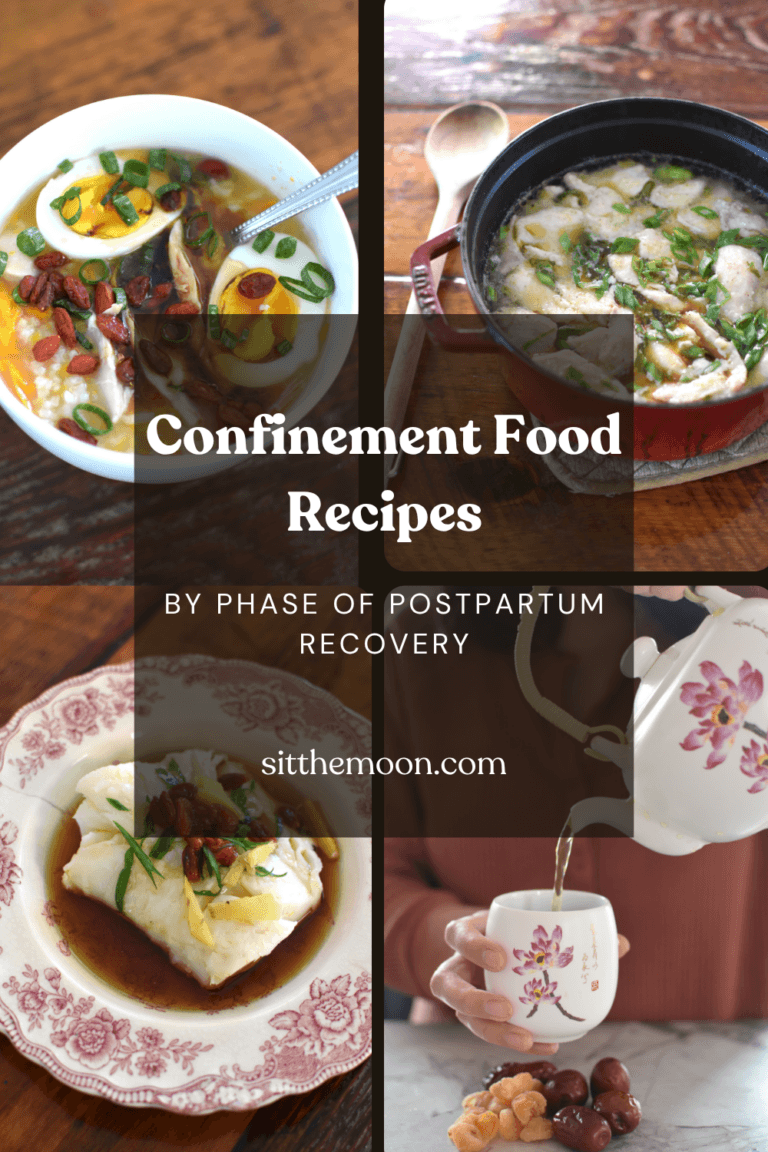
Warm, cooked, easy-to-digest food, in a progression that shifts as you heal. Week one is light: congee, steamed fish, broth, nothing rich. By weeks two and three the food turns heartier and more warming. By week four, the richest dishes come out. That progression is the heart of the tradition. I’ve mapped every phase, with recipes, in my guide to confinement food recipes.
Do you have any advice on postpartum nutrition?
Yes — eat warm, iron-rich, protein-dense food, stay well hydrated, and don’t rush to “bounce back.” The postpartum body is rebuilding from blood loss and depletion, and the first few weeks are for replenishing, not restricting.
A few things I tell every new mom as a dietitian:
Prioritize iron in the first 6 weeks. Childbirth involves real blood loss, and low iron is one of the most common — and most overlooked — reasons new moms feel exhausted, foggy, and run-down. Iron-rich foods like liver, red meat, and well-cooked leafy greens help rebuild your stores, and pairing them with vitamin C improves how much your body absorbs. I go deep on this in my guide to iron-rich foods for postpartum recovery.
Lean on protein and warmth. Protein supports tissue repair and, if you’re nursing, milk supply. Warm, cooked, easy-to-digest meals — soups, congees, stews — are gentle on a sluggish postpartum gut and are the backbone of the confinement tradition for good reason. You’ll find a full progression of these in my confinement food recipes.
Hydrate, especially if breastfeeding. Milk production raises your fluid needs significantly. Warm teas and broths count, and they fit the tradition’s emphasis on warmth.
Don’t diet yet. Your body needs energy to heal and, if nursing, to make milk. This is not the season for cutting back. Nourish first; everything else can wait.
Want more? I’m a registered dietitian, and I love helping new moms understand their nutrition needs. Tell me your name and email address, and I’ll send you a free postpartum nutrition guide with everything in one place.
Barriers to Sitting the Month in Modern America
Three things make sitting the month hard in modern America: most people don’t have paid leave, most don’t have family nearby, and many already have another kid at home. If you’re thinking, “I’d love to sit the month, but how?” — you’re not alone.
The Paid Leave Gap
According to the U.S. Bureau of Labor Statistics, as of 2023, only 27% of private-sector workers have access to paid family leave. While the Family and Medical Leave Act (FMLA) offers up to 12 weeks of job-protected leave, it is entirely unpaid. Additionally, according to the Department of Labor, only about 56% of the U.S. workforce even qualifies for FMLA in the first place. For many families, stepping away from work for a month without a paycheck is simply not survivable.
The Missing “Village” and Distance from Family
The traditional confinement period relies entirely on a matriarch—usually a mother or mother-in-law—stepping in to take over the household. In the U.S., nuclear families often live hundreds or thousands of miles away from their parents. Without that built-in village, the intense domestic labor of cooking and cleaning falls right back on the exhausted new parents.
The Reality of Multiple Children
“Strict bed rest” is a beautiful concept until you have a toddler tornado demanding snacks and playtime. When you are managing second or third children without full-time childcare, resting uninterrupted for a month is extremely difficult.
Practical Workarounds for the Modern Mom
If you cannot perfectly replicate a traditional confinement, give yourself grace. The goal is adaptation, not perfection. Doing something to protect your recovery is always better than doing nothing.
Hiring Help
If you have the budget, hiring a housekeeper to take care of laundry and cleaning, a babysitter to take care of older siblings, or utilizing specialized postpartum meal delivery services is an incredible investment in your health. In some places, you can hire a postpartum doula or night nurse. In places like Taiwan, South Korea, and mainland China, the modern evolution of traditional rest is the yuezi zhong xin (postpartum care center) or sanhujoriwon. These are essentially luxury hotels dedicated entirely to the fourth trimester, offering 24/7 nursery care, daily doctor visits, and in-house dietitians preparing meals specifically for your recovery. While these luxurious confinement centers are just starting to pop up in the United States, they are prohibitively expensive for most people.
Freezer Meal Prep
If you don’t have a village to cook for you daily, you and your partner can cook for yourself during the “nesting phase” of your pregnancy. Batch-cooking and freezing confinement foods during your third trimester is a good way to ensure you get the nourishment you need without standing over a stove while recovering. Many of my recipes can be prepared weeks in advance, stored in your freezer, and simply reheated. When friends ask how they can help out with the new baby, you can send them a link to my recipes.
Any questions?
Leave a comment below, and I’ll be happy to get back to you! Best of luck on your motherhood journey. 🙂
Did you find this article helpful? Consider adding Sit the Moon as a preferred source on Google, and you’ll see more content from Sit the Moon when you search for postpartum recipes and guides. Click the button below and check the box.




Great write up! I especially appreciated the ancient context and modern adaptation interpretations. Very thought provoking
Thanks for reading, Tim! 🙂