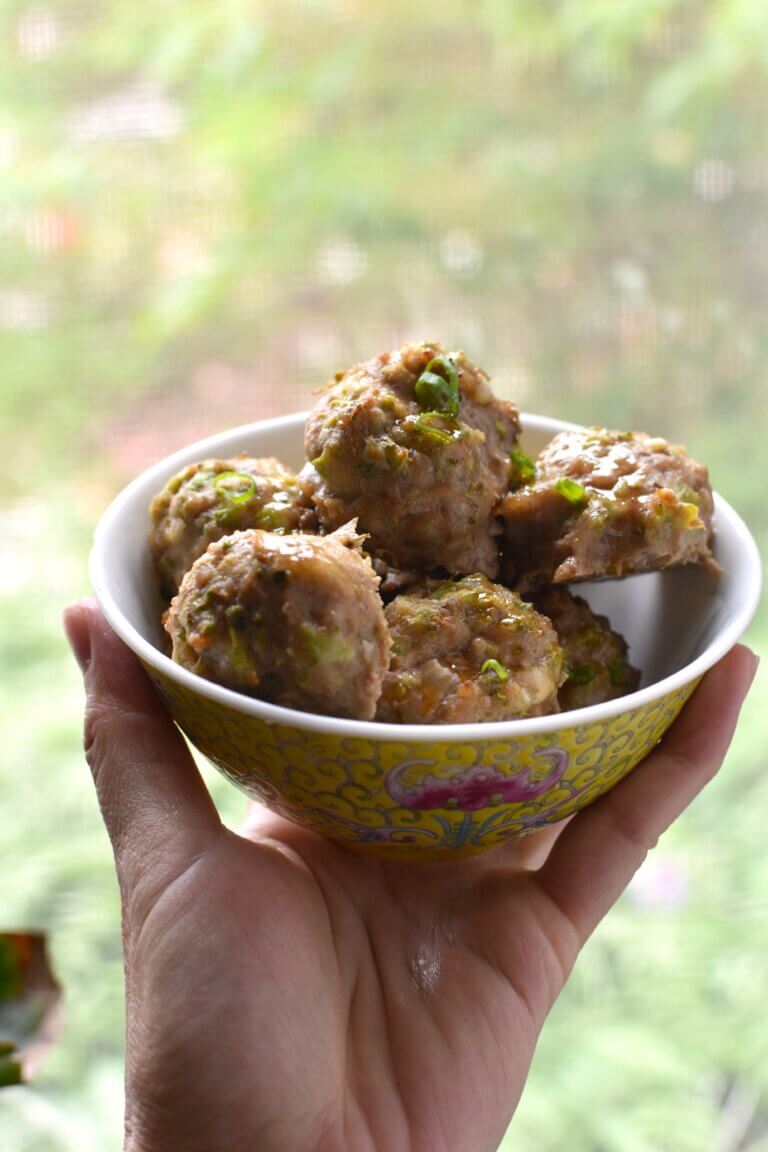
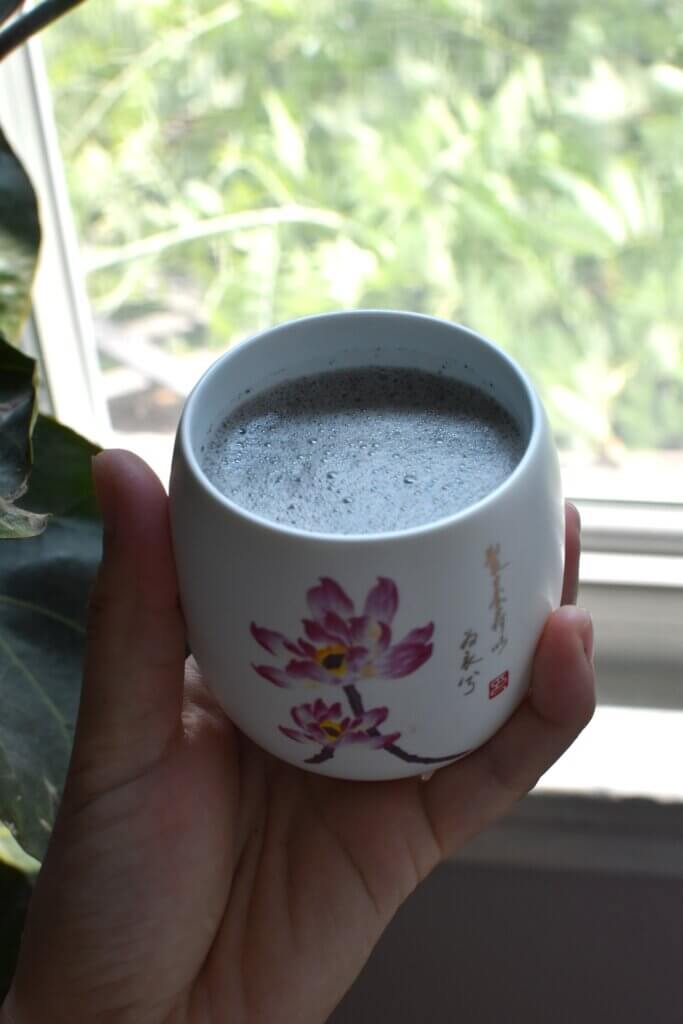
I wanted something warm that wasn’t coffee. Something frothy, milky, and nutty, sweet but not too sweet, and quick to make. Enter the black sesame latte, which I made on a whim because I had black sesame paste and sweetened condensed milk on hand. To my surprise, my creation was better than any black sesame latte I have paid for in a café! After doing some googling, most recipes use honey. Mine uses sweetened condensed milk, which adds an extra layer of creaminess and the maltiness of White Rabbit Candy – if you know, you know!
Is black sesame latte a traditional confinement food?
Black sesame latte is not a traditional confinement food, but black sesame soup (芝麻糊, zhī ma hú) is! Black sesame soup is a Cantonese “tong sui”, a sweet dessert soup, thickened with glutinous rice and served in a bowl with a spoon. It’s a bit tricky to make, so this latte is my shortcut; you still get the benefit of the black sesame without having to toast and grind sesame seeds and glutinous rice. You can check out my papaya milk tong sui recipe if you’re interested in that category of food!
By the way, if you’ve been sprinkling whole black sesame seeds on things and assuming you’re getting the nutrition, you’re mostly not. Whole seeds pass through largely intact (more on that in my iron-rich foods post). The seeds have to be ground for your body to get at what’s inside. Which is what paste is.
Black sesame nutrition
Two tablespoons of black sesame paste deliver roughly 350 mg of calcium, 5 grams of fiber, 6 grams of protein, and 2.7 mg of iron.1 Stir that into a cup of milk and you’re holding one of the most calcium-dense drinks you can make at home.
Calcium — the real star
This latte carries just over 650 mg of calcium, about two-thirds of the 1,000 mg a day recommended for women ages 19–50.2 The 2 tablespoons of black sesame paste brings 350 mg and the cup of milk brings 306 mg.3
If you’re breastfeeding, your body is pulling calcium out of your own skeleton to put into your milk — a normal remodeling process that temporarily lowers bone density, which typically recovers during and after weaning.4 Your calcium needs don’t technically go up. But most of us weren’t meeting them to begin with: American women average 842 mg a day from food5, more than half of US women fall short of recommendations,6 and in one study of pregnant women, only a quarter met the RDA.7
Note: the 350 mg on the paste’s label is total calcium, not absorbed calcium. Sesame, like many seeds, contains oxalates and phytates that bind some of its calcium,8 so the actual amount absorbed is not as much as it might seem on paper. The milk’s ~300 mg absorbs at around 27–30%, which is as good as calcium gets from food.
Iron
Two tablespoons of paste also bring 2.7 mg of iron — about 15% of the Daily Value, which is a respectable amount for a plant food. It’s non-heme iron, the plant form, which your body absorbs at a lower rate than the heme iron in meat (learn more about absorption percentages in my guide to iron-rich foods!).
Fiber
Five grams per two tablespoons — about 18% of the DV. Get those bowels moving!
Plant Fat
Two tablespoons of black sesame paste gives you 18 grams, or 23% of your DV for fat. Fat often gets a bad rap, but it’s a good thing! Especially in postpartum, it supports your energy, helps your baby’s brain grow if you’re breastfeeding, and helps with tissue repair.
Black sesame latte ingredients
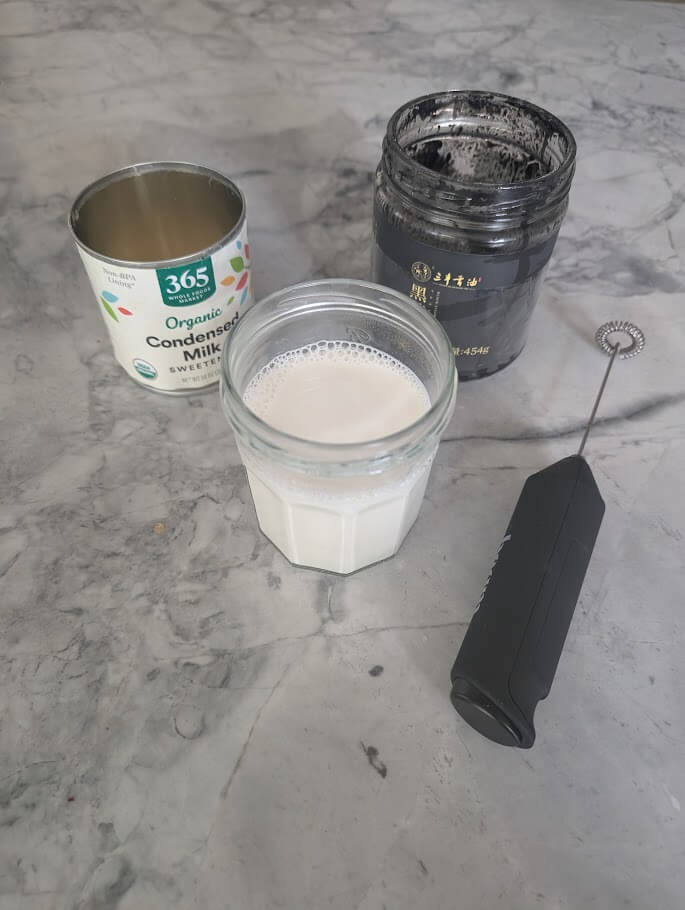
Milk — 1 cup
I’ve tested this with whole cow’s milk and with unsweetened pea milk. Cow’s milk makes a richer, sweeter cup. Pea milk is thinner and less sweet, and you may want a little more condensed milk to compensate.
Black sesame paste — 2 tablespoons
This is the whole point of the drink. Look for it labeled black sesame paste or black sesame butter — same thing. It should be pure ground sesame, ideally with nothing else in the jar.
Sweetened condensed milk — 1 tablespoon
You can substitute honey or sugar, but it won’t be as good. Condensed milk is how this would be sweetened in a Hong Kong café, and it brings a malty, White Rabbit candy flavor that honey can’t compete with. It also adds dairy solids, so the cup gets rounder and creamier, not just sweeter. Start with one tablespoon and add more if desired.
Recipe
Black Sesame Latte
Equipment
- 1 frother or immersion blender
Ingredients
- 1 cup milk any milk of your choice, whole cows milk produces creamiest results
- 2 Tbsp black sesame paste
- 1 Tbsp sweetened condensed milk
Instructions
- Pour 1 cup of milk into a microwave-safe mug. Microwave for one minute.
- Add 2 tablespoons black sesame paste and 1 tablespoon sweetened condensed milk. (I give it a quick stir to get the condensed milk off the spoon, but you don't need to stir before frothing.)
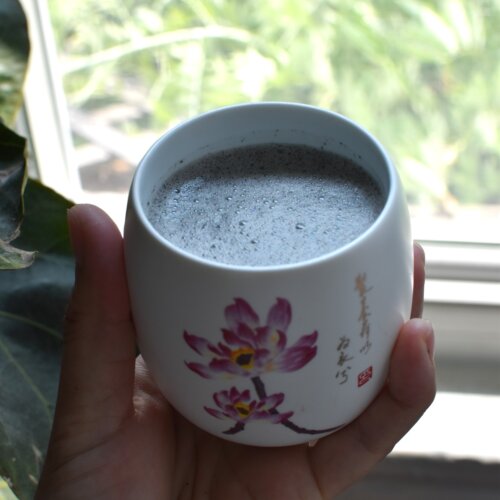
- Froth with a handheld frother until the paste fully disperses and the top goes foamy — about 20 seconds. An immersion blender works too. Enjoy!
Frequently asked questions
Is black sesame latte safe while breastfeeding?
Yes. Black sesame is a food, not an herb or supplement, and there’s no reason to avoid it while breastfeeding. The drink is also caffeine-free, which is often the real question underneath this one.
Can I use black sesame seeds instead of paste?
Yes but you would have to toast and grind them to make your own paste.
Is this caffeine-free?
Yes. No coffee, no tea, no espresso — the “latte” refers to the milk. You can add espresso if you want to make it a coffee latte!
Can I make it dairy-free?
Yes, you can try pea milk or soy milk, and use honey or sugar as a sweetener.
Where do I buy black sesame paste?
You can find it in Asian grocery stores, or online Asian grocery stores, like Weee. My local American grocery store carries black sesame seeds but not the paste. If that’s the case for you too, and you have a high quality food processor, you can make your own paste.
Did you make this recipe?
Please rate and comment below. We’d love to hear from you!
References
- USDA FoodData Central, FDC ID 2428733 (Eden Foods Organic Black Sesame Butter), per 2 Tbsp (33 g). Nutrient content varies by brand and roast; check your jar. ↩︎
- Institute of Medicine. Dietary Reference Intakes for Calcium and Vitamin D. National Academies Press; 2011. RDA for females 19–50: 1,000 mg/day, unchanged for pregnancy and lactation. ↩︎
- USDA FoodData Central, FDC ID 746782, 1 cup whole milk. ↩︎
- NIAMS, “Pregnancy, Breastfeeding, and Bone Health.” Calcium moves out of maternal bone via remodeling during the third trimester and breastfeeding; extra calcium does not prevent this loss; bone density is typically restored after weaning. ↩︎
- USDA ARS, What We Eat in America (NHANES 2017–2018): mean calcium intake from foods and beverages, women 20+, is 842 mg/day. Approximately 72% of US calcium intake comes from dairy products and foods with added dairy. ↩︎
- Thomas M, Weisman S. Calcium supplementation during pregnancy and lactation: Effects on the mother and the fetus. American Journal of Obstetrics & Gynecology, 194, 937-945 ↩︎
- Cullers A, et al. Effect of prenatal calcium supplementation on bone during pregnancy and 1 y postpartum. Am J Clin Nutr 2019. Baseline mean intake 733 mg/day; 25% met the RDA. n=64 enrolled, 30 completed 12-mo follow-up — small trial, authors call for a larger study. ↩︎
- NIH ODS, Calcium Fact Sheet for Health Professionals: oxalic and phytic acids form indigestible calcium salts and reduce absorption from plant foods; absorption from dairy and fortified foods is roughly 27–30%. ↩︎