

My neighborhood mom friends and I noticed something interesting recently: every time we drank horchata (the delicious Mexican and Spanish almond and rice drink) from one of our favorite local cafes, we noticed an increase in our milk supply! That got me thinking. In my own Chinese heritage, soymilk is the traditional gold standard for postpartum nourishment and milk-boosting. But could almond milk be powerful too? I dove into the research, and the answer is YES!
While soymilk is a wonderful tradition, almond milk has a major “busy mom” advantage: it is incredibly easy to make, and every grocery store has almonds. Unlike soymilk, it doesn’t require any cooking or heating to be safe to drink—you simply blend and strain.
For another drink using dates (but red dates), check out my red date tea recipe.
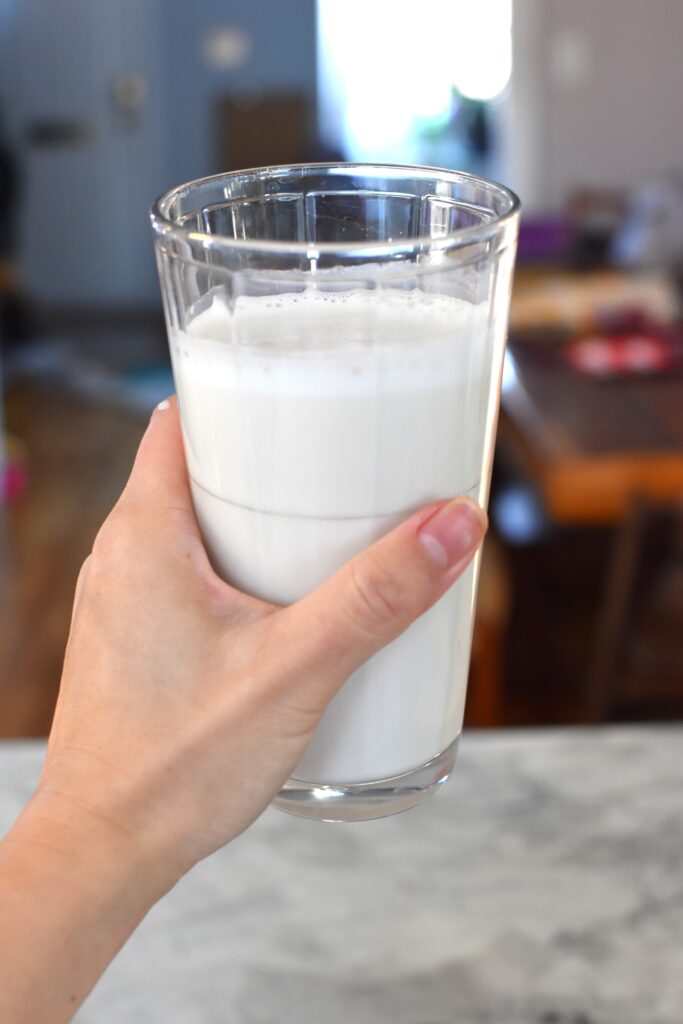
The Science: Does Almond Milk with Dates Support Lactation?
While we often think of almonds as just a healthy snack, they are clinically recognized as a galactagogue—a substance that helps support lactation.
According to research and lactation resources like La Leche League, almonds are packed with essential nutrients that support the hormonal pathways of breastfeeding. They contain specific plant sterols and minerals that help optimize milk production. Furthermore, almonds are rich in healthy monounsaturated fats, which not only increase the caloric density of your milk but also provide the sustained energy mothers need for the physical demands of the fourth trimester.
Dates are used to sweeten the almond milk, but they are also a recognized galactagogue, as published by the Cochrane Pregnancy and Childbirth Group.
Soymilk vs. Almond Milk for Postpartum
In traditional Chinese postpartum cooking, soymilk is the most common recommendation for nourishing new mothers. Both soy and almonds are excellent tools for lactation, but I often recommend almond milk for my US-based clients because high-quality raw almonds are so accessible in any local grocery store. It’s a bridge between ancient wisdom and modern convenience.
Homemade Almond Milk Vs. Store Bought
If you’ve only ever had store-bought almond milk, you are in for a treat. Commercial versions are often mostly water and stabilizers. Making it yourself ensures a high “nut-to-water” ratio, meaning you actually get the protein, calcium, and healthy fats your body is craving. Plus, the taste is exponentially richer and creamier.
Ingredients
Instructions
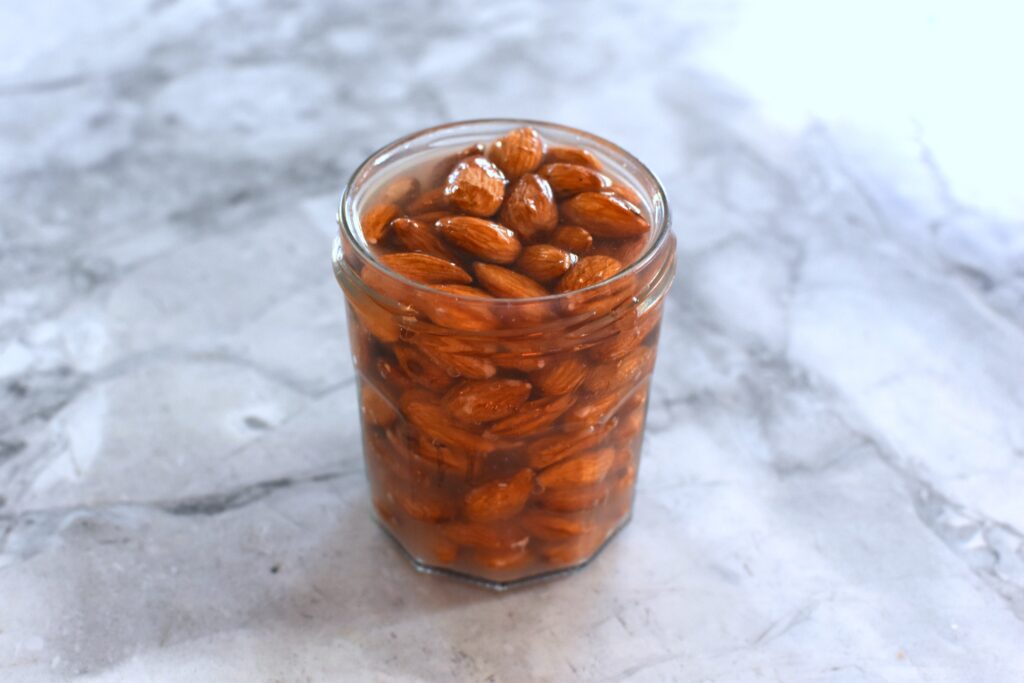
Soak: Soak 1 cup of raw almonds in water for 8 hours or overnight to soften. The long soaking time makes the almond milk creamier and reduces the amount of fiber left over. Soaking also helps remove enzyme inhibitors and tannins, making the almond milk more stomach-friendly, and reduces phytic acid, a substance that inhibits iron and zinc absorption.
Blend: Drain the soak water. Add almonds and 4 cups of fresh filtered water to a high-quality blender. Add dates for an extra lactation boost. Blend for 1-2 minutes.
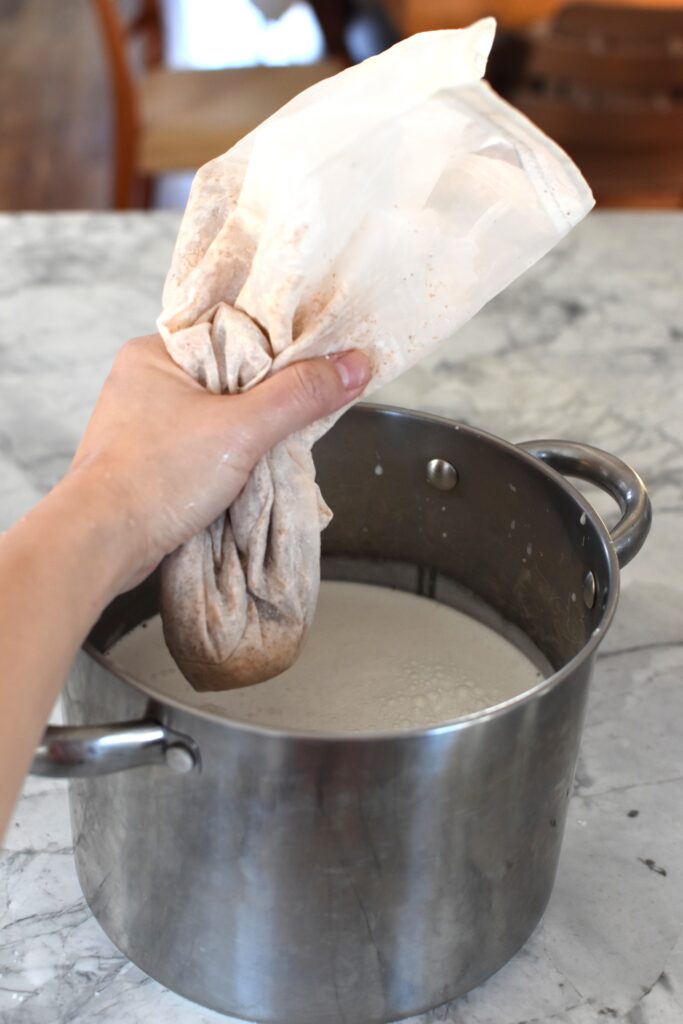
Strain: Pour through a nut milk bag and squeeze thoroughly.
Warm & Enjoy: In keeping with traditional “warming” recovery practices, I recommend gently heating your almond milk on the stove before drinking to support easy digestion.
Save the Almond Pulp!
Save the almond pulp from making the almond milk to make my recipe for almond date balls!
Almond Milk with Dates
Equipment
- High quality blender
Ingredients
- 1 cup raw almonds
- 4 cups filtered water
- 3-5 medjool (palm) dates
Instructions
- Soak: Soak 1 cup of raw almonds in water for 8 hours or overnight to soften.
- Blend: Drain the soak water. Add almonds and 4 cups of fresh filtered water to a high-quality blender. Add dates for an extra lactation boost and a hint of sweetness. Blend for 1-2 minutes.
- Strain: Pour through a nut milk bag and squeeze thoroughly.
- Warm & Enjoy: In keeping with traditional "warming" recovery practices, I recommend gently heating your almond milk before drinking to support easy digestion.
Notes
FAQ
Can I drink this cold?
In traditional Chinese medicine (TCM) and postpartum recovery practices, cold drinks are thought to slow down circulation and hinder digestion. For the best “warming” effect to support healing and lactation, I recommend gently warming your homemade almond milk on the stove until it is lukewarm or room temperature before enjoying. If you’re not postpartum, of course you can enjoy it cold!
What do I do with the leftover almond pulp?
Don’t throw it away! Since we strained out the fiber and some protein, the pulp is still incredibly nutrient-dense. You can freeze it in small bags to add to smoothies, or better yet, use it as the base for my Almond Date Balls (a perfect, gestational-diabetes-friendly snack).
How long does homemade almond milk stay fresh?
Because this recipe is pure and contains no preservatives or stabilizers, it will last in an airtight container in the refrigerator for about 3 to 4 days. If it separates, don’t worry—that’s a sign of a natural product! Just give it a good shake before pouring.
Can I use roasted almonds instead of raw?
For this specific lactation recipe, I recommend raw, unroasted almonds. Raw almonds retain more of the natural oils and plant sterols that serve as galactagogues. Roasting can alter the fat profile and may add unwanted salt or oils that aren’t necessary for this healing drink.



3 Comments