

Mmm…the aroma of ginger, scallion, and sesame oil. My mom calls steamed cod the easiest postpartum meal you can make for a new mother. Ten minutes of prep, ten minutes of cooking, and you have something delicious and nourishing on the table.
This steamed cod recipe is her design, a classic Chinese steamed fish with ginger and scallions, adapted for postpartum recovery, with goji berries added for their antioxidant properties and a diluted soy sauce to keep sodium low during the early weeks when the body is still releasing excess fluid. The hot sesame oil finish transforms a simple steamed cod fillet into something that smells like someone is taking care of you.
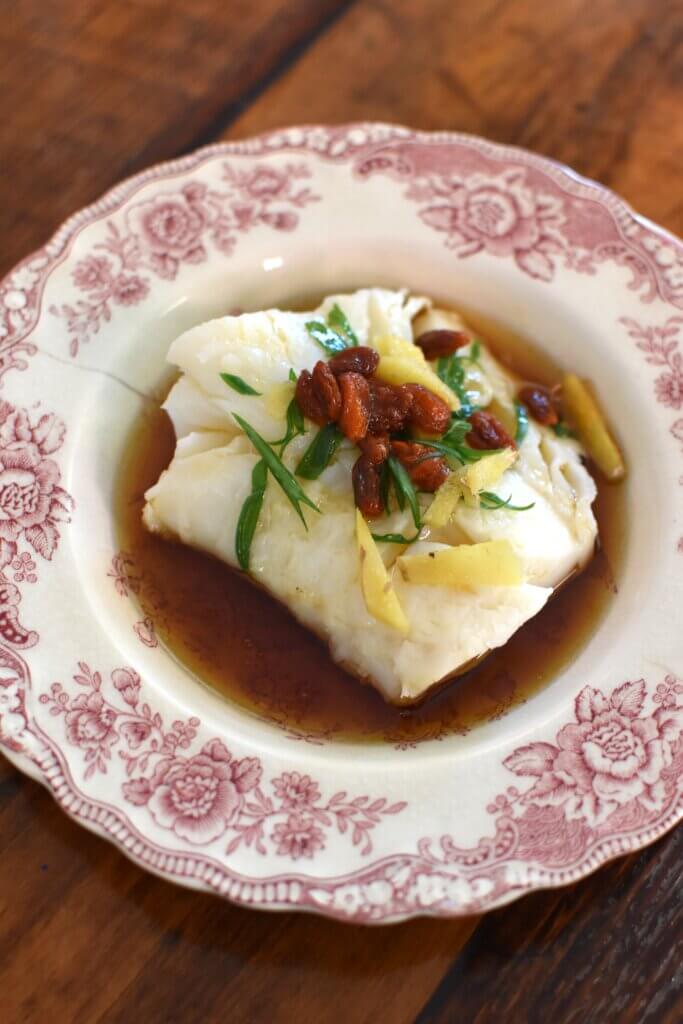
Why Steamed Cod is the Perfect Postpartum Meal
A new mother’s digestive system is often delicate and sensitive after childbirth — strained by labor, disrupted by hormonal changes, and sometimes affected by medication. Steaming is the gentlest cooking method available. It preserves the fish’s natural moisture and sweetness without adding fat, keeps sodium minimal, and produces a texture so tender it requires almost no effort to eat.
Steamed cod fish is one of the most complete sources of easily digestible lean protein available. Unlike red meat, which requires more digestive effort, fish protein is absorbed quickly and efficiently — exactly what a healing body needs. For breastfeeding mothers, steamed cod is particularly valuable: it supports milk production and delivers nutrients directly to the baby through breastmilk.
The ginger and scallion topping is not just aromatic — it is functional. And the goji berries, so often reduced to a decoration, earn their place here through genuine nutritional merit.
This recipe makes 2 servings.
The Science Behind the Ingredients
Cod Cod is an excellent postpartum protein, rich in B12, a nutrient critical for postpartum energy and mood regulation. It also contains iodine, which supports thyroid function during the hormonal recalibration of the postpartum period. Cod is low in mercury, making it a safe choice for breastfeeding mothers. My family typically eats salmon for its high omega-3 content (and because it’s one of the few proteins my picky toddler eats!), but white fish like cod is more traditional in Chinese cuisine and steams beautifully.
Fresh Ginger (生薑) Ginger is a vasodilator that promotes circulation and helps relieve uterine cramping. It assists in the discharge of lochia and gently warms the postpartum body. In this recipe, ginger serves double duty: it neutralizes any fishy smell during steaming, and delivers its warming properties through the hot oil finish at the end.
Scallions (蔥) In TCM, scallions are a warming aromatic that promotes circulation and supports the flow of Qi. Clinically, they contain quercetin and vitamin C, both of which support immune function — relevant for a new mother whose immune system is recalibrating after birth. This Chinese steamed fish with ginger and spring onions relies on the combination of both aromatics for its characteristic flavor.
Goji Berries (枸杞) Goji berries are rich in antioxidants, particularly zeaxanthin, which supports eye health, and polysaccharides, which support immune function. In TCM they nourish the liver and kidneys, considered central to postpartum recovery. In this recipe they are soaked briefly in warm water, added to the fish before steaming, and left on for serving — by the end they are plump, soft, and full of flavor. Not sure where to buy goji berries? Check out my pantry guide.
Sesame and Olive Oil Finishing Blend Pure sesame oil is deeply warming in TCM and nutritionally rich — it contains sesamol and sesamin (sounds made up, I know), antioxidant compounds with anti-inflammatory properties. However, straight sesame oil can be overpowering. A 50/50 blend of sesame and olive oil delivers the aromatic warmth and nutritional benefits without overwhelming the delicate flavor of the fish. Olive oil adds heart-healthy monounsaturated fats and a mild fruitiness that rounds out the finish beautifully.
Diluted Soy Sauce Standard soy sauce is high in sodium, and new mothers frequently retain fluid in the early weeks. Mixing soy sauce with an equal amount of warm water retains all the savory umami flavor while significantly cutting sodium — actively helping the body release excess fluid rather than contributing to swelling.
What Fish to Use for Steamed Cod
Cod is the ideal choice for this recipe and the fish I tested it with. It is mild, widely available, and steams well. However, the quality of your fish makes a real difference in the final texture.
Standard supermarket fillets Boneless, skinless cod fillets work fine and are the most accessible option. The texture will be firm and flaky, less delicate than the upgrade option below, but still delicious, especially with the sauce. This is what I used, since Safeway is my main grocery store.
The upgrade: bone-in, skin-on cod If you have access to an Asian supermarket, lucky you! Look for whole cod portions with the bones and skin on. This is the traditional preparation and produces a noticeably more luxurious result — silkier texture, richer flavor, and additional fat that gives it a yummy “stickiness.” Steam with the bones and skin on. If you shop at a supermarket with a seafood counter, you can ask them to leave the skin on when they cut your fillet.
Other good options for steamed cod fish or similar preparations: Low mercury white fish all work well — tilapia, haddock, and flounder are my top alternatives. You can check current FDA mercury guidelines for fish here: FDA Fish Advice
Instructions
Prep Time: 10 minutes Cook Time: 10-12 minutes Total Time: 20-22 minutes Servings: 2
Step 1: Prep the Ingredients
Pat both sides of the cod fillets thoroughly dry with paper towels.
Drizzle 1 tablespoon of Shaoxing rice wine over the fish and rub a pinch of salt onto both sides. Let marinate for 5 minutes while you prepare the aromatics.
Cut the scallions into approximately 2-inch strips. Peel and cut the ginger into similarly sized strips — you want about a thumb’s worth of ginger total. Place the goji berries in a small bowl of warm water and soak for about a minute.
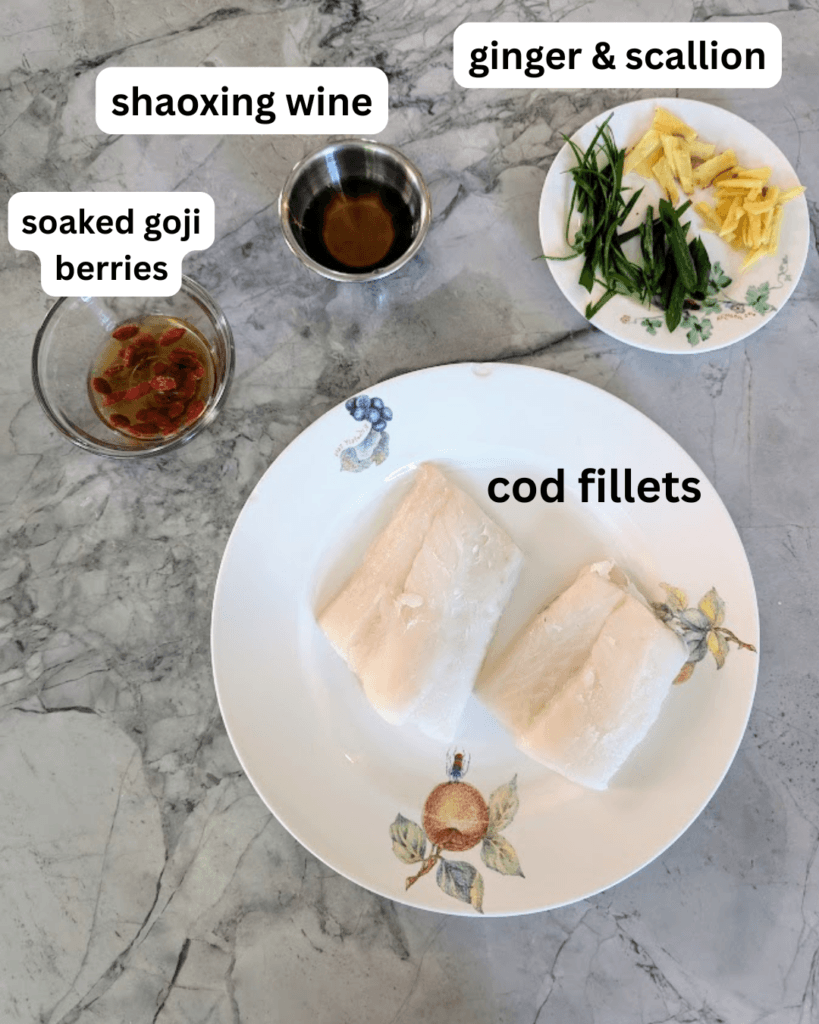
Step 2: Arrange and Steam
Set up your steamer and bring the water to a rolling boil over high heat until heavy steam is rising.
Place the marinated cod fillets on a heatproof plate. Lay the ginger and scallion strips on top of the fish. Drain the goji berries and scatter them over as well.
Carefully place the plate in the steamer. Cover and steam on high heat for 10-12 minutes, depending on the thickness of your fillet — about 10 minutes for thinner fillets under an inch, 12 minutes for thicker fillets around 1 to 1.5 inches. The fish is done when it’s flaky and white, or the internal temperature reaches 140°F (FDA recommends cooking cod to 145°F, but if you take it out at that point it will be rubbery and overcooked. The fish will continue to cook a little more once you take it off the heat).
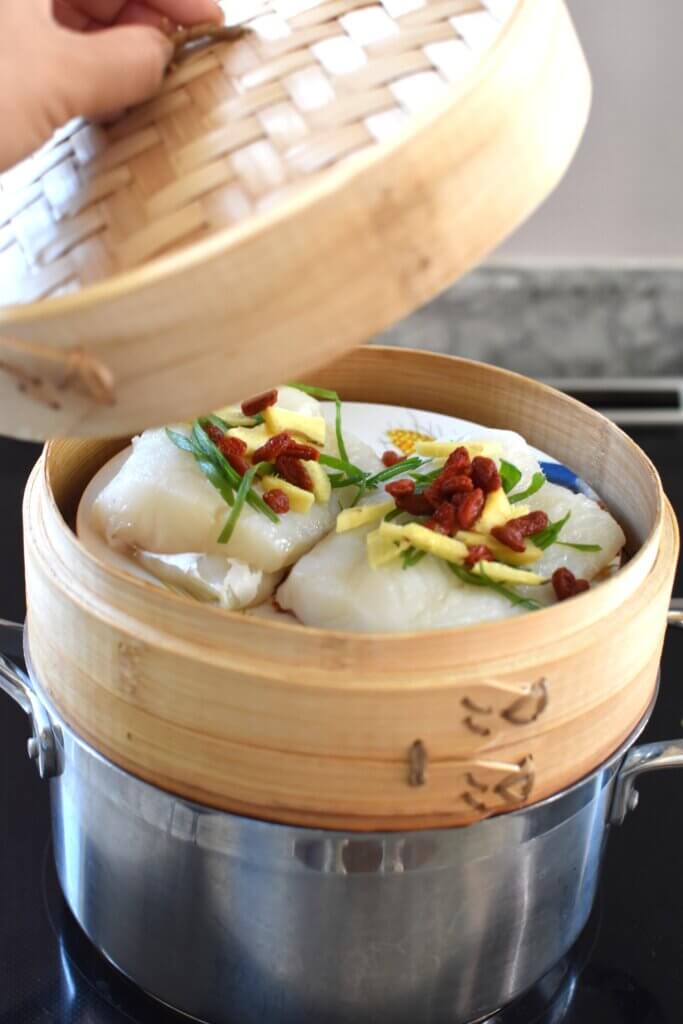
Do not oversteam. Steamed cod cooks quickly and becomes rubbery if overdone.
Step 3: Plate and Finish
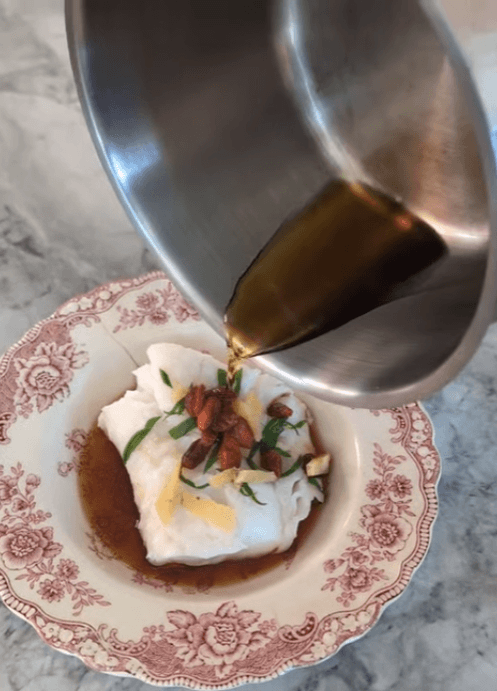
Transfer the steamed cod to a clean serving plate — this naturally discards the steaming liquid, which carries the fishy cooking smell and is best left behind. The ginger, scallion, and goji berries come along with the fish.
Mix 1 tablespoon of soy sauce with 1 tablespoon of warm water and spoon it onto the plate around the fish.
In a small saucepan, heat ½ tablespoon of sesame oil and ½ tablespoon of olive oil together until shimmering and just beginning to smoke. Immediately pour the hot oil directly over the fish, ginger, and scallions. You will hear a satisfying sizzle as the aromatics release their fragrance. Serve immediately.
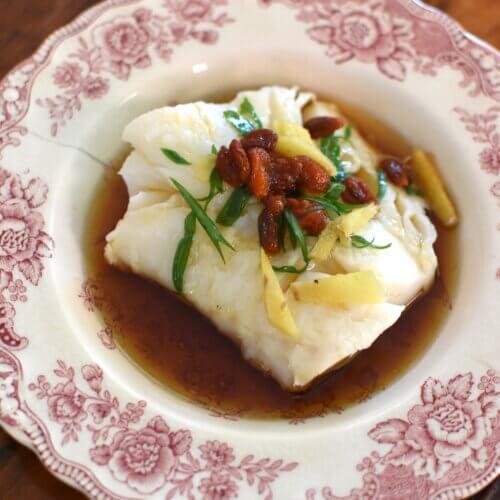
Steamed Cod with Ginger, Scallions, and Goji Berries
Ingredients
- 300 g cod fillets about 10 oz
- 1 tbsp Shaoxing rice wine
- pinch salt
- 2 scallions cut into 2-inch strips
- 1 thumb fresh ginger peeled and cut into 2-inch strips
- 10-12 goji berries soaked in warm water for 1 minute
- 1 tbsp soy sauce mixed with 1 tbsp warm water
- 1/2 tbsp sesame oil
- 1/2 tbsp olive oil
Instructions
- Prep: Pat cod dry. Drizzle with Shaoxing wine, rub with a pinch of salt. Marinate 5 minutes. Cut scallions and ginger into 2-inch strips. Soak goji berries in warm water for 1 minute.
- Arrange: Place cod on a heatproof plate. Lay ginger strips, scallion strips, and drained goji berries on top of the fish.
- Steam: Bring steamer to a rolling boil. Place plate inside, cover, steam on high heat for 10-12 minutes (depending on thickness of fish) until the internal temp of the thickest part reaches 140°F. Fish should be flaky and white when done.
- Plate: Transfer fish with its aromatics to a clean serving plate, leaving behind the steaming liquid. Spoon diluted soy sauce around the fish on the plate.
- Finish: Heat sesame and olive oils together in a small saucepan until shimmering. Pour immediately over the fish. Serve at once.
Notes
FAQ
Can I make steamed cod in the microwave?
Sure, you can make microwave steamed cod. You will need to place a microwave-safe cover (such as a ceramic or glass bowl) over your prepped fish dish. Microwave on high for 5 minutes. You will still want to heat the oil mixture in a saucepan and pour on top of the fish after it is cooked.
Can I prep this ahead and freeze it?
I wouldn’t recommend cooking it and freezing it ahead of time (the fish is delicate and the texture would not be great reheated), but you can freeze the raw fish with the cooking wine and aromatics.
Why transfer to a clean plate instead of serving on the steaming plate?
The liquid that accumulates during steaming carries a concentrated fishy smell. Transferring the fish to a clean plate naturally discards this liquid and makes a noticeable difference to the clean, fresh flavor of the finished dish.
Why pour hot oil at the end?
The sizzling hot oil releases the volatile aromatic compounds in the fresh ginger and scallion instantly, creating a fragrant finish you cannot replicate any other way. Don’t skip it — this is what makes the dish.
Can I use other fish instead of cod?
Yes. Any mild, low-mercury white fish works well — tilapia, haddock, and flounder are good alternatives. Salmon works too, though it is less traditional for Chinese steamed fish with ginger and spring onion preparations. Check the FDA mercury guidelines linked in the fish selection section above.
Can I skip the Shaoxing wine?
Yes. You can use white wine instead. Or, if you are skipping alcohol entirely, place a few thin slices of lemon under the fish before steaming.
When can I start eating steamed cod postpartum?
This is one of the gentlest postpartum dishes and can be introduced in the first week after birth, once you have a normal appetite. The low fat, easily digestible protein is ideal for a sensitive postpartum digestive system. Check out my guide to postpartum foods by recovery week.
Did you make this recipe?
Please comment and rate below, we’d love to hear from you!


One Comment