

(continued from Part 2)
Start with Part 1
This is translated to English from the original Chinese version. You can find the Chinese version below.
I finished high school and started going out to the fields with the rest of the village. In China back then, people who farmed weren’t called “farmers” — they were commune members. The villagers themselves never took to the word “commune member,” though. They preferred the name handed down for a thousand years: farmers.
The whole countryside was organized into People’s Communes: the land, the labor, and the harvest were all shared, not privately owned. There was a song everyone knew by heart, and its promise was simple: the commune is the vine, and we are the melons on it — the fatter the vine, the sweeter the melon. Indeed: take care of the commune, and the commune would take care of you.
The moment I became a commune member, the guaranteed grain that had come with city life was taken away. Now, like everyone else, I ate only if the vine produced.
Here is what the vine produced. Our village, Sunying, was one production team of thirty-seven households farming about forty acres together. When the harvest came in, it was divided in a strict order: the country took its share first of the best grain, the team kept back seed and animal feed second, and only what remained was divided among the families.
And the remainder was almost nothing. In 1969, a full day’s labor was worth about eight cents, and a person’s entire grain allotment for the year came to 136 jin, roughly 68 kilograms, of unmilled grain. Once hulled and spread across a year, it was barely a few hundred grams of edible grain a day. No amount of careful budgeting could stretch numbers like these into a livable life. The villagers survived on a hundred rough, stubborn ways of getting by — far too many to list.
Here is one of those ways, and it’s the one closest to my heart. If a household had a daughter or daughter-in-law due to “sit the month” that year, the family would plan ahead — raising a few extra hens, saving up every egg they could.
But where was the spare grain to feed chickens? Every hen ran free; at dusk you’d scatter a little feed and call the “chicken children” home to roost. My mother kept seven hens, raised just this way.
Shoulder to Shoulder
I have always been someone who takes life as it comes. My head was fairly empty — I didn’t dwell on things, let alone fret about the future. The “educated youth” around me were full of complaints, anxious about their dim prospects and their marriages, but I’d simply let things take their course, the way I always had. And here, as before in the city and at school, I had friends my own age. We chatted; they taught me needlework — how to stitch the soles and uppers of cloth shoes — and every kind of farm work. When we weeded the corn, the two of us would take a single row together — one of us in the shallow trench down each side — hoeing out the weeds as we worked our way along. To keep me from falling behind, my partner would quietly clear two-thirds of the way and leave only a third for me, so we could stay side by side.
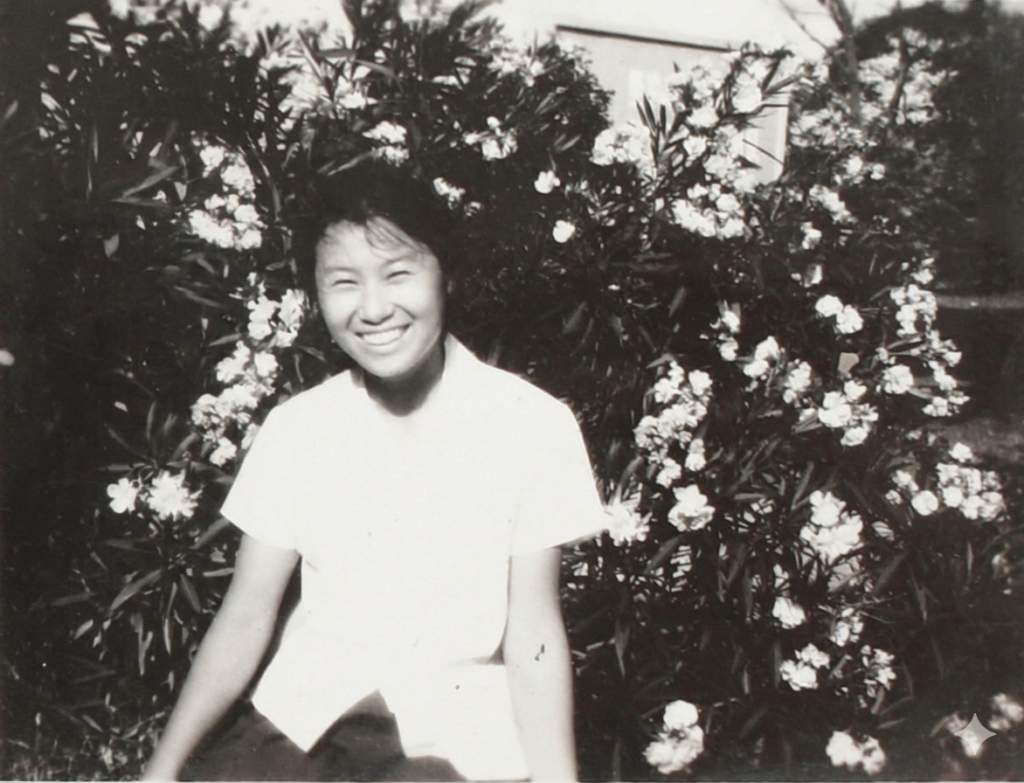
The longer I worked alongside them, the more I saw how the villagers looked after this city girl who’d landed among them — and one small moment showed it more clearly than any other.
An Unspoken Kindness
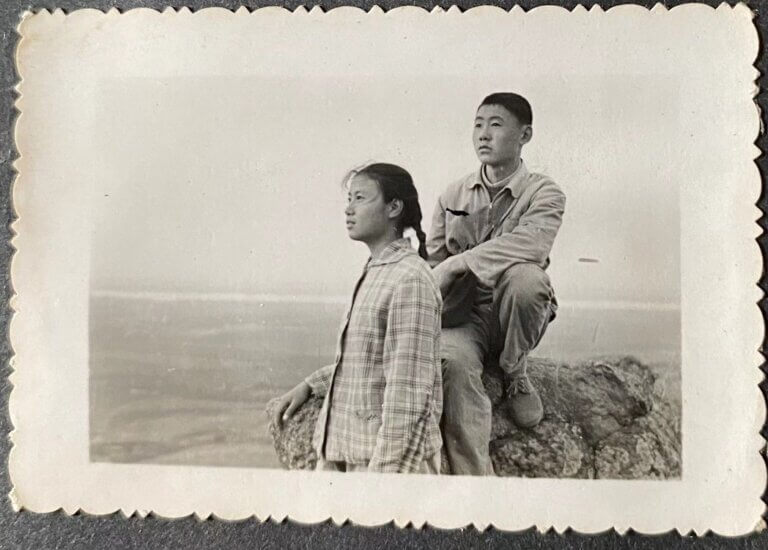
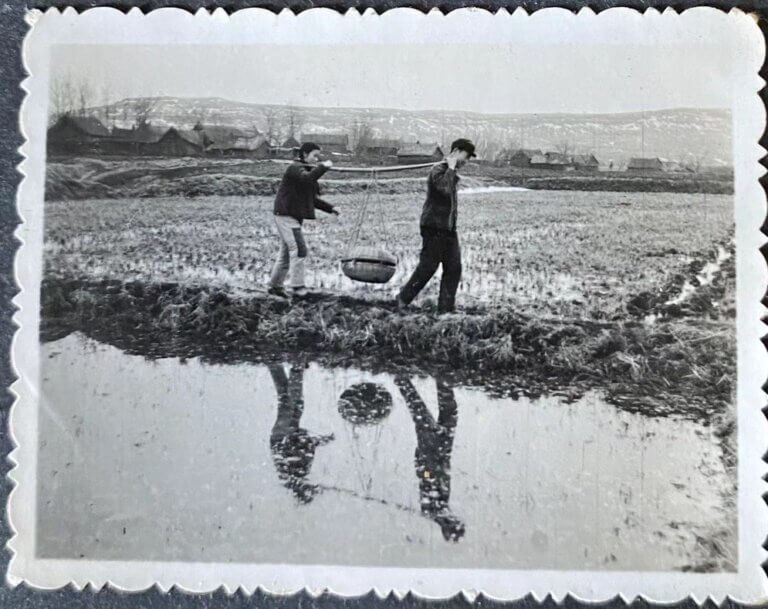
Carrying the cut wheat from the open fields to the threshing ground — the flat, hard-packed yard where the harvest was processed and weighed — was heavy work, and I had to learn to walk the narrow ridges between the paddies. When I reached the threshing ground, I’d carry my load up to the work-points recorder, who held a big steelyard scale; he’d weigh it, call out the number, and log the points. When he finished weighing mine, he shouted, “A hundred and twenty!” Hearing it, a sweaty pride welled up in me — a hundred and twenty jin, sixty kilos! I really was a hard worker. I gave myself a thumbs-up on the inside.
The boy who’d weighed in just ahead of me, the Li family’s Xiaogouzi, turned to stare at Jian Mazi1 the recorder, then glanced at me, opened his mouth as if to speak and quickly swallowed the words back down. In their place, he gave me a little smile. Once I understood that smile, it stayed with me for life, and it has moved me for life. In it was the kindness of seeing through something and choosing not to say it; the unspoken understanding about Jian Mazi deliberately calling out a heavier number to “cheat” in my favor; a generosity toward me; and so much more. What a clever, kindhearted boy Xiaogouzi was.
A Little Night School
So much kindness, given to me freely despite their poverty. After a while, even a blockhead like me couldn’t help but turn the question around: what could I do for them?
The first thing I thought of was a night school. In the countryside of northern Jiangsu, girls past the age of twelve — and certainly no later than sixteen — had generally already been promised to a future husband’s family, the betrothal gifts accepted, waiting in their rooms to be married. My friend Song Yuxia’s fiancé was serving in the army; they exchanged the occasional letter, and she could half-read, half-guess her way through a few characters. I sensed what was on her mind and suggested, “Let’s study together in the evenings.” Several of the other girls answered the call too. So every other evening, in the cook-room of our house, we set out little stools, a little table, a little blackboard; my parents bought them all pencils and exercise books, and we really did keep it up for a while. You could see how much they loved the paper and pencils in their hands — and not only for the sake of finding a husband.
Strangely, not one of the boys ever joined the night school. You’d think they’d want to learn a little something even just to find a match — but they didn’t see it that way. They would rather wait for their parents to arrange things, sitting by the tree stump waiting for the rabbit to run into it, certain a rabbit would eventually come along on its own.2 What’s the use of book learning? It wasn’t for lack of schools — there were primary schools, middle schools, even a high school. In their own words, they “didn’t feel like going to school,” it “didn’t sit right” with them.
“Just Sit in and Listen”: How I Came to Acupuncture
What else could I do for everyone? The chance came soon enough. The army unit stationed nearby at Dashishan got in touch with the commune and sent down a medical team to train barefoot doctors for us, with the focus on acupuncture. Each brigade had two full-time barefoot doctors, one man and one woman, chosen by the brigade cadres, with their pay covered by the individual production teams. By then the leaders of China had begun to take seriously the shortage of doctors and medicine in the countryside. Mao Zedong had issued his supreme directive to “put the emphasis of medical and health work on the rural areas,” and across the country the policy of “a single herb and a single needle” was being pushed hard. Because acupuncture cost nothing, worked quickly, and needed no complicated equipment, it became the cornerstone of rural medicine. For exactly that reason, there was simply no question of a medical license back then; putting needles in someone was absolutely not against the law — on the contrary, it was something society held up and praised.
I wasn’t one of the chosen barefoot doctors, but I couldn’t be bothered about that — I went straight to the training class. I found the army officer in charge and explained that I wanted to learn acupuncture. On the spot they asked the opinion of the barefoot doctors from our own Qiaonan Brigade, and everyone said warmly, “No problem at all, just sit in and listen.” Even I never expected that this one week of study would benefit me for the rest of my life. From then on, I developed a deep and lasting fascination with Chinese medicine, Chinese herbs, and acupuncture.
What Those Few Needles Could Do
The people of Sunying never expected, either, that the little I’d learned could truly, tangibly help them. Sunying was separated from the other eight production teams by a river about twenty meters wide — really the spillway of a reservoir — and the village sat at the foot of the mountain. Ordinarily, if someone had an ache or a fever and wanted to cross the river to find a barefoot doctor, it not only cost them a day’s work but was terribly inconvenient. When they heard that I, too, had studied acupuncture, they gave me their fullest trust and support, in their hearts and in what they did.
Someone would come to the house and say, “I’ve got a headache — see whether the needles do any good.” After I’d needled them, I’d tell them, go try that bupleurum you dug up yourself, boil a mouthful of broth, drink it, sleep on it, and you’ll be fine tomorrow — don’t only think about selling it for money. Or someone with a headache, after needling, I’d tell them to gather some mugwort leaves, boil the water, soak their feet, and sleep with their head covered. These bits of common knowledge were, in fact, all things they had taught me.
Someone would come and say, “Toothache — I want to see whether the needles can do anything.” Usually they’d tell me they’d already rinsed with water boiled from cleavers and it hadn’t helped. I’d give them a little ball of medicinal cotton and suggest they pound the cleavers into a juice, soak the cotton in it, and try biting down on it against the tooth.
Every single villager who came to me for acupuncture — man or woman, young or old — I recorded carefully: the date they came, name, age, sex, symptoms, which points I needled, the gauge of needle, how many sessions in all, and what herbs were used alongside. Over about two years, it filled a thick notebook. The most common cases by far were strained backs and legs, headaches and toothaches, colds and coughs. Most of the cases that passed through my hands were the ordinary acute kind, and after acupuncture most of them improved markedly. As word spread, more and more people came — even people from neighboring villages came seeking me out by reputation.
I ran into difficult cases, too.
The Deng family’s Xiaowu was a young man of eighteen or nineteen with a problem of his eyes watering in the wind, and he earnestly asked me to needle him. I said, “That point is too close to the eye — I’m not sure of myself.” He told me, utterly firm, “It’s all right, give it a try. If it doesn’t work I’ll never blame you.” As it turned out, each needling would help for several days, but two days after stopping, the old trouble would come back. In the end he didn’t keep it up, and I didn’t follow up either.
An Unspeakable Trouble
There was another — Xiaoraozi, from the west end of the village. I don’t remember his family name. His mother was a widow who’d raised two children through bitter hardship: Xiaoraozi was seventeen, his younger sister thirteen and already promised to a husband’s family. One day his mother came to our house, uneasy, to talk to me. She said, “We’ve arranged a wife for Xiaoraozi, and she’s to come into the house next month. But Xiaoraozi has a problem of wetting the bed at night. Could you give him a couple of needles? Let’s try — would that be all right? Cure it or not, we won’t blame you.”
I felt such sympathy for her. We looked into each other’s eyes, and I had no way to say “no.” If she hadn’t been pushed to a hard place, a mother would never have brought herself to ask this. Xiaoraozi3 was a bright, healthy-looking boy; perhaps because he’d grown up without a father, he was a first-rate hand at the work and generous with people too — and perhaps it was exactly this unspeakable trouble that kept a quiet shame locked in his eyes. After his mother left, I looked it up in A Barefoot Doctor’s Manual and learned that the pathology behind adult bed-wetting is tangled and complex, and that with my ability alone, I’d never sort out the specific cause. The book said that several key points on the lower abdomen — guanyuan, zhongji — combined with the warming tonification of moxibustion, had many precedents of marked success. So I agreed to go to his house and try.
The first acupuncture worked, miraculously, right away. Mother and son were beside themselves with joy, and I was genuinely happy for them. I needled a second time two days later, with equally good results. Those few needles helped him pass smoothly through that delicate stretch when a new bride first enters the house — the time most likely to bring embarrassment. For some reason, after those two times they never came to me again, and I didn’t have the heart to ask whether the trouble ever returned. I suspect that just two acupuncture sessions, with no medicine of any kind to support them, could not really have resolved so stubborn a condition for good. But whenever I think of this case, I still feel a real sense of accomplishment.
Melons on the Same Vine
Now and then a villager would bring their own precious eggs to thank me. This I absolutely could not accept. I knew very well that in that era, a farmer’s eggs were an extremely scarce resource they could trade for cash. Buying kerosene, lighting the lamp, buying toothpaste, getting cloth to make clothes — all of it depended on the eggs this flock of hens laid. The neighboring village of Yinpai4 sat halfway up the north face of the mountain, even less accessible than we were; when the Yinpai folk came down the hill to find me for acupuncture, they’d carry along a load of firewood-grass to express their thanks, and my mother would buy it from them at the market price. Behind me, my parents were my steadfast support. Without the slightest hesitation they covered every expense the acupuncture required — the alcohol, the medicinal cotton, the professional books — and now and then gave me their few quiet words of encouragement, and the approval that shone in their eyes.
In an age of such extreme scarcity, the vine was not so fat and not so strong. And yet the melons clung to the vine, and the vine carried the melons — that we were all melons on the same vine was the plainest, hardest truth of that era. It was never really the commune that held us; it was each other. To step so genuinely into the farmers’ world, to throw myself into learning a real skill, and to do something truly useful for them with all my heart — that joy, welling up from inside, surpassed any happiness I’d ever felt scoring a hundred on a test at school.
FOOTNOTES
1“Jian Mazi” means something like “Pockmarked Jian.” “Mazi” pointed to the scars smallpox had left on his face. Smallpox has since been eradicated; in my mom’s village it was still a living memory.
2“Waiting by the tree stump for a rabbit” is an old Chinese saying about a farmer who once saw a rabbit run into a stump and break its neck — so he gave up farming and just waited by the stump for the next one. It means passively hoping for luck instead of working for it.
3“Xiaoraozi” comes from rao (绕), “to wrap” — he was named for being born with the umbilical cord wrapped around his neck. There were actually two boys in Sunying who carried that name.
4The village names hold a small lesson in yin and yang. Yinpai (阴牌) sits on the shaded north face of the mountain, where little sun reaches. Over the ridge lies its twin, Yangpai (阳牌), on the sunny southern slope — yin for shadow, yang for sun — where the light is generous and things grow more easily.
If you read and enjoyed this story, please leave a comment to encourage my mom to write more.
Chinese Version: 我走进农民圈
一,藤儿与瓜
高中毕业了,我开始正式和社员们一起下地干活。那时候在中国,种地的职业不叫农民,而是社员——人民公社的社员。那时有一首大家耳熟能详的歌,叫《社员都是向阳花》。里面唱着:“公社是棵常青藤,社员都是藤上的瓜,瓜儿连着藤,藤儿牵着瓜,藤儿越肥瓜越甜,藤儿越壮瓜越大。”的确是这么个道理。我成为了人民公社社员,便没有了国家提供的商品粮,我和社员们一样,全指望着这棵藤儿肥、藤儿壮。乡亲们不习惯称自己社员,他们喜欢千年来流传下来的称号——农民。
人民公社最小的经济核算单位是生产队,基本按照原有的村落划分,我们孙郢是一个生产队。我们有40英亩左右的可耕地,社员们在生产队长的安排带领下一起干活。有了收成,按“先国家,后集体,再个人”的顺序分配。在我们的记忆里,“先公后私”是刚性的,国家的公粮和统购任务永远享有绝对的优先权。挑出最好的粮食交完公粮、留足生产队的种粮和饲料后,剩下的才由我们37户人家按人口平均分配。所以说,藤儿越壮瓜越大。另外,每家有大约70平米的自留地可以种菜,这块地基本上划在每一家的房前屋后,社员有百分之百的自主权,我们家也划到一块。
无论当年的愿望有多美好,残酷的现实是,孙郢1969年每个劳动日的单价只有8分钱人民币,每个人一年分得的口粮仅仅只有136斤(68公斤)原粮。我在那儿的几年里,数字虽然每年有所增长,但依然没能达到每天半公斤原粮的水平。所谓的“原粮”,指的是未经加工的玉米粒、小麦粒,脱壳加工后最多只能得八成精粮。面对这样的数字,谁都知道,这不是靠精打细算、勒紧裤腰带就能把日子过下去的。但乡亲们有很多粗粝而顽强的办法把日子过下去,这里不能一一展开。
比如,家里如果有女儿或媳妇年内要坐月子,妈妈和公婆便会早做打算,多养几只鸡,多攒些鸡蛋。可那时候哪有那么多余粮喂鸡呢!所有的鸡都是散养,每到傍晚时给一点点鸡食,招呼“鸡孩儿们”回来上窝。我妈妈喂了七只母鸡,也是这样如法炮制地喂养的。
我从来就是一个随遇即安的人。脑子比较空洞,不太想事儿,更别说考虑前途。那时候知识青年怨声载道,为自己前途渺茫担心,为自己的婚嫁选择忧心。我从小就顺其自然,也许是我小时候的自然结果都挺顺利,养成了这样的性格。
二, 走进农民
此刻也是如此,自然而然地整天和社员们一起,也没有多想,与从前在城里、学校里一样,我有我同龄的朋友,我们一起聊天,她们教我做针线,纳鞋底,做鞋面;教我做各种农活。每次给玉米除草,两人在一垄玉米地的两边沟里边锄边向前挪,为了不显得我落后,我的同伴主动锄三分之二,只留三分之一的工作给我,以此保证我们能并肩前行。
把割倒在大田里的小麦挑到打谷场,是个大活儿,我得学着在田埂上挑着担子走路。我到了打谷场,挑到记工员面前,他拿着一杆大秤,称完了报数记工分。他称完我的,高声喊:“120!”我听了心里那份交织着汗水的得意油然而生——一百二十斤,六十公斤啊,我真是个实干家!内心给自己竖了大拇指。在我前面过秤的李家小狗子,回头盯着记工员简麻子,又看了我一眼,话欲出口而又急急咽了进去,取而代之的是冲我笑了笑。这笑容等我回味过来,让我记得一辈子,感动一辈子。那笑容里包涵着看破不说破的善意、有对简麻子故意多报重量“作弊”照顾我的默契、有对我的宽容,还有很多很多难以言表。真是个好聪明、好善良的孩子!
即便是个榆木脑袋,受到各种各样的款待,也会想想我能为他们做点什么。我想过办个夜校。苏北农村女孩子12岁以后,不会超过16岁普遍已经说好了婆家,收过彩礼,阁中待嫁了。我的朋友宋玉霞的未婚夫在部队服役,偶有书信往来,她连估带猜能识几个字。我猜到她的心思,提议:“咱们晚上一起学文化吧。”另外几个女孩子也纷纷响应,于是,每隔一天在我家的锅屋里,摆上小板凳、小桌子、小黑板,我的父母给她们都买了铅笔和练习本,我们真的坚持了一段时间。看得出来,她们热爱她们手里的纸和笔,不仅仅是为了找婆家。奇怪的是男孩子们则没有一个参加夜校学习。即便为了找对象也该学点文化吧,他们不这样想,宁可等待父母安排,守株待兔,认为总有一只兔子会撞上来。学了文化又能干啥?这里并不缺小学、中学、还有高中。用他们的话说,就是“不高兴上学”、“不自在”。
三,学习针灸
我还能为大家做啥?机会很快就来了。附近大石山驻军与公社联系,派了一个医疗队来为公社培训赤脚医生,重点是教针灸。每个大队有一男一女两名脱产的赤脚医生,他们是由大队干部选派的,由各生产队负担他们的报酬。当时国家已经开始重视农村缺医少药的问题,毛泽东发表了“把医疗卫生工作的重点放到农村去”的最高指示,在全国大力推广“一把草、一根针”的方针。因为针灸不花钱、见效快、不需要复杂设备,成为了乡村最核心的医疗手段。正因如此,当时根本没有行医执照的问题,替人扎针绝对不是违法行为,相反是全社会推崇的正能量。
我虽然不是选派的赤脚医生,但我顾不上这些,直接去了那个学习班。我找到学习班的军人领导,说明我想学习针灸。他们当场征求了我们桥南大队赤脚医生的意见,大家都热心地说:“没有问题,你就旁听好了。”连我自己也没有想到,这一个星期的学习,竟让我受益终身,我从此对中医中药和针灸产生了浓厚的兴趣。
孙郢的老乡也没有想到,我学的那一点点知识,竟也可以真真切切地帮助到他们。孙郢与其它八个生产队相隔一条大约二十米宽的河,实际上是水库的溢洪道,村子又坐落在山脚下。乡亲们平时有个头痛脑热的,要想跨河去找赤脚医生,不仅耽误上工,也极不方便。他们听说我也学了针灸,从内心到行动上都给予了最大的信任与支持。
有人到我家说:“头痛,看看针灸管不管用。”我给他们针过后,会跟他们说,试试你挖的小柴胡,熬口汤喝下去睡一觉,明天就好了,别光想着卖钱。也有的人头疼,针完后,我会告诉他们,薅些艾草叶煮水泡脚,蒙头睡一觉。这些常识,其实都是他们告诉我的。
有人来说:“牙痛,想看看针灸能不能行。”通常,他们会告诉我,他已用拉拉藤煮水漱口,不管用。我会给他一小团药棉,建议他们把拉拉藤捣成汁,放在棉球上,用牙咬着试试。每一个来找我针灸的乡亲,不论男女老幼,我都会认真做登记,包括病人来的日期,姓名、年龄、性别、症状、针了哪些穴位、用针的型号、一共针了几次,用过什么草药辅助。大约两年的时间下来,记录了厚厚的一本。其中最多的是腰腿扭伤、头痛牙痛、感冒咳嗽。我所经手的病例多数是常见的急性病,经过针灸,大多数都有了明显好转。这样一来,找我的人越来越多,连邻村也有人慕名过来。
我也碰到过棘手的病例。
邓家小五是个18,9岁的小伙子,有迎风流泪的毛病,恳切地请我给他针。我说:“那个穴位太靠近眼睛了,我没有把握。”他极其坚定地对我说:“不要紧,你试试!治不好也绝不怪你。”结果是,每针一次症状可以消除几天,但停针后几天,老毛病卷土重来。后来他没有坚持,我也没有持续询问。
还有一个是村西头的小绕子。我不记得他姓什么了,他的妈妈是个寡妇,含辛茹苦带着两个孩子,小绕子十七岁,妹妹十三岁也说好了婆家。有一天,他妈妈局促地来到我家找我说话。她说,“给小绕子说的媳妇,下个月就要过门了,可小绕子有个夜里尿炕(遗尿)的毛病,能给他下两针么?咱们试试,行不?治好治不好都不怨你。”我很同情她,我们互相看着对方的眼睛,我没有办法说“不行“。如果不是被逼到了难处,她一个做母亲的绝不会开这个口。小绕子长得很精神,大概是因为从小没有父亲,他干活是个顶呱呱的好把式,待人也宽厚,也许正因为有这个难以启齿的毛病,他的眼神里总锁着几分自卑。小绕子妈走后,我翻查了《赤脚医生手册》,得知成人的夜间遗尿症背后病理错综复杂,仅以我的能力,不会搞得清楚具体的病因。书上也明白地写着,关元、中极等几个位于下腹部的关键穴位配合艾灸温补,已有许多显著疗效的先例。于是,我答应去他家试试。第一次用针,奇迹般地有效果,他们母子二人高兴得不知如何是好,我也由衷地为他们开心。隔了一天针了第二次,效果同样很好。这几针,帮他顺利地度过了新媳妇进门最容易出现尴尬的特殊时期。不知何故,几次之后他们没有再来找我,我也没好意思去问这毛病后来到底又犯了没有。我感觉仅仅几次针灸、在没有任何药物辅助的情况下能彻底解决这样一个顽症是不太可能的。但每每想起这个病例,我依然挺有成就感的。
四,藤上的瓜
偶尔有乡亲会拿自家珍贵的鸡蛋来表示感谢。这坚决不能收。我深知在那个年代,农民的鸡蛋是他们手中极其稀缺的、可以兑换现金的资源。买煤油、点灯、买牙膏、扯布做衣服,全靠这群鸡下的蛋。邻村阴牌位于山北面的半山腰,比我们更不方便,阴牌的乡亲下山来找我针灸时,会顺便挑一担烧锅草来表达谢意,我妈妈会按市价收购。在我的身后,父母是我的坚强后盾,他们毫不犹豫地承担了所有针灸所需的开销,包括酒精、药棉、专业书籍,时而给予我言语不多的鼓励,还有眉眼中闪烁的赞许。
在那样物质极度匮乏的年代里,藤儿不那么肥,也不那么壮,可瓜儿连着藤,藤儿牵着瓜,大伙儿都是藤上的瓜是那个时代最朴实的硬道理。我能这样真切地走进农民的圈子里,潜心学习一技之长,真心实意地为他们做点实事,那种由心而发的愉悦超过了任何一次在学校考到100分的喜悦。



I am really enjoying reading your mom’s stories! Thank you so much for sharing.
Thanks for commenting, Amber! I’ll make sure my mom sees your message. I just updated the posts to include her original Chinese text too, in case that is of interest.