

My mom never visits me without making her signature dried astragalus and red date herbal soup. Even now, over a year postpartum, she arrives ready to prepare it with ginger, scallions, red dates, and astragalus (黄芪红枣全鸡汤). It represents her love and care for me – a warm, shimmering bowl of liquid gold. It is the ultimate comfort food.
Typically enjoyed after the initial discharge of lochia (around 4-7 days postpartum), this soup nourishes the body, and supports lactation.
By using a whole chicken and specific functional herbs, you extract the maximum amount of nutrition to support your fourth trimester. If you haven’t used a whole chicken to make broth before, you’ll find that it’s surprisingly easy!
It’s also very cost effective. You get so much soup out of one chicken. I find that I can use it to feed my family of 4 (2 adults + 2 littles) for 2-3 dinners!
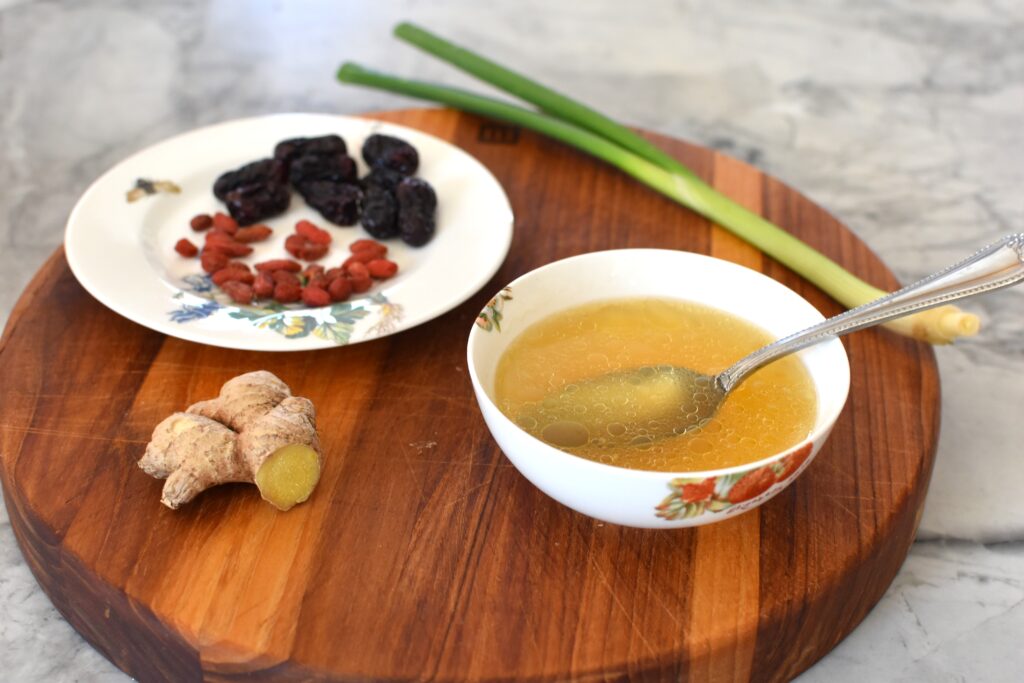
The Science of Astragalus Red Date Herbal Chicken Soup
On its own, a properly simmered Chinese bone broth is a nutrient-dense, collagen-rich food. During childbirth, the body undergoes immense physical stress. The slow-simmering process of the bones and connective tissues releases gelatin and essential amino acids, like glycine, which directly aid in cellular repair and the rebuilding of your own connective tissues and uterine lining.
The addition of traditional botanicals transforms a basic stock into a healing chicken bone broth with functional ingredients for recovery.
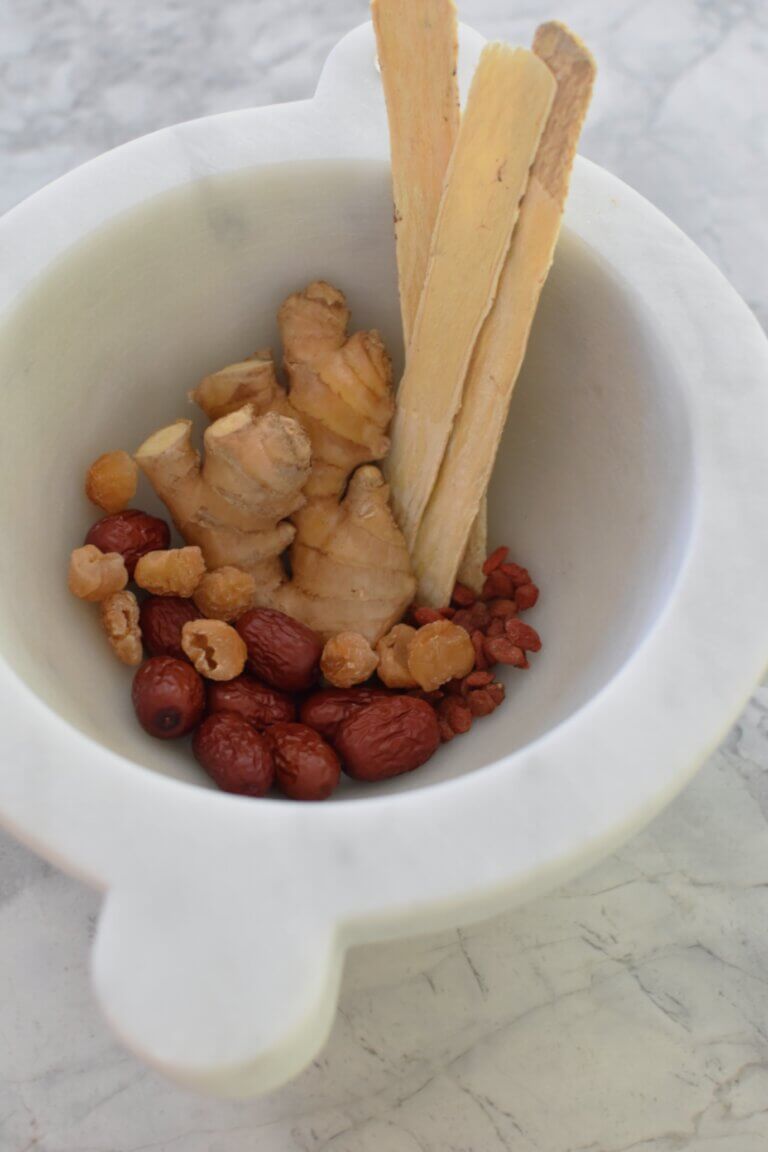
Functional Ingredients for Postpartum Recovery
Instructions
While using a whole chicken gives you the most nutritional bang for your buck, the preparation is surprisingly simple.
1. The Cleanse
In traditional Chinese cooking, cleaning the chicken thoroughly is the secret to a perfectly clear, light broth.
- Remove the internal fat and any loose skin.
- Rinse the chest cavity with cold water until it runs clear and all traces of organs near the spine are removed.
- A Clinical Note: If the chicken is organic or pasture-raised, you may save the liver to cook separately, as it is a nutrient powerhouse (Vitamin A, Iron). If conventionally raised, it is best to discard the organs, as the liver can concentrate environmental toxins.
2. Prepping the Pot
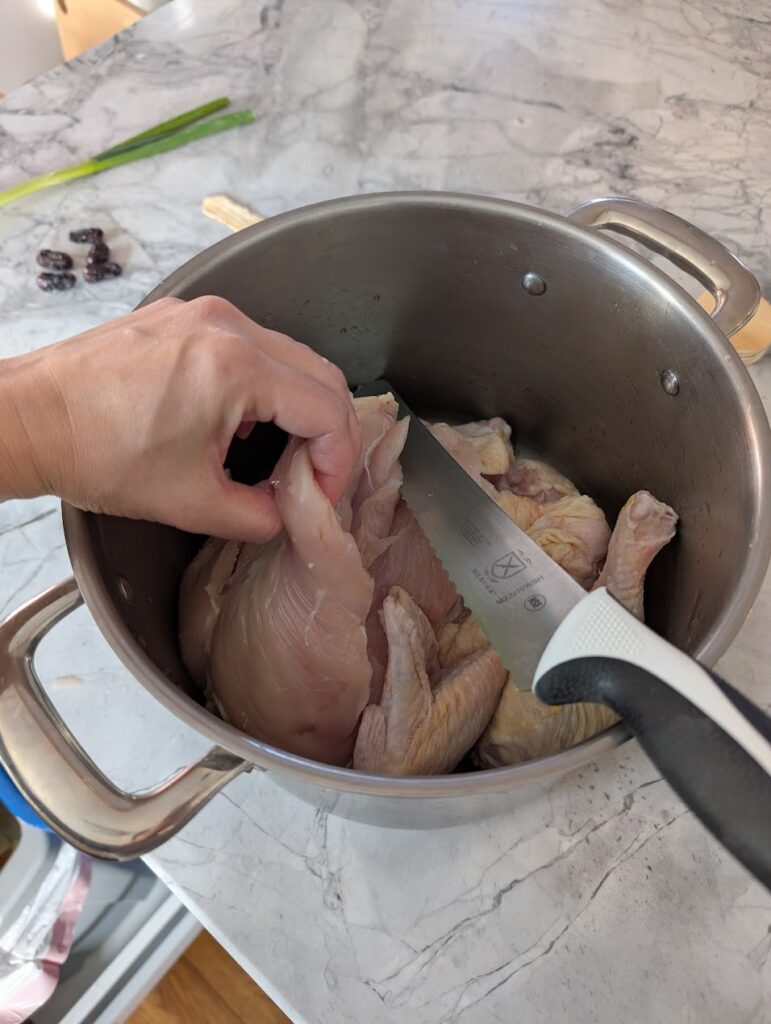
While this is a “whole chicken” soup, you don’t have to keep it in one piece. Removing the thighs and wings allows the chicken to sit lower in your stockpot. This means you need less water to cover the meat, resulting in a richer, more concentrated broth.
- My Personal Prep Tip: I usually remove the breast using a serrated knife and freeze it in a ziplock bag for another meal. The breast meat does not add much collagen or flavor to the stock, and it becomes overly tough when boiled for hours.
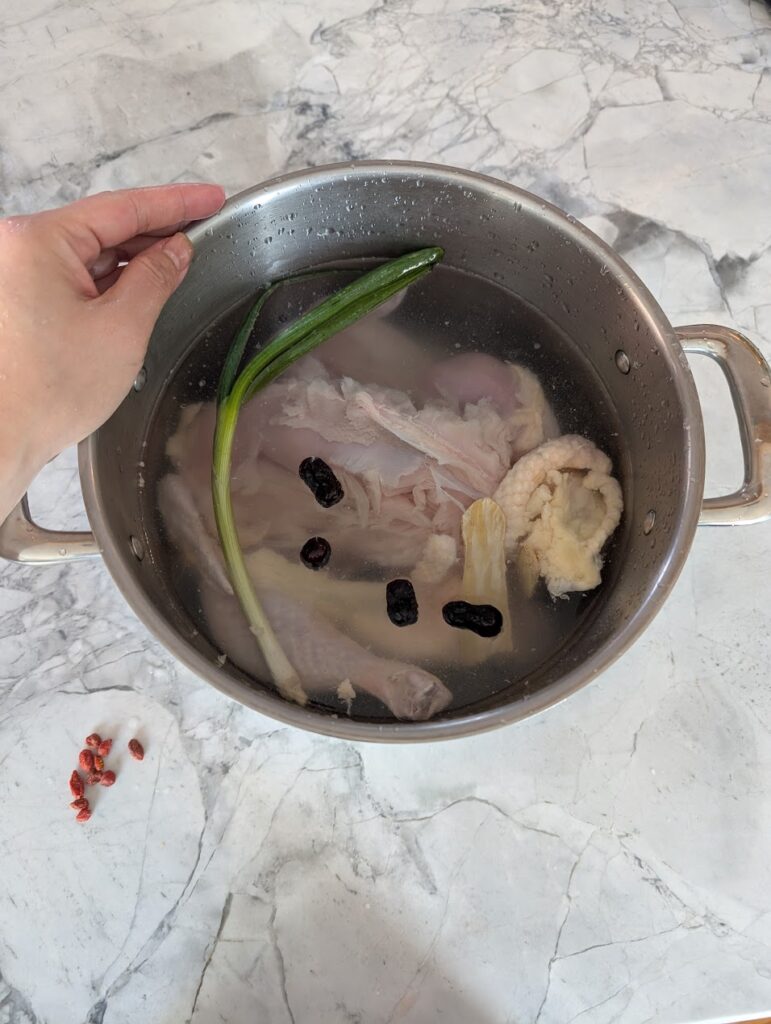
Place your aromatics (Dates, Astragalus, Ginger, Scallion) inside the chicken cavity for easy removal later. Add cold water until the chicken is submerged, with about one inch of water above the meat. This strikes the perfect balance—not so watery that it lacks flavor, but not so concentrated that it becomes overwhelming.
3. The Slow Simmer
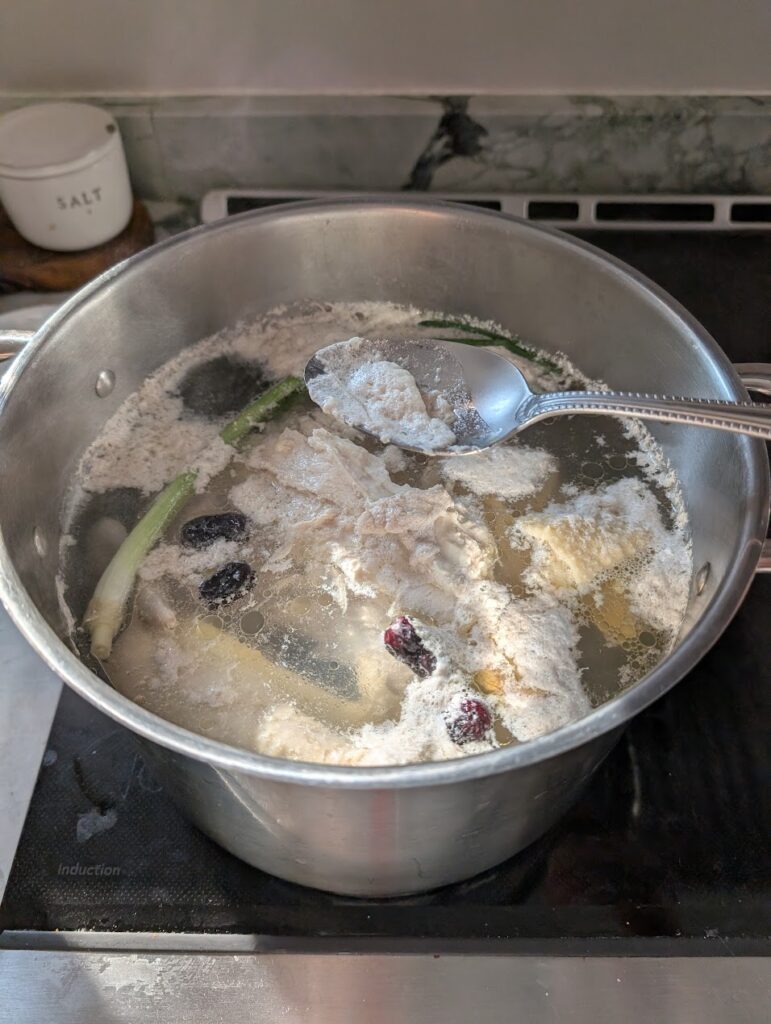
Bring the pot to a boil over high heat. Carefully skim off the foam and impurities that rise to the surface.
Reduce the heat to low and simmer until the meat is tender and falling off the bone—about 3 hours (my mom notes 2 hours is sufficient, but I have found that 3 hours is optimal for the best flavor). If you have a kitchen thermometer, simmering temperature is around 190°F.
4. Strain and Serve
Once the soup is finished, strain the liquid and remove the bones. The broth can be served over several meals. If your postpartum appetite is low and you don’t want to eat the boiled meat, simply shred the dark meat to use later in a cold salad. Salt the broth to taste right before serving.
Freezer Tip
You can freeze the broth for postpartum meal planning.
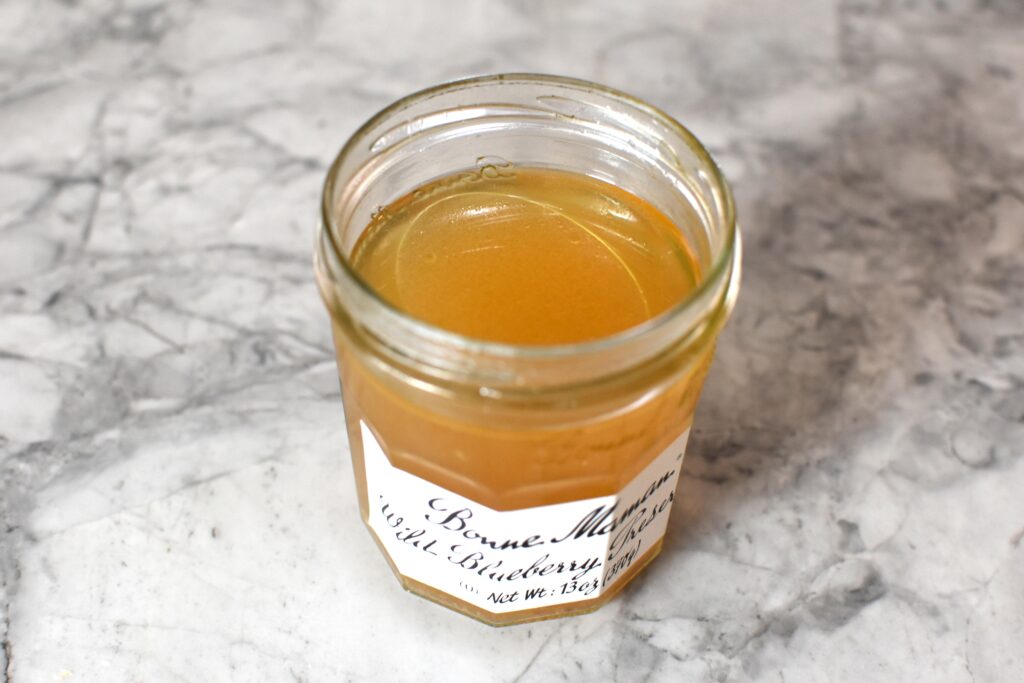
- Use wide-mouth mason jars or repurposed glass jam jars.
- Crucial tip: Always leave at least an inch of “headspace” at the top of the jar. Liquid expands as it freezes, and you don’t want your restorative broth to break the glass!
Keep a stash of these small jars in the freezer so you can easily warm a mug of pure, healing nourishment whenever you need it.
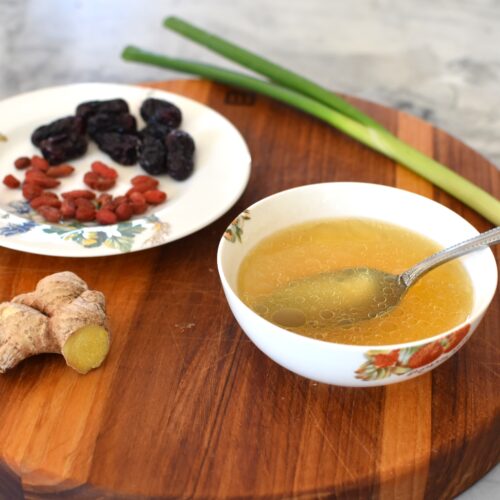
Astragalus Red Date Herbal Chicken Soup
Equipment
- 1 large stock pot 6-8 quarts
Ingredients
- 1 whole chicken 3-5 pounds, organic or pasture-raised
- 3-7 dried red dates also known as jujube
- 1 piece astragalus root about 10 grams (also known as huang qi)
- 10-12 goji berries optional
- 1 slice fresh ginger
- 1 sprig fresh scallion
- water (enough to cover chicken by 1 inch)
- sea salt to taste
Instructions
- Clean the chicken: Remove internal fat, the tail, and loose skin. Rinse the cavity thoroughly with cold water until clear. Remove the raw breast meat to save for another meal.
- Prep the pot: Remove the wings and thighs to allow the chicken to sit flat at the bottom of a large stockpot. Arrange the chicken in the pot.
- Add the aromatics: Place the red dates, astragalus, ginger, and scallion inside the chicken cavity.
- Add water: Cover the chicken with cold water, ensuring the water level is about 1 inch above the meat.
- Boil and skim: Bring to a boil over high heat. Carefully skim off and discard the foam that rises to the surface.
- Simmer: Reduce the heat to low. Maintain a gentle simmer (around 190°F) for 3 hours, or until the meat falls off the bone
- Add Goji Berries (Optional): If using, drop the goji berries into the pot during the last 1 minute of cooking.
- Strain and serve: Strain the broth, discard the bones and herbs, and salt the broth to taste in individual bowls.
Notes
Pregnant and planning for postpartum? Download my free postpartum nutrition guide!



This is a test comment! Freshly baked bread um lorem bites into dolorum, warm with hints of buttered sunshine. Sautéed onions meet ipsum in the skillet, their savory fragrance filling the room. Juicy tomatoes, vine-ripened bursting.