

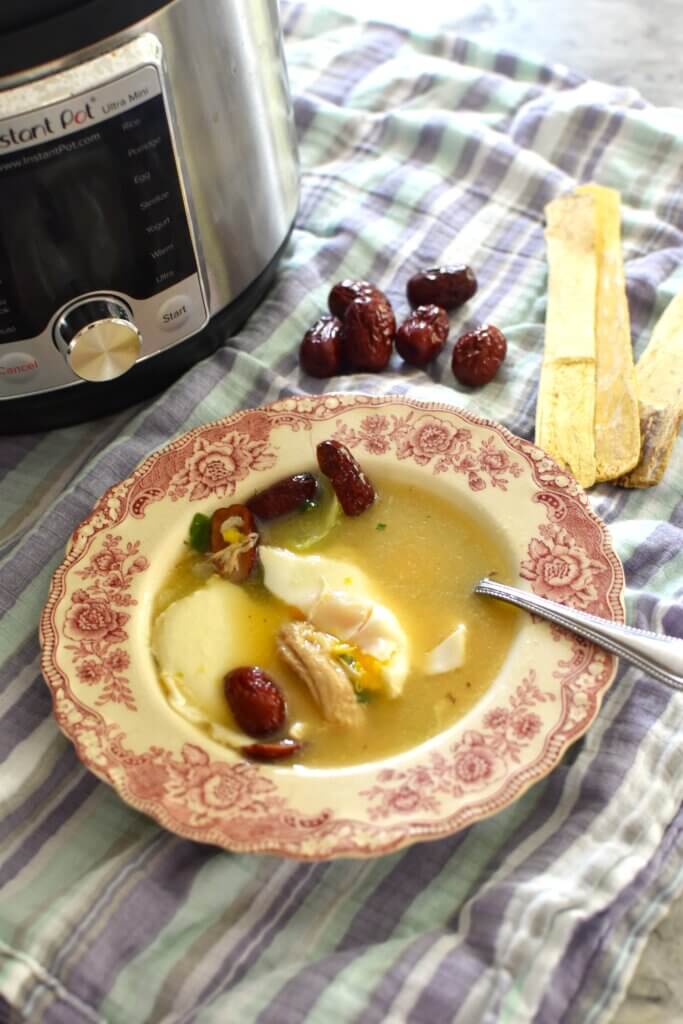
While my mom’s whole-chicken herbal soup will always be the gold standard, this version is my “Modern Mom” essential. Using chicken thighs means you don’t have to do anything at all to prep the chicken. It simply goes into the pot with water and some aromatics. If you want the deep benefits of a traditional confinement soup, but you are navigating life with a newborn, this Instant Pot version of an herbal chicken soup extracts the vital collagen and amino acids with just five minutes of prep time and yields a thousand times more taste and nourishment than anything you can buy in a grocery store.
The Science of Pressure Cooking
Pressure cooking does not meaningfully destroy the nutrients that matter in a bone broth — for connective tissue, it’s actually remarkably efficient. As a registered dietitian, I get this question a lot, so let me explain.
Using bone-in, skin-on chicken (thighs, wings, or drumsticks) is non-negotiable for this recipe. The high pressure and temperature inside the Instant Pot rapidly break down the dense connective tissues and marrow in the thighs. This process extracts the collagen and amino acids (like glycine and proline) directly into the broth, making it profoundly supportive for tissue repair after childbirth.
What a three-hour simmer does gently, 45 minutes at high pressure does forcefully. The broth tastes almost as good. I make this version of the soup more often than the traditional version with the whole chicken, though the whole chicken recipe in the big pot yields a more broth and meat, so I do love to make that version when I have time!
Instructions
1. Prepping the Pot
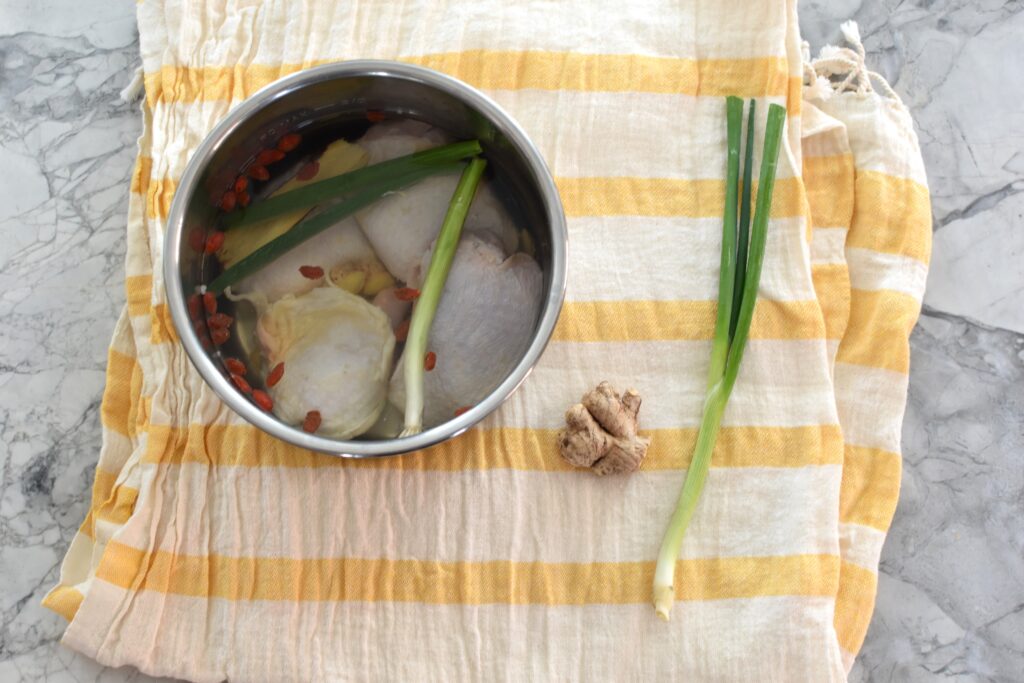
Place about 1.5 pounds of bone-in, skin-on chicken thighs into the Instant Pot insert.
Add cold water until the chicken is submerged, leaving about one inch of water above the top of the meat. Next, add your aromatics.
Aromatics: Functional Ingredients for Postpartum Recovery
This soup uses the same four functional ingredients as my mom’s traditional version: dried astragalus root and red dates — the tradition’s Qi-and-Blood pairing — plus ginger for warmth and goji berries for color. I explain what each herb does in tradition, and what the research actually shows, in the traditional recipe post. Sourcing help is in my postpartum pantry guide.
If your pantry is bare, just ginger and scallion still yield a restorative, collagen-rich broth. Don’t skip making the soup because you’re missing the herbs. That is the whole spirit of this recipe.
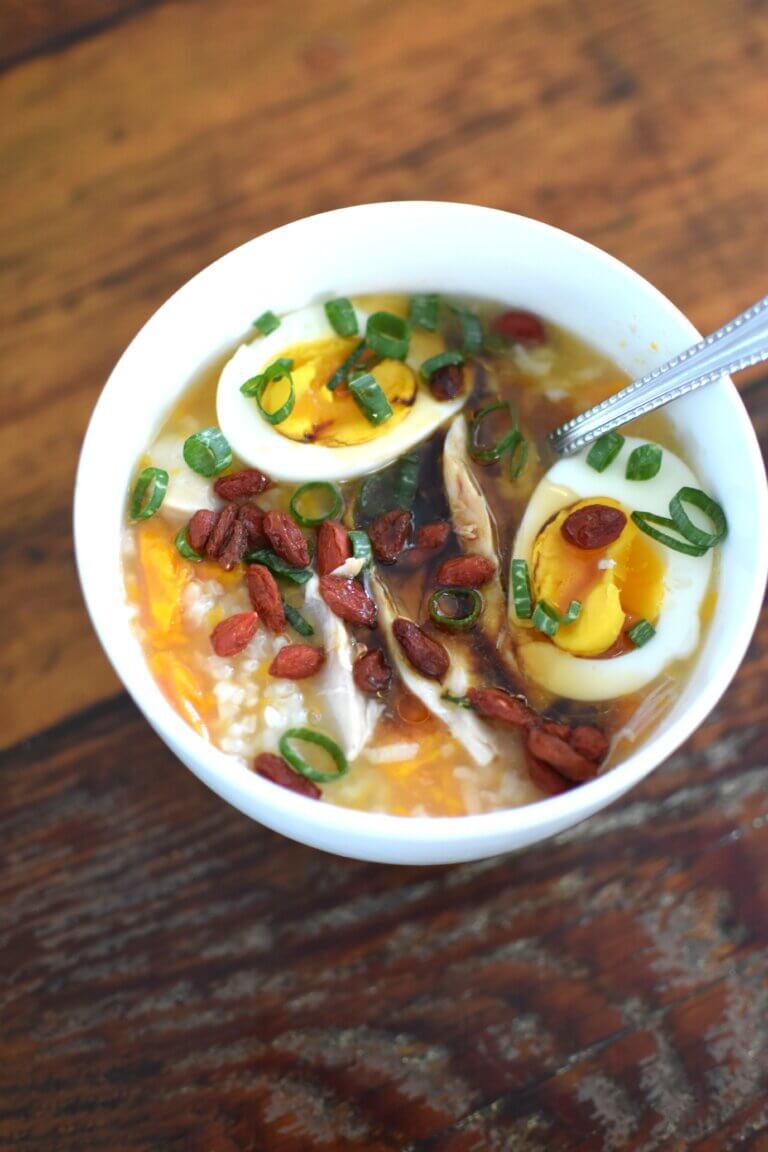
One difference from my mom’s method: she adds goji berries in the final minute to keep their color and texture. I throw them in at the start with everything else. Newborn-life rules apply.
2. Set the Instant Pot
Secure the lid and set the Instant Pot to High Pressure for 45 minutes.
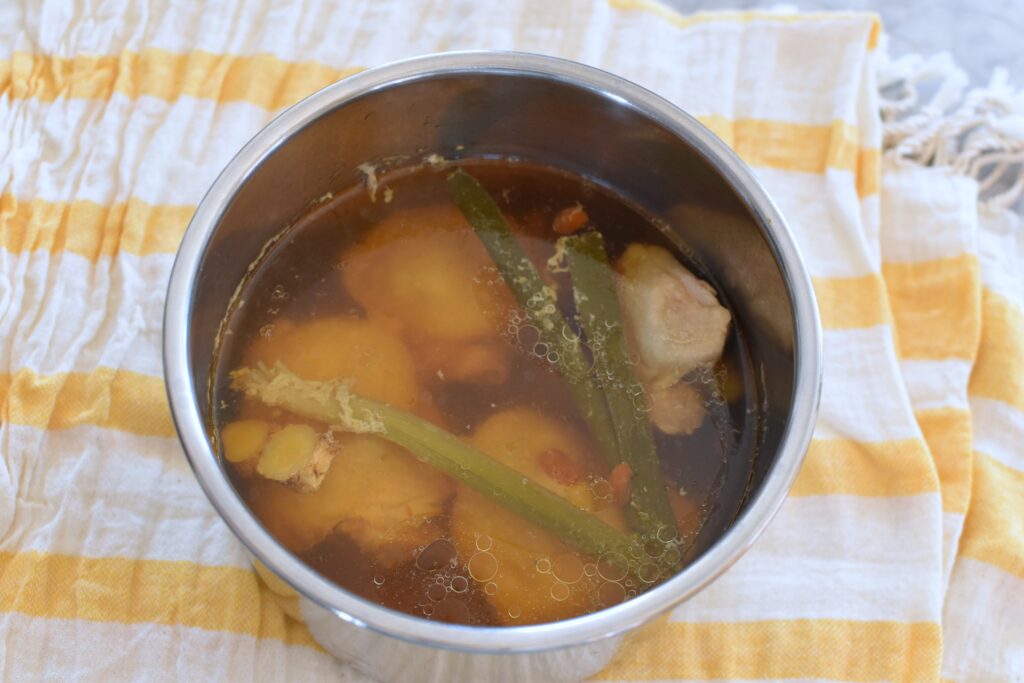
Now, step away and let the pot do the work. Once the cooking cycle is complete, allow the pressure to release naturally for 20 to 40 minutes. This slow release keeps the chicken incredibly tender and prevents the broth from aggressively boiling and clouding up inside the pot.
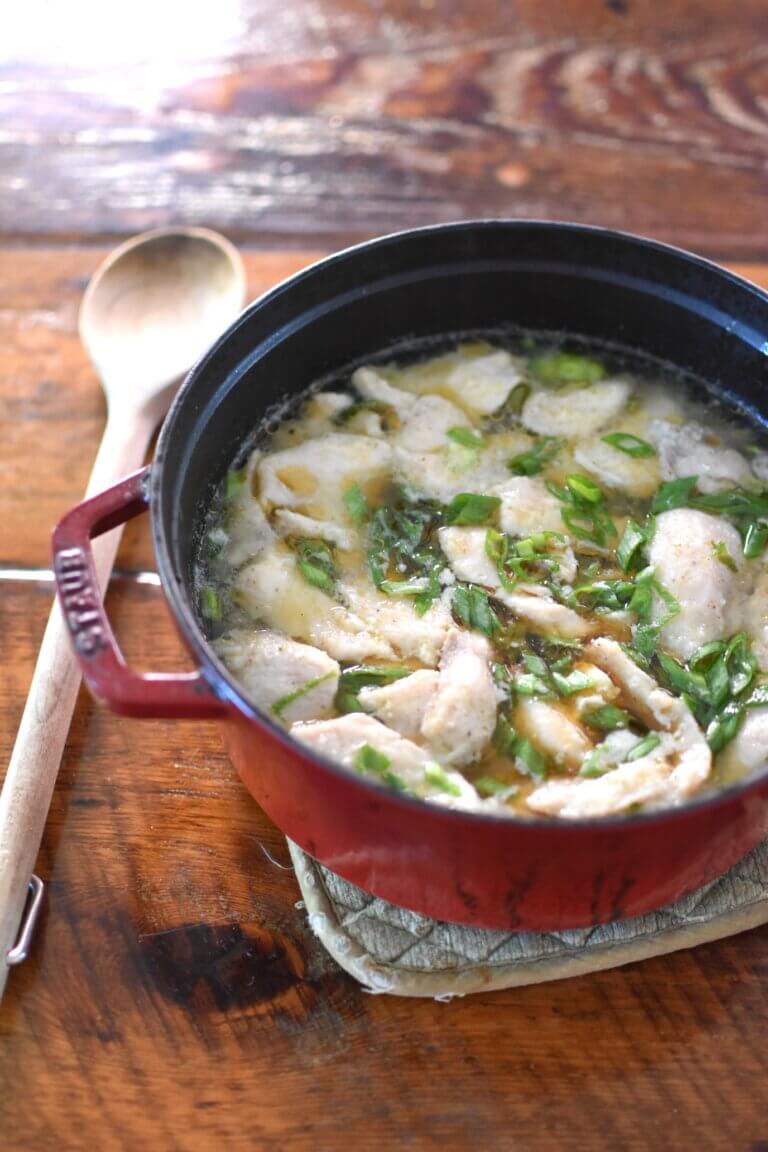
When you open the lid, you will be greeted by a beautiful, shimmering golden color!
3. Debone the Chicken and Serve the Healing Chicken Bone Broth
Strain the liquid to remove the aromatics and the bones. The broth can be served immediately over several meals.
Because the chicken thighs will be fall-off-the-bone tender, you can easily shred the meat with two forks. Add it back into the broth for a protein-heavy meal, or save it separately for cold salads during the week.
Freezer Tip
If you’re pregnant and batch-freezing, I actually recommend making my mom’s traditional postpartum soup since it makes a greater quantity of soup and meat. Either way, if you have leftovers from making this recipe, freeze small portions in freezer quart bags or glass jars with one inch of headspace. Glass jars make it really easy to reheat in the microwave.

Instant Pot Herbal Chicken Soup
Equipment
- 1 pressure cooker e.g., Instant Pot
Ingredients
- 1.5 lb bone-in, skin-on chicken thighs
- 3-5 dried dates optional
- 1 piece astragalus root optional, about 10 g
- 10-12 goji berries optional
- 1 slice fresh ginger
- 1 sprig fresh scallion
- water (enough to cover chicken by 1 inch)
- sea salt to taste
Instructions
- Prep & Aromatics: Place 1.5 lbs bone-in chicken thighs in the Instant Pot. Submerge in cold water (approx. 1 inch above meat) and add ginger, scallions, and functional aromatics (astragalus, red dates).
- Pressure Cook: Secure the lid and cook on High Pressure for 45 minutes.
- Natural Release: Allow a natural pressure release for 20–40 minutes.
- Finish & Serve: Strain the broth to remove aromatics. Shred the fall-off-the-bone chicken to add back into the soup or save for future protein-heavy meals. Add goji berries just before serving for an antioxidant boost.
Notes
FAQ
Does pressure cooking destroy the nutrients in bone broth?
No — the collagen, gelatin, and amino acids that make bone broth valuable are heat-stable, and pressure cooking extracts them from bone and connective tissue even more efficiently than simmering. Heat-sensitive vitamins like vitamin C degrade with any long cooking method, pressure or not, which is one reason whole foods alongside the broth matter more than the broth alone.
Should I use natural release or quick release?
Natural release, for 20–40 minutes. Quick-releasing a full pot of broth causes violent boiling inside the pot, which clouds the broth and can spray liquid through the valve. The wait also carries the chicken to fall-apart tenderness.
Can I use frozen chicken thighs?
Yes — add about 5 extra minutes at high pressure and expect a slightly longer time coming to pressure. No thawing needed, which makes this genuinely a zero-prep recipe on the hardest days.
When can I start drinking this after giving birth?
The traditional guidance is to hold herbal tonic soups until about day 4–7, after the heaviest lochia has passed — within the tradition, warming herbs too early are believed to increase bleeding. The first few days call for plainer, gentler foods; I map out exactly what to eat when in my confinement food recipes by recovery phase.
Can I double this recipe in my Instant Pot?
In an 8-quart Instant Pot, yes — 3 pounds of thighs, water still just an inch over the meat, same 45 minutes (pressure cooking time doesn’t scale with volume; only the time to reach pressure lengthens). In a 6-quart, stay under the max-fill line, which usually means about 2 pounds.

4 Comments