

This postpartum congee recipe is a sitting the month staple, and I developed this version to let your Instant Pot do all the work. You do not need chicken stock for this. Other recipes call for boxed broth. Skip it. Bone-in, skin-on drumsticks simmering under pressure ARE the stock. The bones, skin, and connective tissue release their gelatin and flavor directly into the pot. (I also have an easy Instant Pot chicken soup recipe that you’ll love that also uses chicken thighs or drumsticks!)
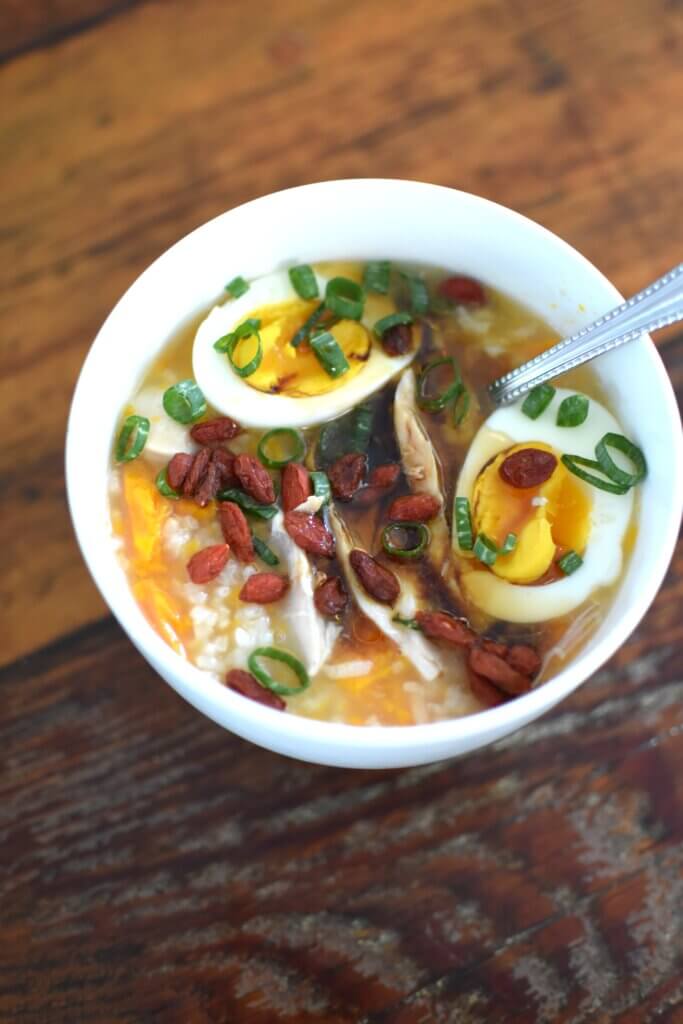
Why Sweet Potato Congee Works for Early Postpartum
In zuo yue zi (坐月子, “sitting the month”), congee is one of the classic first foods after birth. Traditionally, it’s considered warm, easy on a body that has just done enormous work, and gentle on digestion.
Here’s how sweet potato congee helps you in the first weeks after birth.
- Congee is high-moisture and soft, which matters when postpartum appetite is low, when you’re recovering from a cesarean, or when constipation is making you dread every meal. Fluid needs also climb during lactation, about 3.8 liters a day for breastfeeding women, and that figure counts the water in your food, not just what you drink. A bowl of congee is food and fluid at once.
- Sweet potato A 100g serving of boiled sweet potato provides around 60% of the 1,300 mcg RAE a breastfeeding woman needs in a day. Lactation is the highest vitamin A requirement of any adult life stage, higher even than pregnancy. Sweet potatoes bring gentle fiber too, about 2.5g per 100g, important in those first weeks to get the bowels moving.
- Chicken, cooked on the bone gives you protein for tissue repair, and dark meat specifically contributes iron and zinc. If iron is on your mind postpartum — and after birth, it should be — I wrote a full guide to iron-rich foods for postpartum recovery.
- Goji berries (gou qi, 枸杞) are traditionally said to nourish the Liver and Kidney systems and brighten the eyes. That’s the traditional claim, and I’m presenting it as one. They contribute carotenoids and a little natural sweetness. Unfamiliar with goji berries? Read more about what they are and where to find them.
- Ginger and scallion are the standard aromatic pair in Chinese confinement cooking — traditionally warming, and used here in small amounts. One slice of ginger is enough.
Check out my guide to postpartum recipes by phase of recovery for more recipes for early postpartum!
Sweet Potato Congee Instructions
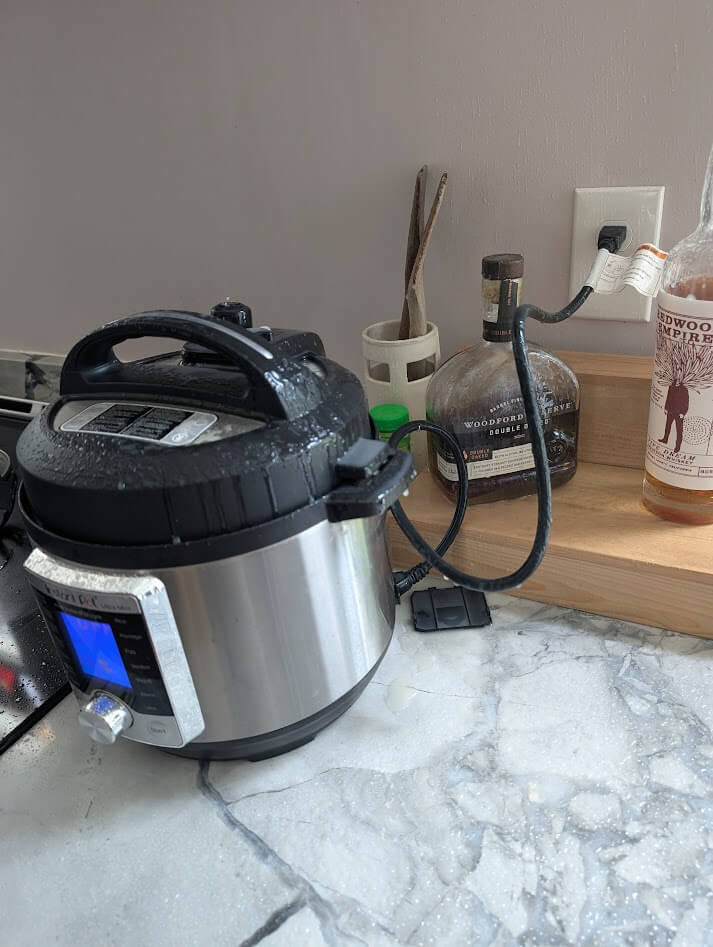
This recipe is simple. Just make sure you do natural release at the end. Don’t get impatient like I sometimes do; quick releasing congee in a pressure cooker makes a big mess!!
1. Load the Pot
After chopping the sweet potato into large (about 2 inch) pieces and rinsing the rice, load the pot. Add the water, rice, cubed sweet potato, drumsticks, ginger, and whole scallion to the Instant Pot.
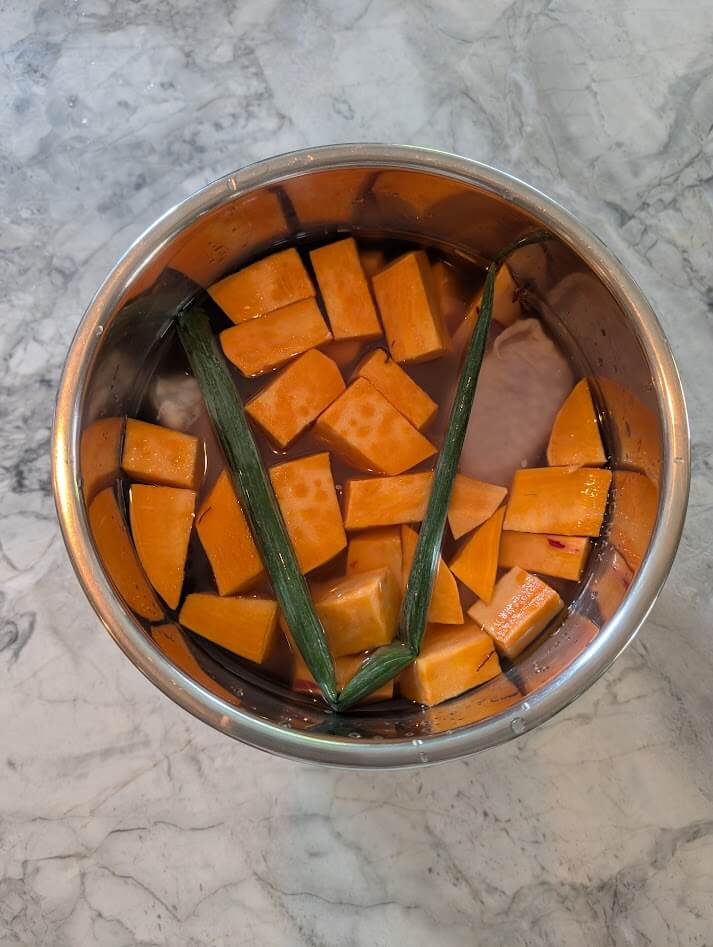
Use bone-in, skin-on drumsticks. This is not optional if you want the broth to taste like something.
2. Pressure Cook
Seal the lid and cook on High Pressure for 30 minutes.
3. Natural Release. Really.
I tried quick release once. Starchy congee foam sprayed out of the valve like a geyser. Congee is thick and full of starch, and it does NOT want to be rushed. Walk away, feed the baby, come back when the pin drops, about 20-25 minutes.
4. Shred and Season
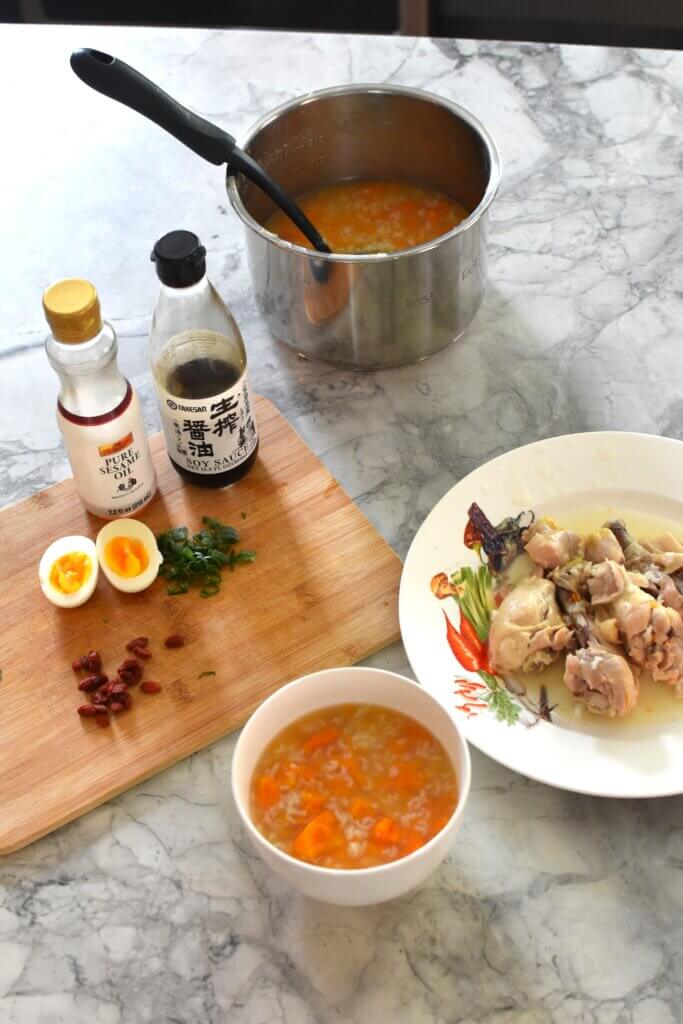
Remove the drumsticks, ginger, and scallion. Shred the chicken off the bone — the skin and bones can go — and stir the meat back into the pot. Salt to taste.
5. Garnish and Enjoy the Sweet Potato Congee
This is where the bowl comes together. Goji berries, sliced scallion, a soft-boiled egg, a drizzle of soy sauce, a drizzle of toasted sesame oil (skip the soy sauce in the first week postpartum if you’re trying to keep things plain and lightly seasoned; Asian confinement culture often suggests keeping foods plain in the first week). The goji and sweet potato lean sweet; the soy and sesame oil lean savory and deep. Don’t skip the garnishes; plain congee is a canvas, and this is the paint.
Make-Ahead Note
Congee thickens dramatically in the fridge. It’ll set up almost like rice pudding. Just loosen it with a splash of water when reheating — it comes right back. Add the egg and garnishes fresh each time.
Recipe
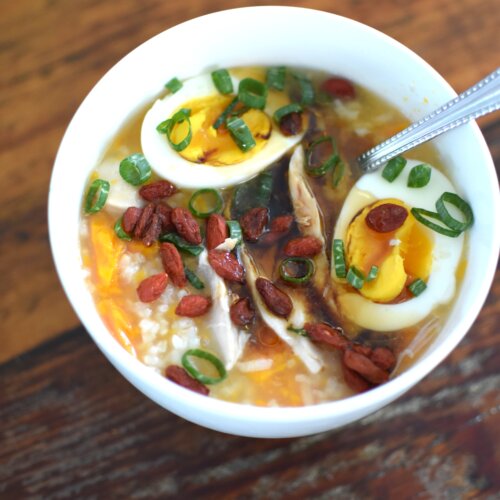
Instant Pot Chicken and Sweet Potato Congee
Equipment
- 1 Pressure cooker (e.g., instant pot)
Ingredients
- 300 g sweet potato, peeled and cut into large cubes about 1 small-medium sweet potato
- 5 cups water
- 3/4 cup medium grain rice
- 4 bone-in,skin-on chicken drumsticks
- 1 slice fresh ginger
- 1 scallion
- salt to taste
- Garnishes: goji berries, sliced scallion, soft-boiled egg, soy sauce, sesame oil (or any garnishes of your choice)
Instructions
- Rinse and chop: Measure and rinse the rice, and chop the sweet potato into large pieces (about 2-3 inches).
- Load: Add water, rice, sweet potato, drumsticks, ginger, and the whole scallion to the Instant Pot.
- Cook: Seal and cook on High Pressure for 30 minutes.
- Release: Allow a full natural release. Do not quick release — the starchy congee will spray from the valve.
- Shred: Remove the chicken, ginger, and scallion. Shred the meat off the bones and stir it back in.
- Season: Salt to taste.
- Serve: Top each bowl with goji berries, scallion, an egg, soy sauce, sesame oil, or any garnishes of your choice.
Notes
Pregnant and planning for postpartum? Download my free postpartum nutrition guide and check out my other postpartum recipes!
FAQ
Is sweet potato congee good for postpartum recovery?
Yes, it’s one of the most practical early postpartum meals I know. The soft texture is easy to eat and digest, the high fluid content supports hydration during lactation, and sweet potato adds beta-carotene and fiber. In traditional Chinese confinement practice, congee is a classic first food after birth.
Can I make this congee without chicken? Is there a vegetarian version?
Yes, in Taiwan, sweet potato congee is often just rice and sweet potato, no meat. Plain rice and sweet potato congee is a wonderful first food postpartum because it’s so gentle. I added the chicken to make the bowl more savory for a Western palate, but the congee stands without it, and may even be better for those first days postpartum when you need something really plain and gentle. If you skip the chicken, cut the sweet potato into smaller pieces and simmer everything on the stovetop for about 30 minutes instead, no pressure cooker needed.
Can I use the Instant Pot porridge function?
Sure, you can use the porridge function, or do 30 minutes at high pressure. Either way, natural release.
Do you need to rinse the rice first?
I do, but you don’t have to. Rinsing washes off some surface starch and gives a slightly cleaner-tasting congee. My mom always rinses rice in case of pesticide residue.
What kind of rice is best for congee?
We use a medium grain rice like calrose. Sushi rice works too.
Can I use chicken breast instead of drumsticks?
I don’t recommend it. Bone-in, skin-on dark meat is what turns the cooking water into broth. The bones and connective tissue release gelatin and flavor under pressure. Breast meat also dries out and turns stringy. Bone-in thighs work too.
Why can’t I quick release congee in the Instant Pot?
Because congee is thick with rice starch, quick releasing forces that starchy liquid up through the valve. It sputters, foams, and sprays. I learned this the hard way. A natural release takes about 20–25 minutes and keeps your kitchen clean.
How long does congee keep?
3–4 days refrigerated in an airtight container. It thickens as it chills — loosen with water when reheating and bring it fully back to a simmer. Add fresh garnishes each time.
References
Here are the sources I referenced when researching the scientific information in this post.
- U.S. Department of Agriculture, Agricultural Research Service. Sweet potato, cooked, boiled, without skin, without salt. FoodData Central, FDC ID 168484. https://fdc.nal.usda.gov/food-details/168484/nutrients
- National Institutes of Health, Office of Dietary Supplements. Vitamin A and Carotenoids — Fact Sheet for Health Professionals. https://ods.od.nih.gov/factsheets/VitaminA-HealthProfessional/
- Institute of Medicine. Dietary Reference Intakes for Water, Potassium, Sodium, Chloride, and Sulfate. Washington, DC: The National Academies Press; 2005. https://www.nationalacademies.org/read/10925/chapter/6
- Vidović, B. B., et al. (2022). Health Benefits and Applications of Goji Berries in Functional Food Products Development: A Review. Antioxidants, 11(2), 248.
Did you make this recipe?
We’d love to hear about it in the comments!
2 Comments