There’s something quietly beautiful about how ginger vinegar enters a family’s life. In many Cantonese households, the pot is started before the baby arrives: ginger scraped and dried, then simmered slowly with sweet black vinegar and set aside for days to deepen, so that the base is ready and waiting when the new mother comes home to add the pork and eggs. From there, the ginger vinegar pork knuckle (or ginger vinegar pork trotter, in its more traditional form) becomes a kind of hearth — reheated and ladled out through the long, sleep-thin days, a warm and steadying thing for a mother in zuo yue zi to return to whenever hunger strikes. And it isn’t only for her: around twelve days after the birth, families traditionally share this stew with relatives and friends to announce the baby — and the hard-boiled eggs soaking in the dark vinegar carry their own meaning, a symbol of new birth. Note: in traditional practice, the pot is left out at room temperature and reboiled daily for weeks. This doesn’t meet modern food-safety guidance, lovely as the ritual is — keep it refrigerated and reheat it thoroughly.
I would be remiss not to include ginger vinegar pork knuckle in my confinement foods recipe compendium, as it is THE confinement food for many Cantonese people. This recipe comes from a family friend, Catherine Cao. (Papaya milk tong sui is another classic Cantonese confinement food suggested by her).
But I’ll be honest with you because I’d rather you go in with clear expectations than be caught off guard. This is a polarizing dish. When I made it, the sauce was syrupy-sweet, the long-soaked eggs turned firm and almost leathery, and the candied ginger was my favorite part. It takes two days to make, and the sweet vinegar can be hard to find. Luckily, my mom notes: the ginger and the vinegar are the parts that matter most to eat. If you make this, you’re making it for what it represents and what the beautiful tradition says it does for a recovering body. Eat the ginger. Sip the ginger vinegar. Eat the pork, maybe you want to leave out the eggs.
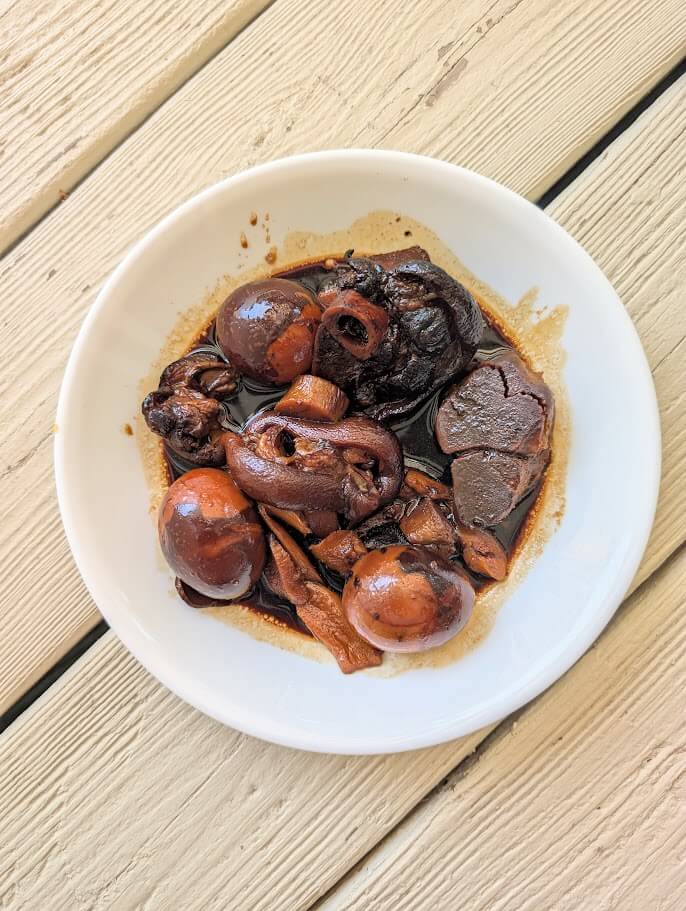
Plan ahead: The entire preparation requires two days and two nights. Most of that time is hands-off steeping and infusing flavor.
Note: Sit the Moon’s mission is to develop easy and accessible recipes for new moms based on traditional postpartum meals. I wouldn’t necessarily consider this recipe to be easy, and the special vinegar it requires can be difficult to find. I am sharing this recipe since it is an important cultural tradition to many, especially those with a Cantonese background. If you would be interested in seeing an Instant Pot ginger vinegar pork knuckle recipe that uses standard black vinegar, please let me know in the comments. If there’s enough interest, I’ll develop it.
Why This Dish Has Been Made for New Moms for Centuries
姜醋蹄膀鸡蛋 — ginger and black vinegar braised pork knuckle with eggs — is one of the most popular dishes in Cantonese zuo yue zi tradition. It is served hot with rice as a deeply satisfying postpartum meal, and many families also keep a pot available for the new mom to snack on throughout the day whenever hunger strikes.
As my mom writes: “Postpartum bodies are often deficient and prone to blood stasis. This dish is able to combine the effects of replenishing qi and blood, dispelling wind and cold, promoting milk flow, and supporting the body’s recovery — all within a single recipe, achieving these effects simultaneously and quickly.”
The dish combines four ingredients, each chosen for a specific purpose: ginger warms the middle and disperses cold; sweet black vinegar activates blood circulation and resolves stasis; pork knuckle nourishes blood and promotes lactation; and eggs nourish yin and replenish blood.
The Science Behind the Tradition
Functional Ingredients
Sweet Black Vinegar — the backbone of the dish. In TCM, as my mom explains, vinegar promotes blood circulation and helps resolve blood stasis (瘀血), which is central to how the tradition understands postpartum recovery. You’ll also hear it said — including in many recipe write-ups — that the vinegar leaches calcium out of the pork bones to help rebuild a new mother’s depleted stores. Here I’ll put on my dietitian hat: the evidence doesn’t really support that one. The calcium that actually makes it into vinegar-and-bone braising liquid is small — research puts bone broth at a fraction of the calcium in a glass of milk — and long acid cooking can also pull trace heavy metals from the bones. So I wouldn’t count on this dish for calcium. Where it genuinely delivers is collagen, gelatin, and protein from the pork, plus the warming, circulation-supporting qualities of ginger and vinegar. If rebuilding calcium stores is your goal, dairy, calcium-set tofu, leafy greens, and small fish eaten with their bones are far more reliable sources.
Mature Ginger (老姜) The recipe calls for mature ginger specifically, which is the kind you would typically find in an American supermarket (compared to fresh ginger that you might find at a farmer’s market in season). Mature ginger has a more concentrated warming effect, which in TCM helps expel cold and dampness from the postpartum body. The preparation step — dry-frying the ginger slices without oil until slightly golden — is the most important technique in the entire recipe. As my mom explains: “This step removes the pungent harsh quality, making the ginger taste like a soft chewy snack.” After the long braise, the ginger is meant to be eaten along with the pork and eggs. Clinically, ginger supports circulation and has shown promise for reducing menstrual cramping in studies, though it hasn’t been well studied specifically for postpartum recovery.
Pork Knuckle (蹄膀) Rich in collagen, protein, and the gelatin that gives the braising liquid its characteristic silky texture. The collagen breaks down during the long braise into gelatin and amino acids, supporting connective tissue repair. After childbirth, the body’s connective tissues — the pelvic floor, the uterine lining, the abdominal wall — are in active repair. The amino acid glycine, abundant in collagen-rich cuts, plays a direct role in this process.
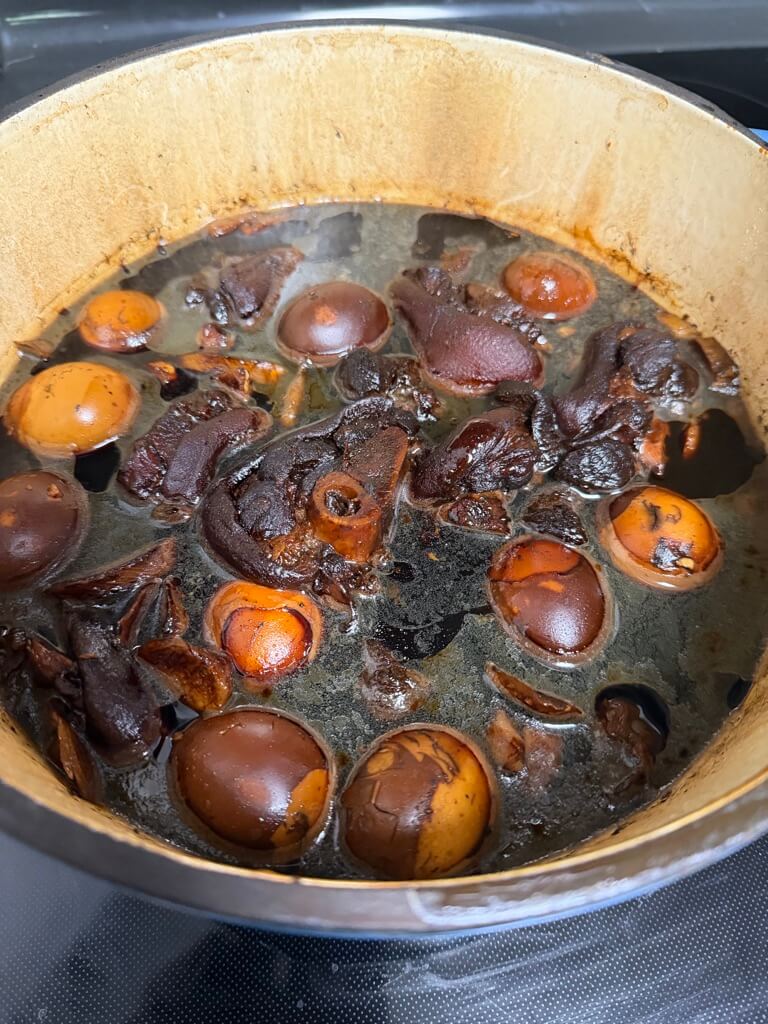
Eggs (鸡蛋) In TCM, eggs nourish yin and replenish blood. Clinically, eggs are one of the most complete proteins available, providing all essential amino acids as well as choline — critical for postpartum brain health and infant development through breastmilk — and iron. The eggs absorb the vinegar and ginger over time, turning a deep mahogany color and developing the firm, bouncy texture Cantonese cooks call tiě dàn (铁蛋) — “iron eggs.” Check out my iron-rich foods guide for more information about iron. Traditionally they’re prized as one of the most nourishing parts of the dish, though as I mentioned up top, the leathery texture wasn’t my personal favorite — if you feel the same, you’re in good company, and you can always soak them more briefly.
Choosing Your Ingredients
The Vinegar
For Catherine’s classical Cantonese version: 海天添丁甜醋 (Haitian Tianding Sweet Vinegar) — available at some Asian supermarkets. My mom found this version from the brand Pearl River Bridge at her local Asian supermarket:
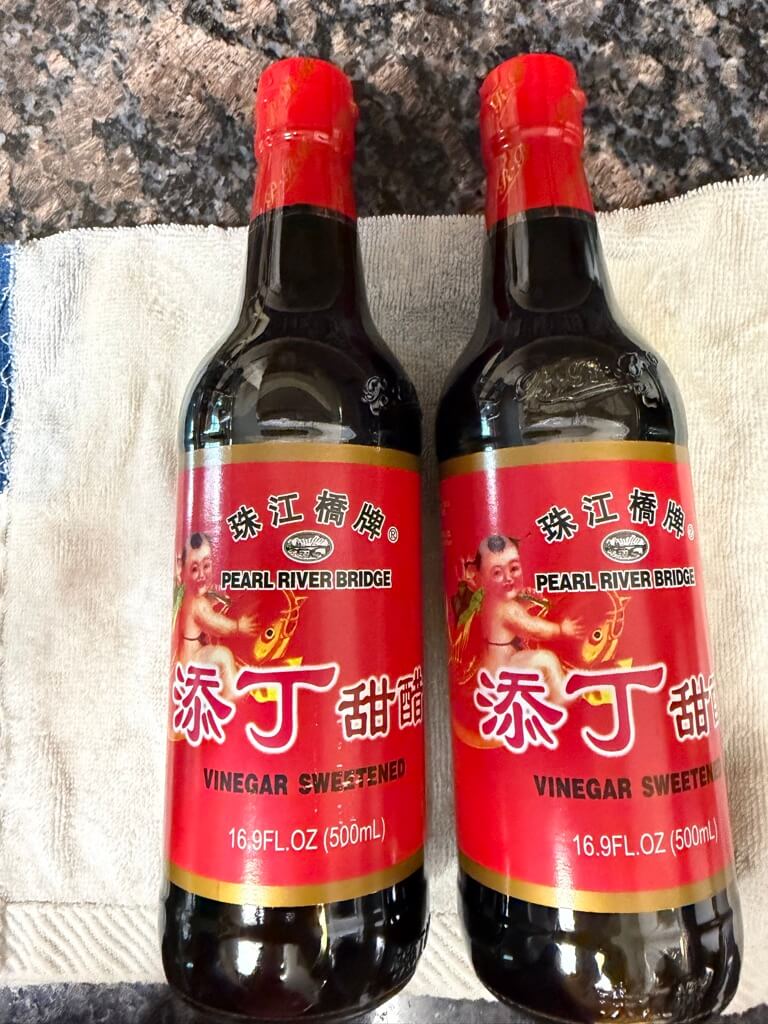
My mom suggests Italian balsamic vinegar from Costco as a surprisingly good substitute with a similar sugar content — it produces a beautiful dark color without needing soy sauce. (Note: I have not tried this)
I am testing out alternatives to using Tianding sweet vinegar, with ingredients that are easier to source. Please join my mailing list if you would like to be notified when the recipe is published.
The Pork
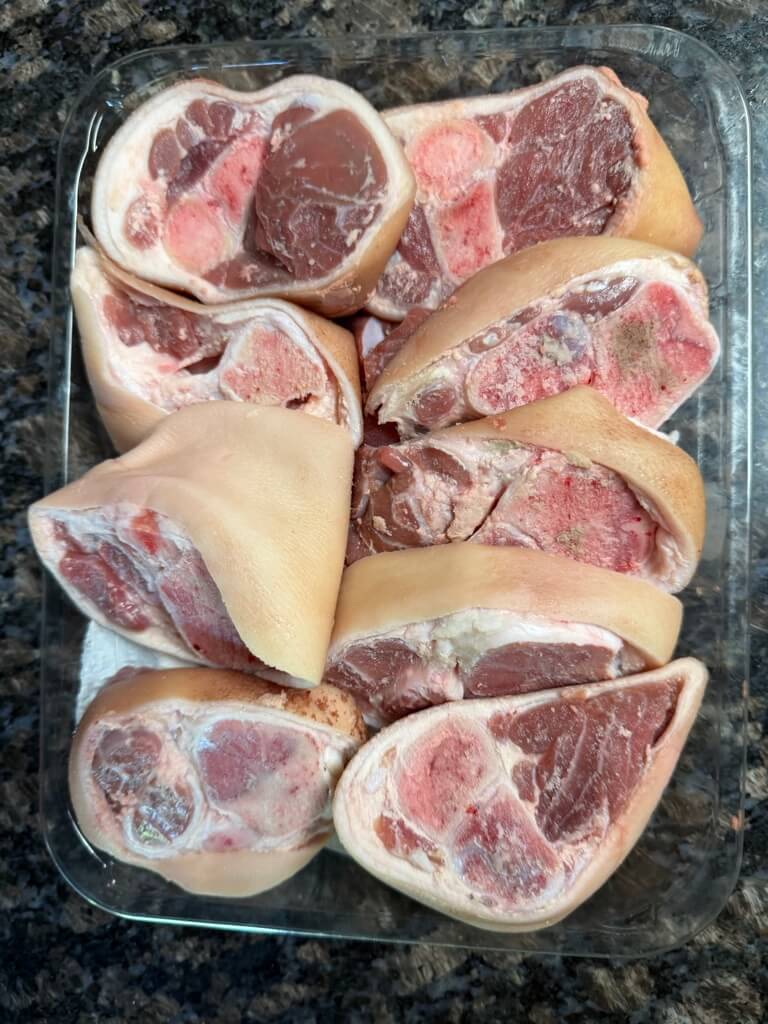
Ask for pork knuckle or pork hock at your butcher counter — the section between the ham and the trotter, meaty and collagen-rich. Wegmans carries it regularly. For Catherine’s classic version, ask for front pig trotters (前蹄), which have more collagen than hind trotters.
The Ginger
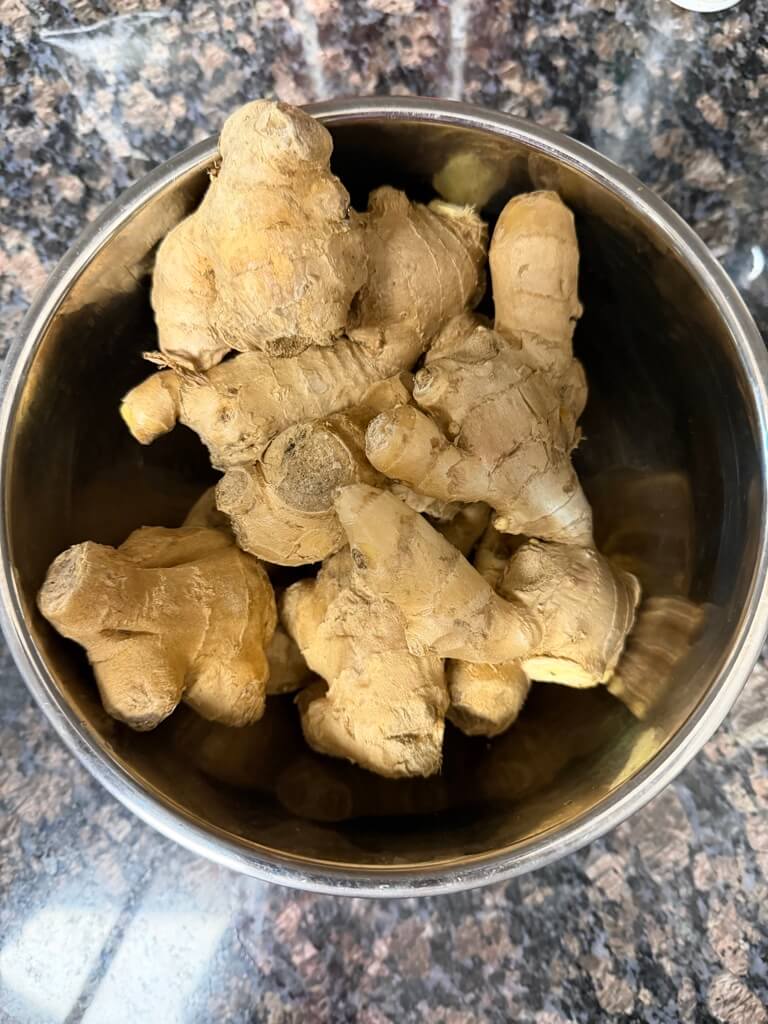
Use mature ginger (老姜) — slightly shriveled with thin skin, available at most supermarkets.
The Cooking Vessel
Use a clay pot (砂锅), enamel-coated Dutch oven, or stainless steel pot. Avoid unseasoned cast iron and aluminum — the high concentration of vinegar and long soaking time can strip the seasoning and impart a metallic flavor. My mom recommends the enamel-coated Dutch oven: “Its thick enamel coating makes it resistant to vinegar soaking, and its heat conduction and retention is comparable to a clay pot. Beyond braising soups, you can also use it to bake bread with an ancient-style flavor.”
Instructions
This recipe takes two days. Day one is active cooking; day two is the rewarding part.
Step 1: Make the Ginger Vinegar (Day 1)
Peel the ginger and cut into thick slices. Without any oil, add to a flat-bottomed skillet over low heat. Cook slowly, turning occasionally, until the surface is lightly golden and the moisture has evaporated — about 10-15 minutes. Do not rush; burned ginger will make the whole dish bitter.
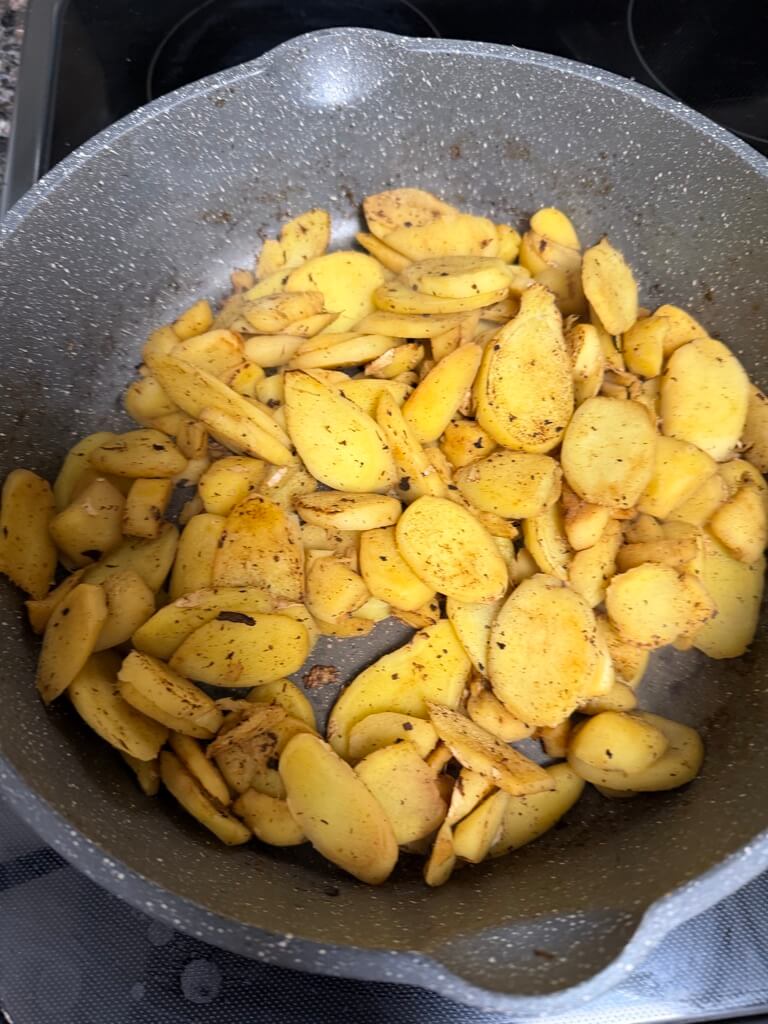
In your Dutch oven or clay pot, combine the vinegar and dry-fried ginger. Bring to a boil, then reduce to low heat and simmer for 30 minutes. Turn off the heat. For best results, allow the ginger to steep in the vinegar overnight — this allows the flavors to fully integrate.
My mom’s tip: Some Cantonese families prepare the ginger vinegar base two weeks before the baby’s due date so it’s ready the moment mom comes home from the hospital.
Step 2: Blanch the Pork (Day 2)
Place the pork knuckle in a separate pot. Cover with cold water. Bring to a boil and simmer for 3 minutes. Drain, rinse under cold water, and pat completely dry with paper towels.
Important: No moisture should enter the pot at any stage. Wipe the pork knuckle dry with paper towels before adding to the pot.
Step 3: Braise
Bring the ginger vinegar base back to a boil. Add the blanched, dried pork knuckle. Ensure the vinegar covers all the ingredients — add more if needed. Reduce to the lowest possible heat and braise for 40-60 minutes, until you can pierce the pork easily with a chopstick.
Dutch oven oven method (my mom’s recommendation): After bringing to a boil on the stovetop, cover and transfer to a 275°F (135°C) oven for 3 hours, turning once halfway through. As my mom writes: “The oven’s constant temperature environment mimics the effect of a clay pot in a charcoal fire — the most even heat distribution.”
Step 4: Add the Eggs and Soak
Soft boil your eggs (about 7 minutes), soak them in cold water or an ice bath, and peel them completely. Add to the pot. Bring everything back to a boil, then turn off the heat. Cover tightly and allow to cool completely, then refrigerate overnight.
Step 5: Enjoy! (Day 3)
The next day, reheat gently before serving. The eggs and pork should be a deep, dark mahogany. The longer the eggs sit, the more flavorful and bouncy they become. Enjoy over rice as a meal, or as a snack throughout the day. Based on a daily consumption of 3-4 eggs, the new mother can enjoy it for 4-5 days. Keep refrigerated and reheat gently before serving.
When to Start Eating It Postpartum
Wait until at least two to three weeks postpartum. Unlike herbal chicken soup, which can be introduced in the first week, this dish is potent. The vinegar’s blood-activating properties are beneficial once lochia has largely cleared — which typically happens around two weeks postpartum. Introducing it before lochia has cleared may increase bleeding.
Who should be cautious:
- Those with acid reflux or excess stomach acid
- Those with a cold, fever, or hot constitution in TCM terms
- Anyone with blood sugar concerns (the sweet vinegar has a high sugar content)
As always, consult your healthcare provider about your specific postpartum dietary needs.
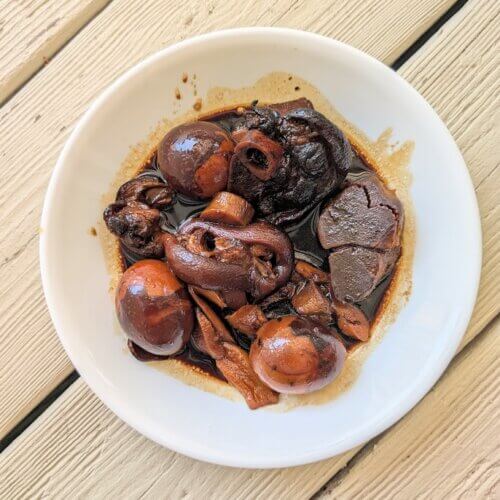
Ginger Vinegar Pork Knuckle Braised with Eggs
Equipment
- 1 enamel-coated dutch oven or stainless steel pot
Ingredients
- 500 grams ginger peeled and sliced
- 10 eggs hard boiled and peeled
- 1 pork knuckle/hock approximately 1,000 g
- 2 bottles Haitian Tianding vinegar approximately1500-2000ml, enough to cover the ingredients
Instructions
- Make the ginger vinegar: Without oil, dry-fry ginger slices over low heat until lightly golden, about 10-15 minutes. Combine with vinegar in your pot, bring to a boil, simmer 30 minutes. Steep overnight if possible.
- Blanch the pork: Cover pork with cold water, bring to a boil, simmer 3 minutes. Drain, rinse, pat completely dry.
- Braise: Bring ginger vinegar to a boil. Add dried pork. Reduce to lowest heat and braise 40-60 minutes until chopstick-tender.
- Add eggs and soak: Add peeled hard-boiled eggs. Bring to a boil, turn off heat, cool completely. Refrigerate overnight.
- Serve: Reheat gently. Serve hot with rice. Begin with broth and eggs; add pork once you confirm tolerance.
Notes
FAQ
Can I use Zhenjiang black vinegar instead of sweet vinegar?
Haitian Tianding vinegar is much sweeter than Zhenjiang vinegar. I suspect that we could approximate Tianding vinegar using Zhenjiang vinegar, water, sugar, and spices, but I have not experimented with it yet. After I experiment, I will report back and post an updated recipe.
Can I make ginger vinegar pork knuckle in an Instant Pot?
Again, I hypothesize yes but have not experimented yet. Will report back.
Can I eat ginger vinegar pork knuckle if I am diabetic?
I would avoid it. The vinegar used has a high sugar content. There are other great postpartum recipes you can try instead, that also have a high collagen content but less sugar, such as my herbal chicken soup.
What’s the difference between pig trotters and pork knuckle?
Pig trotters are the actual feet — more collagen, more bones, more gristle. Pork knuckle (蹄膀) is the meaty section just above the foot, also called pork hock. More meat, easier to find, and the flavor and healing properties are similar.
Did you make this recipe?
Please leave a comment below! And let us know if you’re interested in seeing a version using Zhenjiang vinegar and an Instant Pot.