

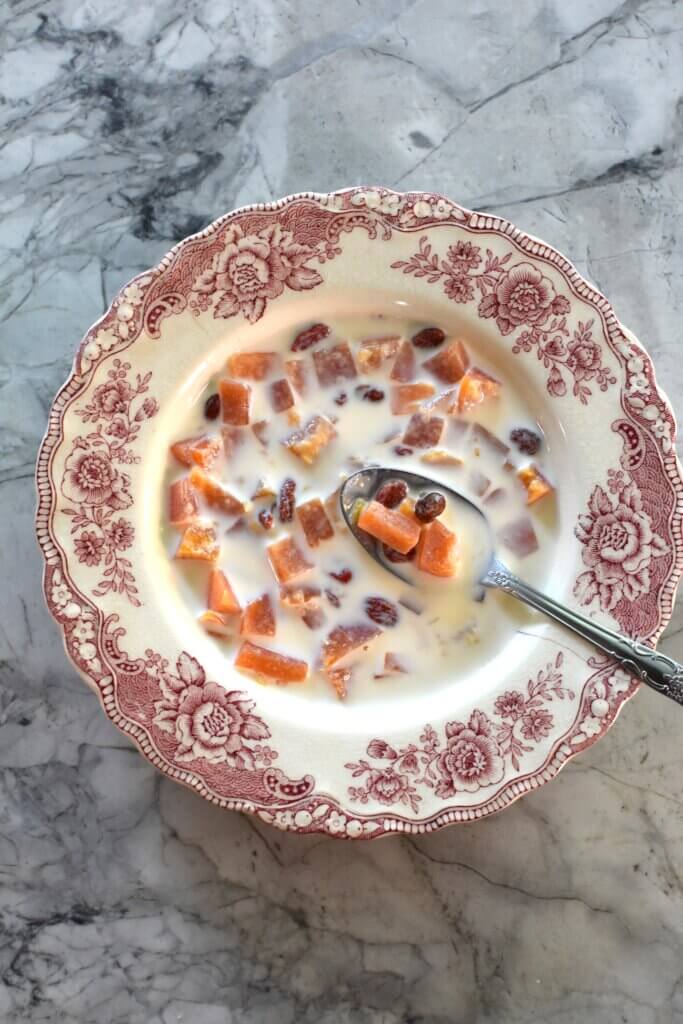
Our family friend Catherine first told us about a Cantonese confinement tradition: warm papaya cooked with milk, meant to support breast milk supply during the postpartum period. It’s a common food for zuo yue zi — “sitting the month,” the traditional 30-to-40-day Chinese postpartum confinement period — served warm, since cold and raw foods are usually avoided during recovery.
The traditional method cooks the papaya in water first, then adds milk at the end. When I tried it that way, though, two things bothered me. The water diluted the milky flavor I was after. And the classic double-boiling method takes 30 to 40 minutes of hands-on attention — a lot to ask of anyone in the early weeks with a newborn.
So I set out to make something easier. This version steams the diced papaya right in the microwave, then finishes with fresh milk and a spoonful of sweetened condensed milk at the end. The whole thing takes about 8 minutes, skips the watery dilution entirely, and comes out richer and more milky than the boiled version. Goji berries add a pop of color and natural sweetness. This dessert is known in Cantonese as a tong sui (糖水): a warm, lightly sweet soup.
A Note on Papaya Varieties (This Matters)
Here’s something I learned the hard way. Most American grocery stores carry the large Mexican (Maradol) papaya — the giant, oblong ones that can weigh several pounds. These are starchier, earthier, and less sweet than the small Hawaiian or Asian “Solo” papayas, which are floral and much sweeter.
I couldn’t find the smaller Asian variety at my local store, so I developed this recipe to work with the Mexican papaya most Americans can actually buy. The condensed milk does a lot of the heavy lifting here — it smooths over the starchier Mexican papaya’s flavor in a way plain milk doesn’t.
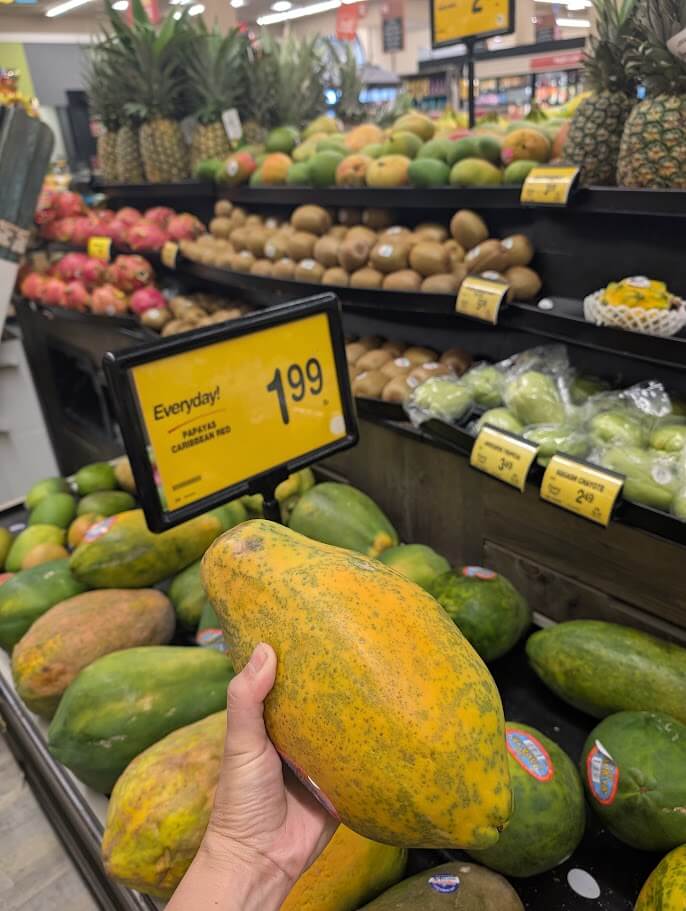
If you can find a small Hawaiian or Asian papaya, use it, and cut the condensed milk back to 1 tablespoon. If you’re working with a Mexican papaya, choose a smaller, very ripe one — the skin should be mostly yellow and give slightly when you press it.
Health Benefits of Papaya During Postpartum Recovery
The Traditional Belief: Papaya Supports Lactation
In Cantonese confinement food culture — and in traditional practice across parts of India, Melanesia, Angola, and Indonesia — people have long used papaya as a galactagogue: a food many believe supports milk production, possibly by increasing prolactin.
What the Research Shows
According to the National Institutes of Health’s Drugs and Lactation Database (LactMed), no scientifically valid clinical trials support papaya fruit or papaya leaves as a galactagogue. Researchers haven’t studied whether any component of papaya passes into breastmilk. They also haven’t studied papaya’s safety or effectiveness for nursing mothers or infants. That doesn’t mean papaya doesn’t help — it just means the research isn’t there yet.
If you’re looking to support your milk supply, this papaya milk dessert can be a nourishing, comforting part of your postpartum diet. But it shouldn’t replace a conversation with a lactation consultant or your doctor about what’s actually affecting your supply.
Where the Evidence Is Stronger: Your Body Absorbs Papaya’s Vitamin A Well
Papaya is rich in carotenoids — plant pigments like beta-carotene and beta-cryptoxanthin — which your body converts into vitamin A. One study put this to the test. Sixteen healthy adults ate papaya, carrots, and tomatoes, each in a random order, so every person tried all three. Researchers then measured how much of these carotenoids actually reached the bloodstream. Papaya’s carotenoids came out far ahead (Schweiggert et al., 2014). Your body absorbs beta-carotene roughly three times more efficiently from papaya than from carrots or tomatoes.
Why the difference? It likely comes down to how the fruit stores these pigments. Papaya holds them in a looser form that’s easier for your body to break down and use. Carrots and tomatoes store them in a denser form instead.
This lines up with a separate trial in breastfeeding women. Eating pureed papaya actually raised their vitamin A levels (NICHD, 2025).
Allergy Note
Allergic reactions to papaya — including asthma symptoms and skin rashes — aren’t uncommon, and papaya can cross-react with latex and kiwi allergies. If you or your baby has a latex allergy, it’s worth discussing papaya with your doctor before adding it to your routine.
Are you pregnant or postpartum and looking for nutrition information? Sign up for my mailing list to download my free postpartum nutrition guide, written by an RD and peer reviewed by an OB/GYN and an RD!
How to Make Papaya Milk Dessert in the Microwave
Step 1: Choose and dice your papaya.
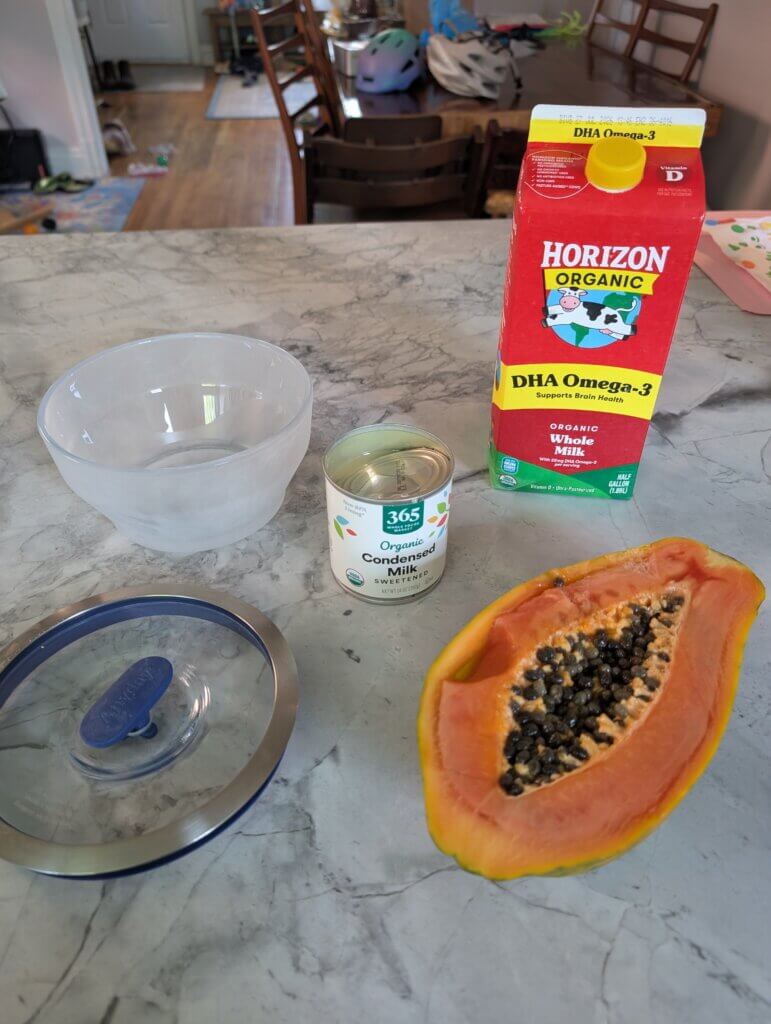
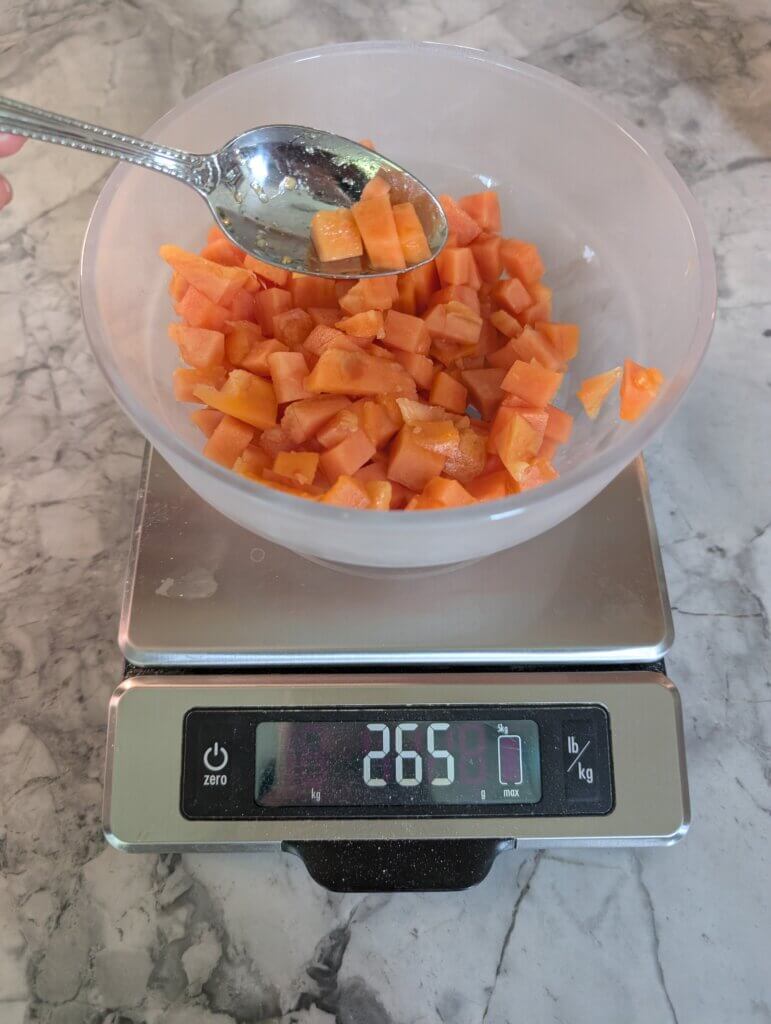
Pick your papaya using the variety guidance above. Peel it, scoop out the seeds, and dice the flesh into tiny 1cm cubes — think of the size as cereal in milk. You’ll want about 260g of diced papaya.
Step 2: Microwave the papaya.
Place the diced papaya in a microwave-safe bowl with a lid. Microwave on high for 6 minutes. The papaya will soften and steam in its own moisture.
Step 3: Add the milk, condensed milk, and goji berries.
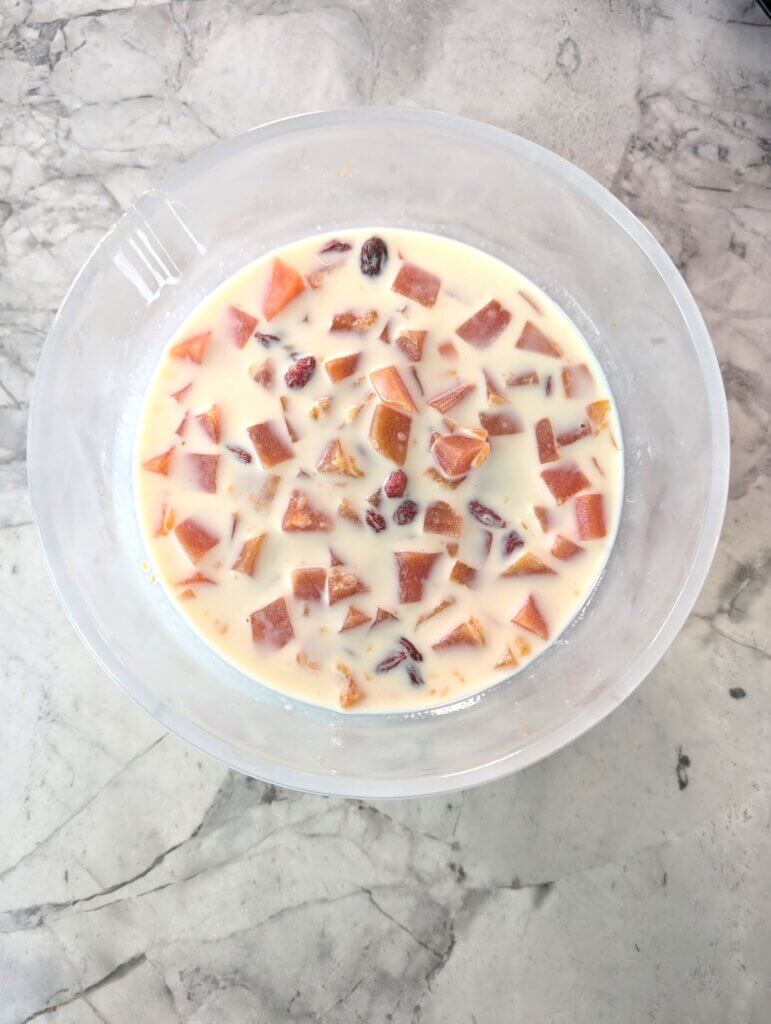
Stir in ½ cup fresh milk, 2 tablespoons sweetened condensed milk (use just 1 tablespoon if you have a sweeter Hawaiian papaya), and 1 tablespoon goji berries.
Step 4: Cover and rest.
Put the lid back on and let it sit for 2 minutes. This warms the goji berries through and lets everything come together.
Step 5: Enjoy.
Serve warm and eat it with a spoon, like a soft, milky fruit bowl.
Recipe
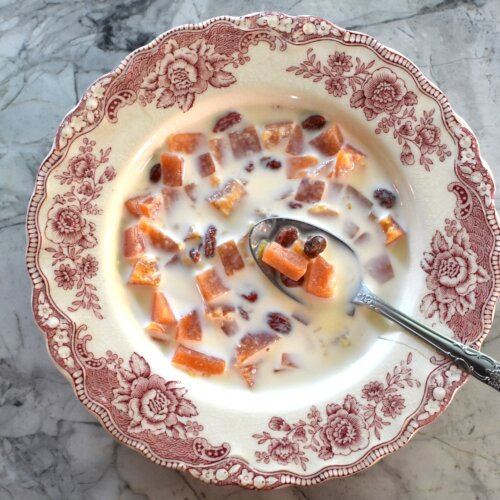
Papaya Milk Dessert (Easy Microwave Tong Sui Recipe)
Equipment
- microwavable bowl
Ingredients
- 260 g papaya diced into 1cm cubes (about 1.5 cups)
- 1/2 cup milk
- 2 Tbsp sweetened condensed milk use 1 tbsp if using sweeter Hawaiian papaya
- 1 Tbsp goji berries
Instructions
- Place the diced papaya in a microwave-safe bowl with a lid. Microwave on high for 6 minutes, until softened and steaming.
- Stir in the milk, sweetened condensed milk, and goji berries.
- Cover and let sit for 2 minutes, until the goji berries soften and everything is warmed through.
- Serve warm and eat with a spoon.
Notes
FAQ
What does tong sui mean?
Tong sui (糖水) literally means “sugar water” in Cantonese. It refers to a whole family of warm, lightly sweet Chinese dessert soups, eaten on their own as a comforting treat. This papaya milk dessert is a simple, modern take on that tradition.
Can I use a plant-based milk instead of dairy?
Yes! In this version, the papaya cooks first, which deactivates papain — the enzyme responsible for the bitterness and curdling you see in raw papaya milk. With no active enzyme left, any milk works, dairy or plant-based. Oat milk is a good choice for its neutral flavor. If you try soy or pea milk, both are higher in protein, so I’d still taste a small batch first — but you shouldn’t run into the curdling problem raw recipes warn about.
Why does my papaya taste starchy or bland?
You may be using a Mexican (Maradol) papaya, the large variety common in American stores. It’s naturally starchier and less sweet than the small Hawaiian type. Make sure to choose the ripest papaya you can find, and keep the full 2 tablespoons of condensed milk — it balances that earthier flavor.
Is this recipe safe during pregnancy, or just postpartum?
This recipe is meant for postpartum use, not pregnancy. Chinese food tradition generally advises against unripe or semi-ripe papaya during pregnancy, out of concern that it may contribute to uterine contractions. This recipe uses fully ripe papaya, which most consider a different category. If you’re currently pregnant, check with your OB before adding papaya to your routine.
Can I make this ahead of time?
Yes. Because the papaya is fully cooked, it won’t turn bitter the way raw papaya milk does. Store it in an airtight container in the fridge and enjoy within a few days. Reheat gently before serving, since this dish is best warm.
Do I have to use goji berries?
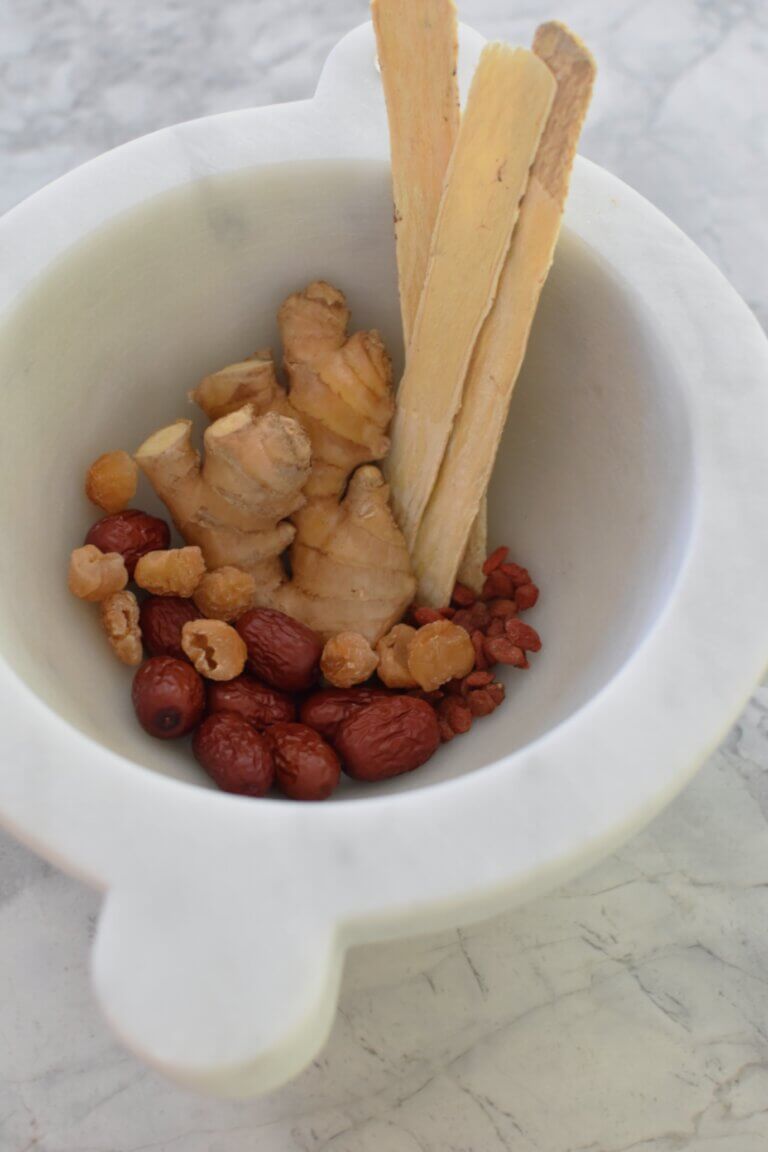
No — they’re optional. Goji berries add a little natural sweetness, a pop of red color, and a nod to the tradition of adding red dates or dried fruit to tong sui. Leave them out if you prefer, or swap in a few chopped red dates instead.
Did you make this recipe?
Please leave a comment below!
References
National Institute of Child Health and Human Development. (2025, January 15). Papaya. In Drugs and Lactation Database (LactMed). National Library of Medicine. https://www.ncbi.nlm.nih.gov/books/NBK501881/
Schweiggert, R. M., Kopec, R. E., Villalobos-Gutiérrez, M. G., Högel, J., Quesada, S., Esquivel, P., Schwartz, S. J., & Carle, R. (2014). Carotenoids are more bioavailable from papaya than from tomato and carrot in humans: A randomised cross-over study. British Journal of Nutrition, 111(3), 490–498. https://doi.org/10.1017/S0007114513002596
2 Comments