

My mom calls fish and tofu soup the soup for the very first days. It’s a gentle soup made with fish fillets and tofu, two of the softest, most delicate ingredients in the Chinese kitchen, simmered slowly in a claypot that locks in their natural sweetness. There’s a saying my mom loves: “a bowl of soup after birth is worth more than a good prescription.” This is what “food as medicine” (药食同源) means in practice, and it’s why this simple postpartum soup has stayed on the table for generations.
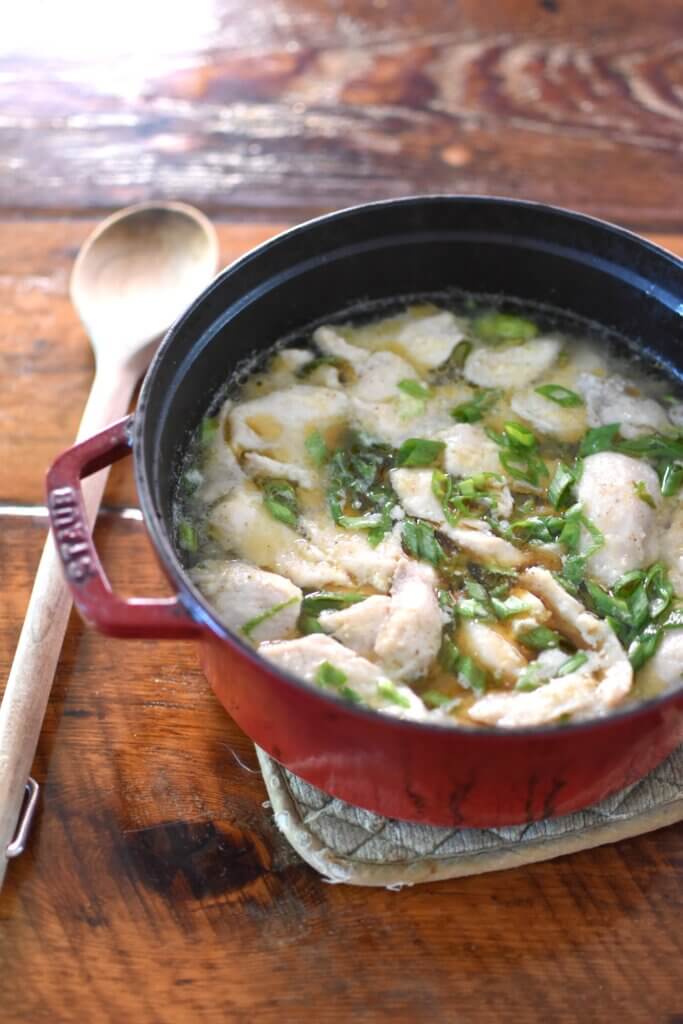
And it really is simple. A lot of Chinese fish soups are gorgeous but fussy — they call for a whole fish, head and all, seared and simmered until the broth turns milky white. This one skips all of that. It uses plain fish fillets, so there’s no whole fish to wrangle, no fish head, no bones to fish out. You give up a little of that ultra-milky depth a whole-fish soup delivers, but what you get instead is tender, silky fish in a clean, savory broth that’s easy enough to make in the bleary first weeks with a newborn.
Be sure to check out my guide to confinement foods by phase of recovery for more foods that are gentle enough for the first week after having a baby.
Why Fish Tofu Soup is a Postpartum Classic
In Eastern postpartum tradition, fish tofu soup is considered one of the most reliable milk-supporting dishes — gentle in nature, replenishing to qi and blood, and (importantly, in traditional thinking) nourishing without being so rich that it contributes to clogged ducts the way heavier tonics like pork trotter soup sometimes can.
From a clinical perspective, the logic holds up well. Breastfeeding mothers need significant additional fluid and protein, and a light, savory soup delivers both in a form that’s easy to eat even with a diminished appetite. White fish and tofu are both complete, easily digestible proteins that ask almost nothing of a postpartum digestive system still recovering from labor, hormonal shifts, and sometimes medication.
In traditional confinement practice, drinking the soup hot enough to bring on a light sweat is considered part of the therapy — the warmth helping the body release retained cold. (Take caution not to eat while scalding hot though!)
An Easy Soup That Uses Fish Fillets — Not a Whole Fish
If you’ve looked up Chinese fish soup before, you’ve probably seen recipes that start with a whole fish, head and bones included, pan-seared and then simmered hard until the broth goes opaque and milky. That milkiness is beautiful, and there’s a place for it — but it’s a project, and it’s not what most people want to take on with a newborn in the house.
This version is deliberately the easy one. You use fish fillets, so:
- No whole fish to clean, scale, or break down. Just fillets, sliced.
- No fish head and no bones to deal with in the pot or pick around in the bowl.
- Less time and less mess — start to finish in about 25 minutes.
The honest trade-off: without the head and bones, the broth won’t turn that signature milky white, and it’ll be a touch lighter in body. But with a well-seasoned broth (more on that below) and the velveted fish, it’s still deeply savory, silky, and nourishing — exactly what these early weeks call for. You can always nudge it toward that fishier, fuller flavor with a few easy additions (see the broth step).
The Science Behind the Ingredients
White Fish — Tilapia or Flounder (比目鱼)
My mom’s version uses flounder, a lean, mild white fish that’s low in mercury and digests quickly and easily — exactly the kind of protein a healing body can actually use in the first weeks. But flounder can be hard to find in a typical American grocery store, so use whatever mild white fish you can get. I used tilapia and it worked beautifully. Any delicate, low-mercury white fish will give you that silky texture, and in traditional confinement cooking these light white fish are prized precisely because they’re so easy on the system.
Tofu (豆腐)
Tofu earns its place here twice over. Nutritionally, it adds plant protein and a meaningful dose of calcium — a nutrient that breastfeeding draws on heavily. In the pot, it does practical work too: the tofu layer at the bottom of the claypot keeps the delicate fish from sticking and scorching, and it soaks up the savory broth as it simmers.
Fresh Ginger (生薑)
Ginger appears in nearly every confinement recipe for a reason. It’s a vasodilator that promotes circulation, helps relieve uterine cramping, and assists in the discharge of lochia. Here it also neutralizes any fishiness in the broth. My mom uses a generous hand with the ginger in this soup — more than you’d use for everyday cooking.
Garlic (蒜)
Briefly sautéed garlic builds the aromatic base of the broth. Garlic contains allicin, an antimicrobial and anti-inflammatory compound, and in TCM it’s considered warming — appropriate for the postpartum period.
White Pepper (白胡椒)
White pepper is the quiet signature of Chinese fish soups. In TCM it’s warming and dispels cold from the middle of the body; in the kitchen, it adds gentle heat without the harshness of chili — important when spicy food may still feel like too much.
Broccoli
My mom’s thrifty addition: diced broccoli stems (or small florets) hold their texture in the broth without watering it down. They add fiber, folate, and vitamin C. Any vegetable that doesn’t release a lot of water works — carrot is her other suggestion. You can try any vegetables you have in your fridge. Mushrooms, bak choy, daikon radish, napa cabbage – these would all work well.
The Secret to Silky Fish: A Cornstarch Coating
If you’ve ever wondered why the fish or chicken in Chinese restaurant dishes is so impossibly tender and smooth — never dry, never rubbery — this is the trick behind it. Before cooking, the fish gets a light coating of egg white, cornstarch, salt, and a splash of wine. The coating forms a thin, protective layer: the egg white and starch seal in moisture, the salt and wine season the fish, and a final drizzle of oil keeps the slices from sticking to each other.
The technique has a name — velveting, which is exactly what it sounds like, because it gives the fish a smooth, velvety texture. (In Chinese it’s 上浆, “applying the coating.”) It’s been used in Chinese kitchens for centuries, and it’s far easier than its restaurant reputation suggests. In this recipe, the coated fish poaches gently right in the hot broth rather than being fried — sometimes called water-velveting — which is about as low-effort as it gets.
Two details make or break it:
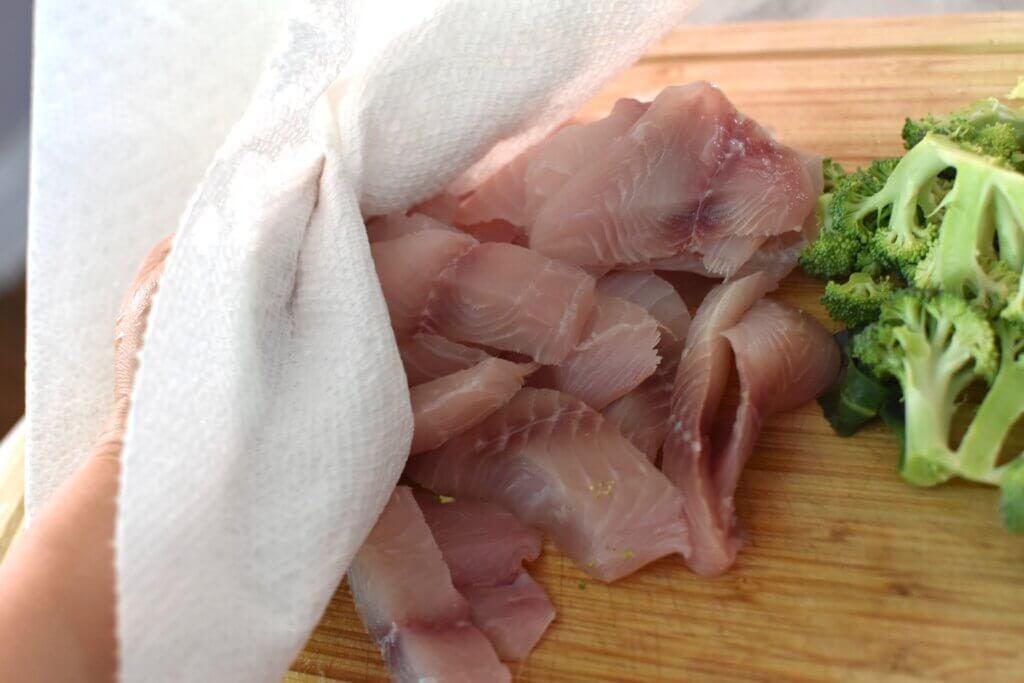
Pat the fish completely dry first. This is the step everything else depends on. If the slices are wet, the coating slides right off in the broth and the fish falls apart.
Don’t stir after the fish goes in. Lay the slices gently on top of the tofu, one at a time, and leave them alone.
Do You Need a Claypot?
A claypot (砂锅) holds heat exceptionally well, which is what lets you turn the burner off and finish the fish on residual heat alone. If you don’t have one, a Dutch oven is the best substitute — it has the same heat-retaining quality. A thin stainless pot will work in a pinch, but leave the heat on its lowest setting for the final step instead of turning it off.
Instructions
Prep Time: 15 minutes | Cook Time: 10 minutes | Total Time: 25 minutes | Servings: 4
Step 1: Dry the Fish (2 minutes)
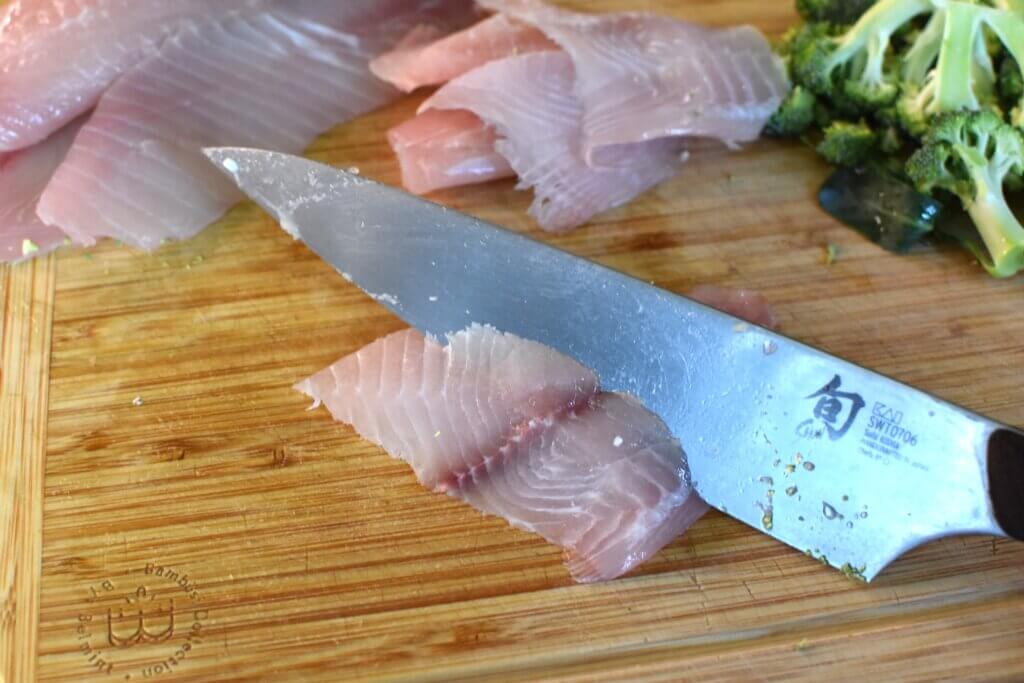
Slice the fish on a bias into thick slices, about ½ cm (¼ inch). Slicing on a bias means at a 45 degree angle, like you would do for sashimi (see photo). Pat every slice thoroughly dry with paper towels. This is the key to a velvet coating that actually stays on — don’t rush it.
Step 2: Coat the Fish (10 minutes)
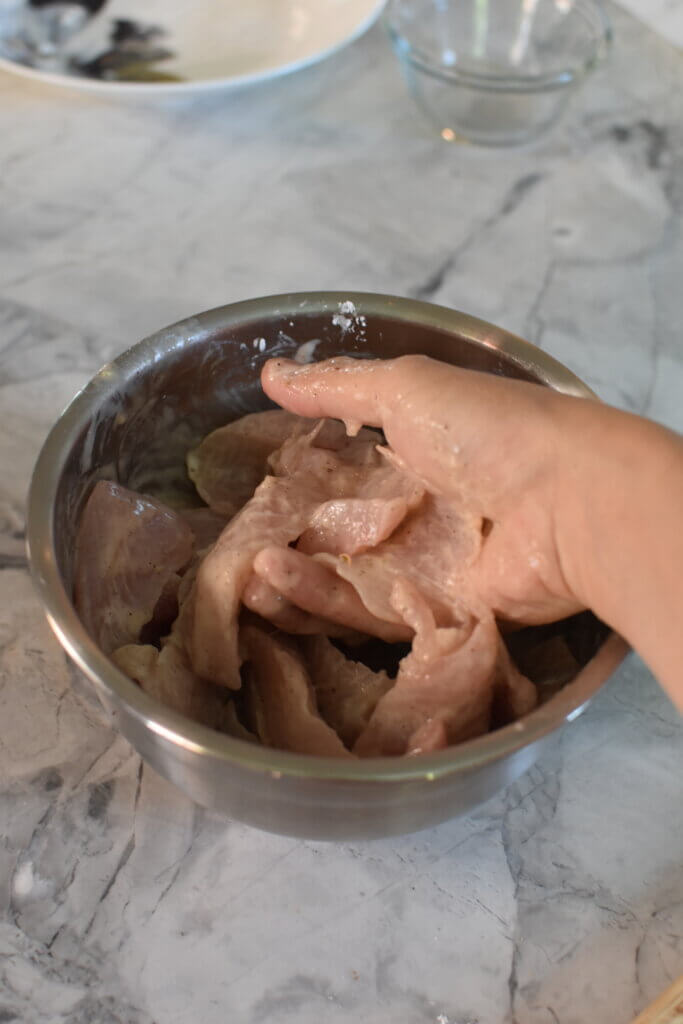
In a bowl, combine the fish with a pinch of salt, a pinch of white pepper, and 1 tablespoon of Shaoxing wine (or white wine). Using your hand, gently mix in one direction until the fish feels slightly tacky. Add an egg white and 2 tablespoons of cornstarch and mix until each slice is evenly coated. Finally, drizzle in a little neutral oil and toss — this keeps the slices from sticking together in the pot. Set aside to marinate for 10 minutes. (This coating is the velveting step — it’s what keeps the fish silky in the broth.)
Step 3: Build the Aromatic Base (3 minutes)
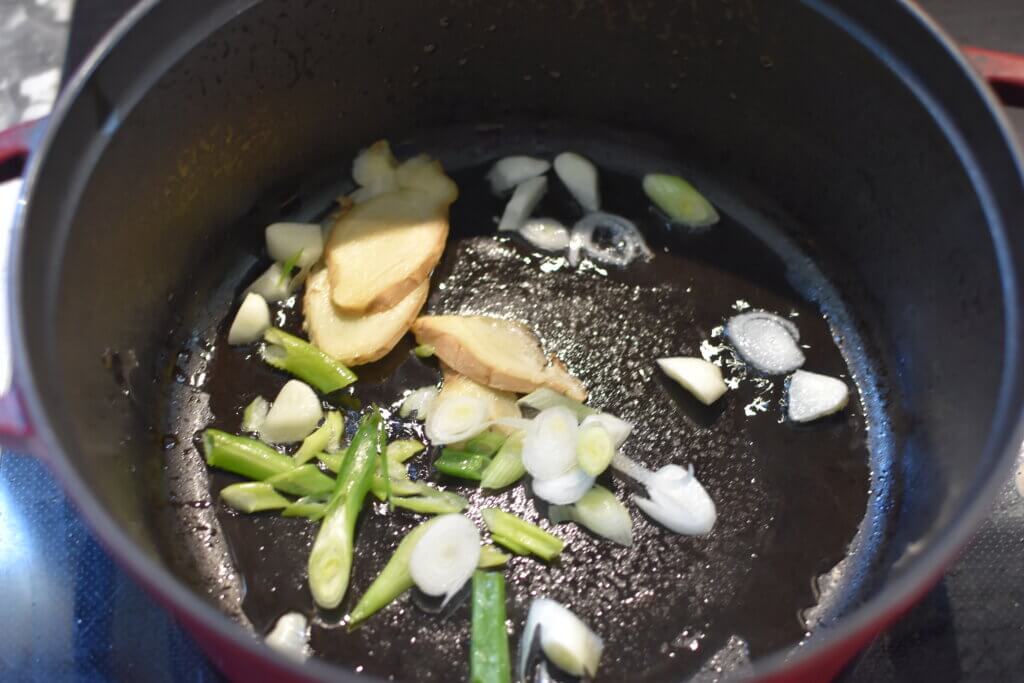
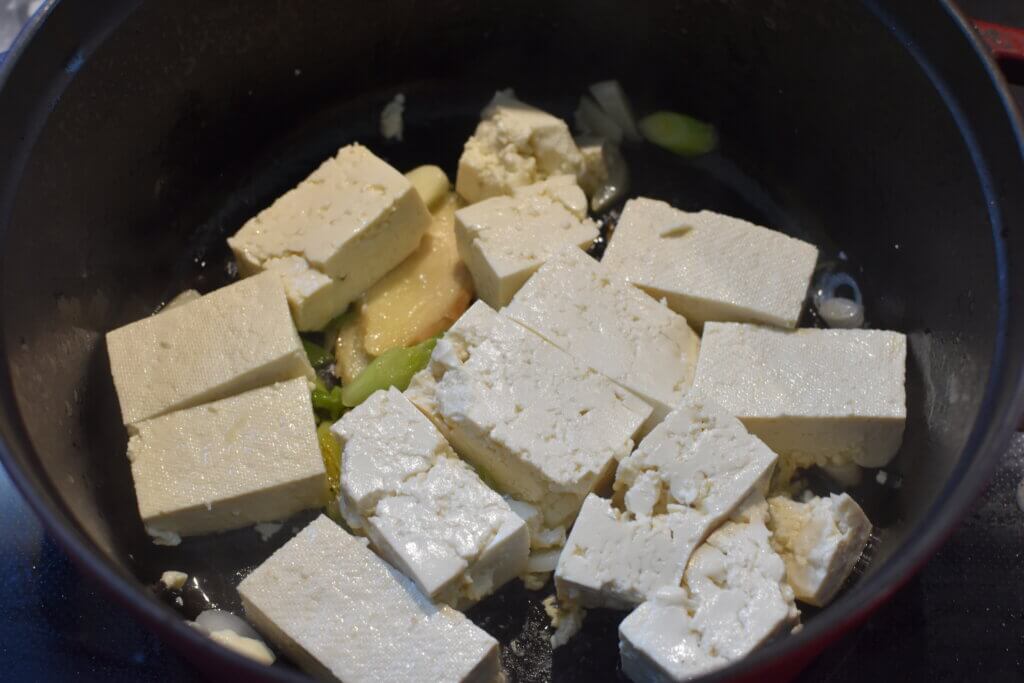
While the fish marinates, heat a little oil in a wok or skillet. Add the ginger slices, garlic, and the white and light green scallion parts and cook until fragrant. Transfer the aromatics to your claypot, then lay the tofu slices over the bottom in a single layer. The tofu does double duty here — it keeps the fish from sticking to the pot, and it drinks up the broth as it simmers.
Step 4: Build and Season the Broth (5 minutes)
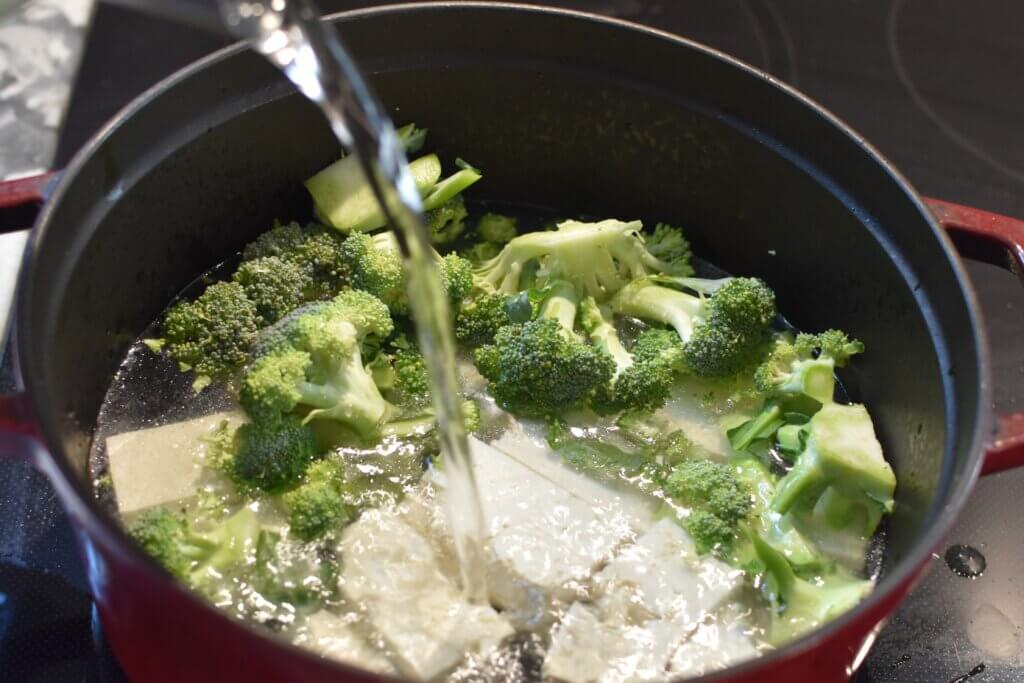
The broth needs to be seasoned before the fish ever goes in. Pour in 4 cups of boiling water and whisk in 1 tablespoon Better Than Bouillon until fully dissolved. (You can also start with chicken broth or fish broth instead of using water and bouillon, or use miso paste. Use whatever seasoning you normally use for soup. This is just a suggestion.) Add the broccoli stems now, if using. Bring to a boil over high heat, then reduce to a gentle simmer for about two minutes to cook the broccoli. Taste and adjust with salt and white pepper — season the broth fully now, since you won’t be stirring once the fish is in.
Want it fishier and fuller? This fillet-based soup is lighter than a whole-fish version, but you can deepen it easily: simmer a piece of kombu or other seaweed, or a few shrimp heads/shells, in the broth for a few minutes, then fish them out before adding the fish.
Step 5: Lay In the Fish (2 minutes)
Turn the heat to its lowest setting — the surface of the broth should barely bubble, not roll. Using chopsticks or tongs, lay the fish slices one at a time across the tofu and the surface of the broth. Do not stir. Stirring is how velveted fish falls apart.
Step 6: Finish on Residual Heat (1-2 minutes)
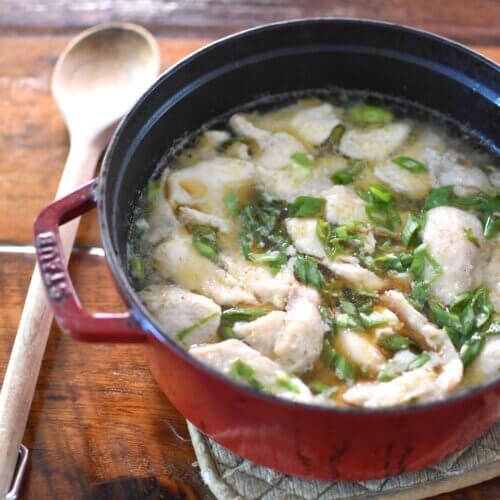
The moment the edges of the fish slices turn white, cover the claypot and turn off the heat. Let the residual heat of the pot gently finish the fish, 1 to 2 minutes. Uncover, finish with a few drops of sesame oil and the sliced scallion greens, and serve hot.
Recipe
Easy Fish and Tofu Soup
Equipment
- 1 dutch oven or stainless steel pot, or clay pot
Ingredients
- 1 lb mild white fish fillets (tilapia, flounder, sole, or cod) sliced on a bias into ½-cm (¼-inch) slices
- 1 block (14 oz) medium-firm tofu cut into thick slices
- 5 slices fresh ginger
- 3 cloves garlic smashed
- 2 scallions white and light green parts cut into segments for the aromatics, dark greens sliced for garnish
- 1 cup chopped broccoli stems and florets can use any vegetables you have (carrot, mushroom, daikon radish, bak choy, napa cabbage…)
- 4 cups boiling water or stock
- 1 tbsp bouillon if not using stock, use water + boullion and/or miso paste
- salt to taste
- white pepper to taste
- 1 tbsp sesame oil to finish
For coating the fish:
- pinch salt
- pinch white pepper
- 1 tbsp Shaoxing wine (or white wine)
- 1 egg white
- 2 tbsp cornstarch
- 1 tsp neutral oil
Instructions
- Slice and Dry: Slice fish into ½-cm slices on a bias. Pat thoroughly dry with paper towels — this is the key to the coating staying on.
- Coat: Mix fish gently in one direction with salt, white pepper, and Shaoxing wine until slightly tacky. Mix in egg white and cornstarch to coat, then toss with neutral oil. Rest 10 minutes.
- Aromatics: Sauté ginger, garlic, and the white/light green scallion parts in a little oil until fragrant. Transfer to the clay pot and layer tofu slices over the bottom.
- Broth: Add boiling water (or stock) and whisk in bouillon and/or miso (if not using stock) until dissolved. Add broccoli stems (if using). Boil, then reduce to a gentle simmer. Season the broth to taste with salt and white pepper. (Optional: simmer kombu or shrimp shells briefly for a fishier broth, then remove.) Simmer for two minutes.
- Fish: Reduce to the lowest heat. Lay fish slices one at a time over the tofu using tongs or chopsticks. Do not stir.
- Finish: When the fish edges turn white, cover and turn off the heat. Rest 1-2 minutes on residual heat. Finish with sesame oil and sliced scallion greens. Serve hot.
FAQ
What kind of tofu should I use?
Medium-firm or firm tofu holds its shape best in the simmering broth. Silken tofu is traditional in some versions and tastes wonderful, but it will break apart.
What fish should I use? My store doesn’t carry flounder.
You’re not alone — flounder can be hard to find in a typical American grocery store. Any mild, low-mercury white fish with delicate flesh works just as well. Tilapia (what I use), sole, and cod are all great. Firmer fish like halibut work too but won’t be quite as silky. As always, check current FDA mercury guidance.
Why use fillets instead of a whole fish?
Most traditional Chinese fish soups use a whole fish to get that milky-white broth — but that’s more work, more mess, and more than most people want to handle in the postpartum weeks. Fillets make this soup fast and approachable. The broth is lighter and won’t turn milky white, but it’s still richly savory and just as nourishing, and you can deepen the flavor with stock, kombu, or shrimp shells if you like.
My broth tastes flat — what happened?
It probably needs more seasoning, and it needs that seasoning before the fish goes in (you can’t stir once the fish is poaching). Plain water alone won’t carry this soup. Build the broth with bouillon and miso, taste it, and adjust with salt and white pepper until it tastes good on its own. For more fish flavor, use fish stock instead of water, or briefly simmer kombu or shrimp shells in the broth and remove them before adding the fish.
Does fish and tofu soup really help with milk supply?
In Chinese confinement tradition, this is one of the most trusted lactation soups — gentle, replenishing, and not so rich that it’s thought to contribute to clogged ducts. Clinically, the strongest evidence-backed drivers of milk supply are frequent, effective milk removal plus adequate fluids and calories — and a protein-rich soup you’ll actually want to eat delivers meaningfully on both. Think of it as supportive nutrition rather than a magic switch. For another traditional lactation supporting recipe, check out my recipe for papaya milk tong sui.
Can I freeze this soup?
I wouldn’t freeze the finished soup; the tofu and fish textures both suffer.


One Comment