

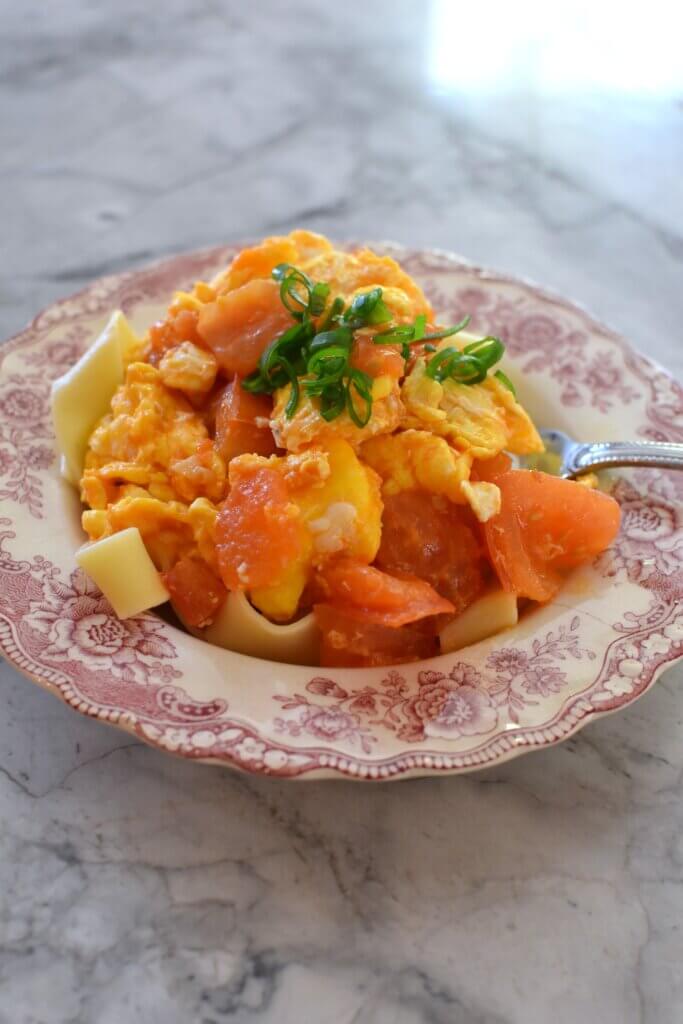
Some dishes live not just in your memory but in your hands. Your hands know what to do before your brain catches up. Chinese tomato and egg, also known as 番茄炒蛋 (xīhóngshì chǎo jīdàn), is that dish for me. My mom made it when I was little. I made it through college when I was short on time and money and needed something that felt like home. After shooting photos for this recipe, I sat down and ate two full servings before I remembered I was supposed to be working. It is that good.
Tomatoes and eggs are a combination that Westerners rarely put together, and I’ve never understood why. They are made for each other — the richness of egg, the acidity and sweetness of a ripe tomato. Legendary chef Alice Waters has an iconic tomato quiche that I was happy to see made it to the mainstream media when it was featured on Meghan, The Duchess of Sussex’s show With Love, Meghan.
This version is simpler than a quiche by a long stretch. One pan, 15 minutes, ingredients you almost certainly already have. The key word is jammy. You want to cook the tomatoes long enough that they break down and concentrate into something sweet, savory, and deeply flavored. Not a quick toss, but a patient 7-minute commitment to letting them do their thing. The eggs go in already mostly cooked, just to warm through and absorb the sauce in the last 30 seconds. The result tastes like it took far longer than it did.
Why This xīhóngshì chǎo jīdàn Is Perfect for Postpartum Recovery
This dish is not just easy and delicious — it is nourishing in ways that matter for new mothers.
Tomatoes are rich in lycopene, a powerful antioxidant that helps protect cells from oxidative damage, supports skin elasticity, and has anti-inflammatory properties (Rao & Agarwal, 2000). Lycopene is fat-soluble, which means it is actually better absorbed when tomatoes are cooked with oil — which is exactly how this recipe works. The lycopene concentration is highest just beneath the skin, which is another reason to use organic tomatoes when you can and leave the skin on.
Eggs are one of the most nutritionally complete postpartum foods available — high in protein, rich in choline (which 90% of women fall short in meeting the recommended daily dose of; see my microwave egg recipe for more on why choline matters so much right now), and containing B12 and vitamin D.
Additionally, eggs contain iron, and the vitamin C from the tomatoes help with iron absorption. Check out my iron-rich foods guide for more information about iron.
Garlic is anti-inflammatory and immune-supportive, and features in Chinese postpartum traditions as a warming, protective ingredient.
This is one of the simplest Chinese postpartum recipes you will find — and one of the ones you will make most often. Interested in learning which recipes are best for each week of postpartum recovery? Check out my confinement foods guide.
A Note from My Mom
My mom has her own version of this recipe, and I’ll pass along some of her notes. She recommends adding a tablespoon of water to the beaten eggs before cooking — it makes them slightly lighter and silkier. She also notes that if you want a softer, more saucy dish, you can add an extra two tablespoons of water to the tomatoes and cook them a little longer. And she is very clear on one thing: use ripe tomatoes. An underripe tomato will not become jammy no matter how long you cook it. If your tomatoes aren’t very ripe, a small extra pinch of sugar helps coax them in the right direction.
If your tomatoes are not organic, she recommends peeling them first to reduce pesticide exposure — score a small X on the bottom, pour boiling water over them, and the skin slips off easily. Peeled tomatoes also give a slightly silkier texture in the finished dish.
Ingredients for Tomato and Egg (xīhóngshì chǎo jīdàn)
Serves 2, with rice or noodles
- 1 large ripe tomato (or 2 medium)
- 4 eggs
- 1 clove garlic, finely chopped
- 1 scallion, thinly sliced
- 2 tablespoons olive oil or canola oil, divided
- Pinch of salt
- Pinch of sugar
- Cooked white rice or noodles, for serving
Instructions to make Tomato and Egg (xīhóngshì chǎo jīdàn)
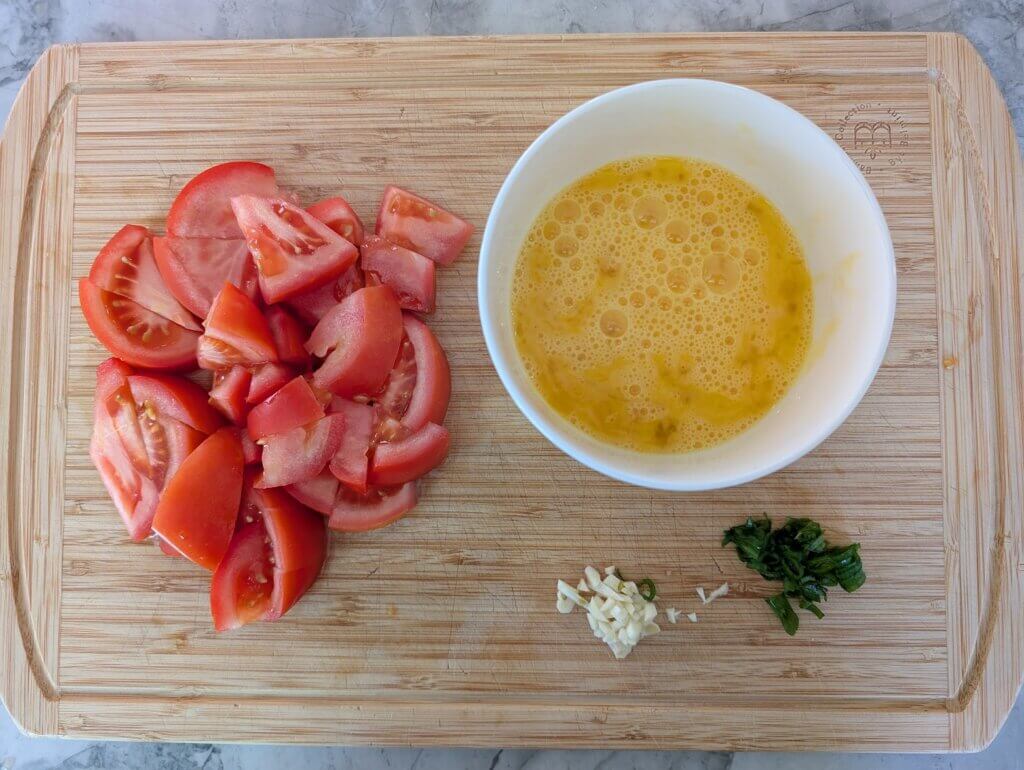
1. Prep everything first. Roughly chop the tomato into irregular chunks — don’t overthink this. Finely chop the garlic. Slice the scallion and set it aside for finishing. Beat the eggs in a bowl with a small pinch of salt (and a tablespoon of water if you want silkier eggs, per my mom’s tip). Have everything ready before you turn on the heat — this dish moves quickly.
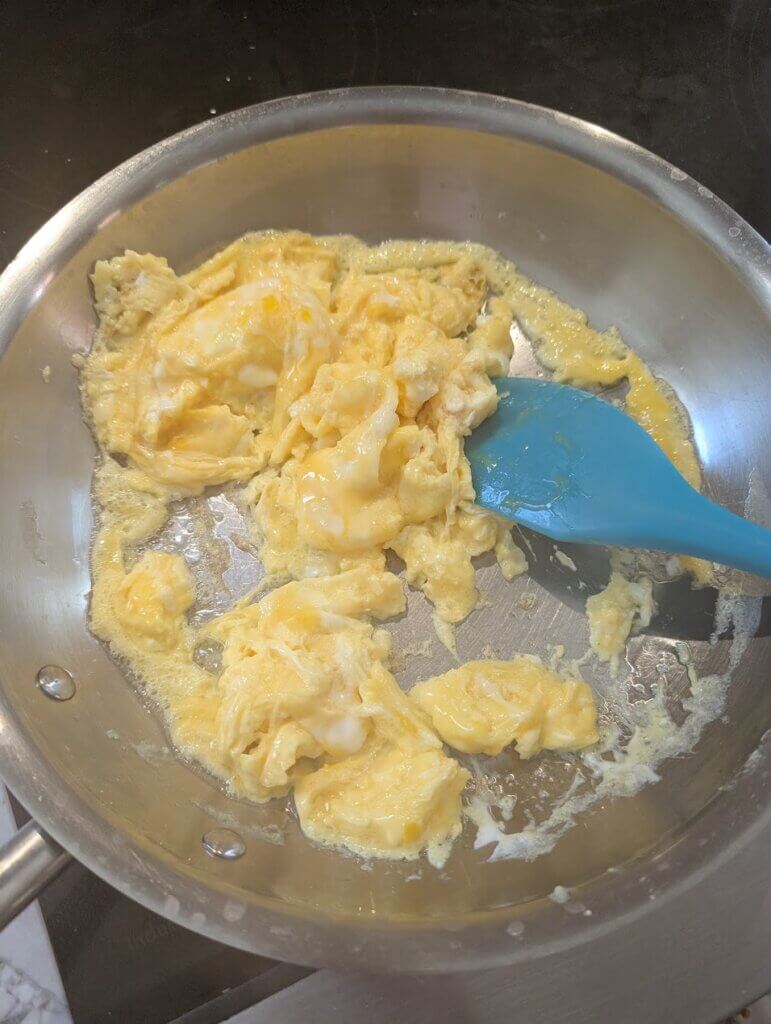
2. Cook the eggs. Heat 1 tablespoon of oil in a pan over medium heat. Pour in the beaten eggs. Let them begin to set on the bottom, then stir and fold gently — you want large, soft curds. Pull them off the heat when they are almost but not quite set, still a little runny in places. They will finish cooking later. Transfer to a plate and set aside.
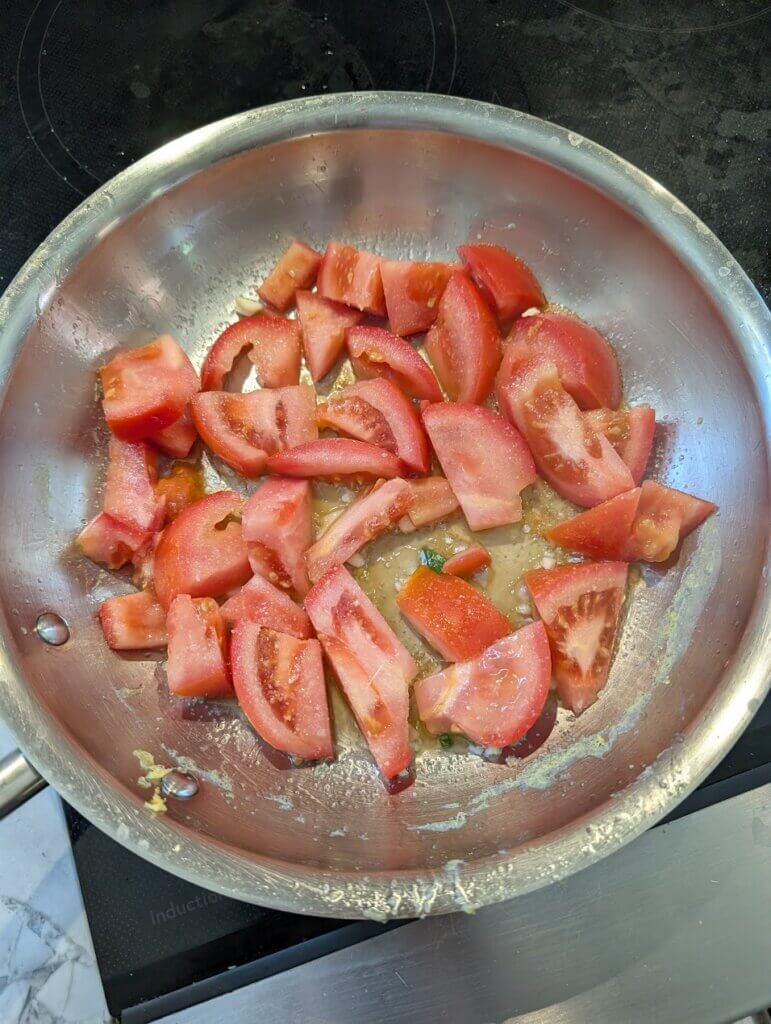
3. Cook the tomatoes. In the same pan, heat the remaining tablespoon of oil over medium heat. Add the garlic and cook for about 30 seconds until fragrant — don’t let it brown. Add the tomatoes, a pinch of salt, and a pinch of sugar. Cook, stirring frequently, for about 7 minutes. You are looking for the tomatoes to break down, release their juices, and begin to concentrate into a thick, jammy sauce. This is the step worth being patient about. If the tomatoes seem dry, you can add a splash of water to help them along.
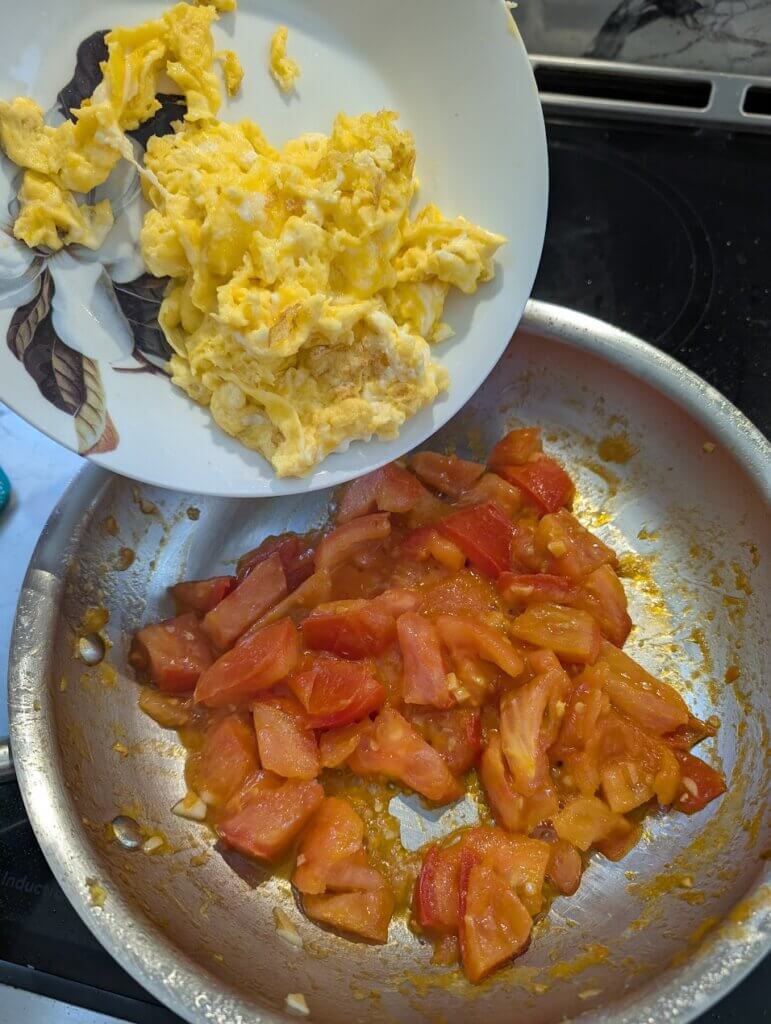
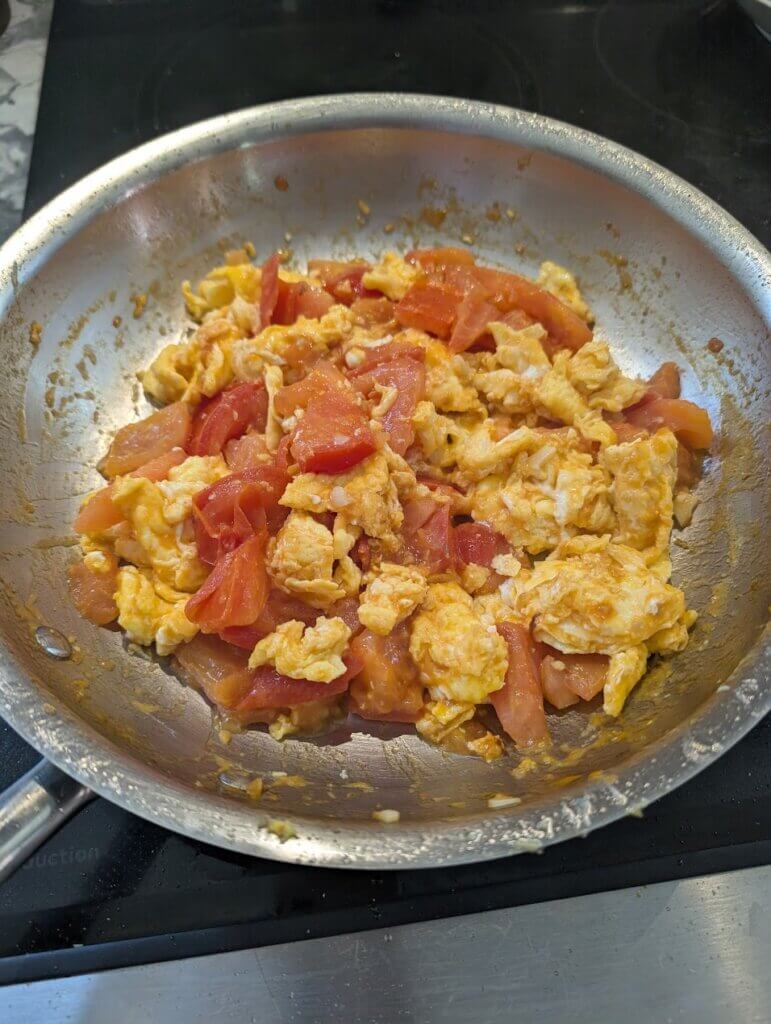
4. Bring it together. Add the eggs back into the pan. Stir gently for about 30 seconds, just long enough for the eggs to warm through and absorb some of the tomato sauce. Taste and adjust salt if needed.
5. Serve. Spoon over a bowl of white rice or noodles. Scatter the scallion over the top. Eat immediately.
Tips and Notes
Use the ripest tomato you can find. This recipe lives or dies by the tomato. A ripe summer tomato in July or August will give you something extraordinary. In winter, a good-quality vine tomato or even a handful of cherry tomatoes will work better than a pale, mealy one. The sugar is there to help coax along a less-than-perfect tomato — use it freely if needed.
Don’t overcook the eggs the first time. The temptation is to cook them all the way through before removing them from the pan. Resist. They will go back in with the tomatoes and overcook quickly if they are already fully set. You want them just barely cooked — almost custardy — when you remove them.
The ratio is flexible. More tomato gives you something saucier and lighter. More egg gives you something richer and more substantial. My mom’s note about ratios is: there is no strict rule here. Cook it the way you like it.
Serve with white rice or noodles. In the early postpartum period especially, white rice is easy to digest and a perfect vehicle for the jammy sauce.
Organic tomatoes if possible. As my mom notes, the lycopene concentration is highest just under the skin — leaving the skin on gives you the full nutritional benefit. Organic tomatoes make this a more comfortable choice.
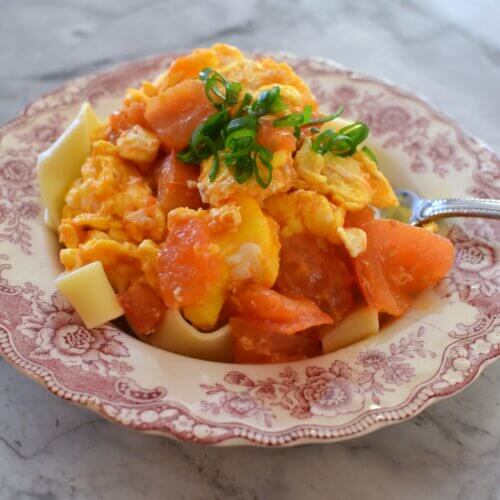
Jammy Tomato and Egg (xīhóngshì chǎo jīdàn)
Equipment
- large pan
Ingredients
- 1 large ripe tomato (or 2 medium)
- 4 eggs
- 1 clove garlic, finely chopped
- 1 scallion, thinly sliced
- 2 Tbsp olive oil or canola oil, divided
- pinch salt
- pinch sugar
- cooked white rice or noodles for serving
Instructions
- Roughly chop the tomato. Finely chop the garlic. Slice the scallion and set aside. Beat the eggs with a small pinch of salt.
- Heat 1 tablespoon of oil in a pan over medium heat. Add the eggs and cook, stirring gently, until just barely set but still a little runny. Remove to a plate.
- Heat the remaining tablespoon of oil in the same pan over medium heat. Add the garlic and cook 30 seconds. Add the tomatoes, a pinch of salt, and a pinch of sugar. Cook, stirring frequently, for 7 minutes until jammy and concentrated.
- Return the eggs to the pan and stir for 30 seconds until warmed through and coated in the sauce.
- Serve over rice or noodles with scallion sprinkled on top.
Notes
FAQ
Can I use canned tomatoes instead of fresh?
Fresh tomatoes are preferred here — the dish is built around the flavor of a real tomato breaking down into something jammy and concentrated. Canned tomatoes are already cooked and broken down, so they won’t develop the same depth of flavor or texture. That said, if fresh tomatoes are out of season and you only have canned, use them. I recommend San Marzano canned tomatoes. Drain the liquid, reduce the cook time to 2 minutes, but still add the pinch of salt and sugar. The result will be softer and more sauce-like, which is not unpleasant, just different.
Why do you cook the eggs separately from the tomatoes?
Eggs and tomatoes need different cooking times — the tomatoes need 7 minutes of patient cooking to become truly jammy, which would turn eggs rubbery and overcooked if they were in the pan the whole time. Cooking the eggs first to just-barely-set, removing them, and adding them back at the very end gives you soft, custardy eggs bathed in concentrated tomato sauce. It takes one extra step and is completely worth it.
What kind of pan is best for this recipe?
A wide skillet or wok works best — you want enough surface area for the tomatoes to cook down quickly rather than steam. Stainless steel or carbon steel will give you slightly more flavor from the fond that develops, but a nonstick pan works perfectly well and makes cleanup easier, which matters when you have a newborn. Use whatever you have.
Is this recipe good for meal prep or freezing?
This dish is best eaten fresh — the eggs can become rubbery when reheated and the tomatoes lose some of their brightness. That said, leftover tomato and egg keeps well in the fridge for a day and reheats gently on the stovetop with a splash of water. I would not recommend freezing it. For postpartum freezer meal prep, the herbal chicken soup is a better candidate. This one is fast enough to make fresh when you need it.
Can I add anything else to this dish?
The beauty of Chinese tomato and egg is its simplicity, but there are lovely variations. A small splash of soy sauce or a few drops of sesame oil at the end adds depth. Some cooks add a teaspoon of rice wine or Shaoxing wine with the tomatoes. If you want to add some greens, a handful of baby spinach pairs nicely.
Is tomato and egg a traditional Chinese dish?
Yes — 西红柿炒鸡蛋 (xīhóngshì chǎo jīdàn) is one of the most universally beloved home-cooked dishes in Chinese cuisine, made across regions and generations. It is often described as the dish every Chinese person learns to cook first, and the one they crave most when they are far from home. Interestingly, tomatoes are not native to China — they arrived via trade routes in the 16th century — but this combination became so deeply embedded in everyday Chinese cooking that it feels entirely native now. It is considered a suitable dish for all ages, including postpartum mothers, because it is warming, easy to digest, and nutritionally complete when served with rice.
Did you make this recipe?
Please comment and rate below!
This is such a delicious recipe. I made it for breakfast, and my grandmother and I enjoyed the sweet acidity of the tomatoes with the velvety eggs. We paired it with a side of whole grain toast, but I am looking forward to trying it with rice. Will be adding this to my regular recipe rotation.
Khrysta, it warms my heart so much that you enjoyed tomato and eggs with your grandma!! Thank you for taking the time to comment. <3