

My mom never visits me without making her signature dried astragalus and red date herbal soup. Even now, with my youngest already toddling (though still nursing), she arrives ready to prepare this traditional Chinese postpartum chicken soup. It represents her love and care for me – a warm, shimmering bowl of liquid gold. It is the ultimate comfort food. (My mom learned about herbs like dried astragalus and red date from farmers during the Cultural Revolution; her story is worth reading).
Typically enjoyed after the initial discharge of lochia (around 4-7 days postpartum), this soup nourishes the body, and supports lactation by using a whole chicken and functional herbs. If you haven’t used a whole chicken to make broth before, it’s surprisingly easy!
It’s also very cost effective. You get so much soup out of one chicken. I find that I can use it to feed my family of 4 (2 adults + 2 littles) for 2-3 dinners! If you’re in a hurry and don’t want to deal with a whole chicken, you can check out my instant pot version that uses bone-in chicken thighs.
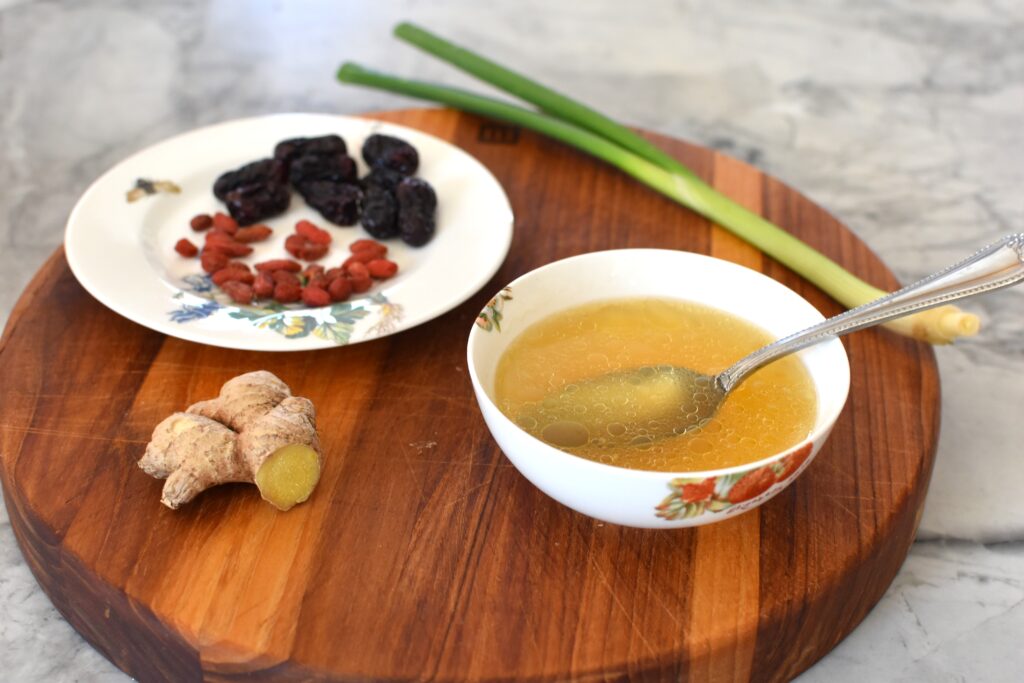
What is astragalus and red date soup?
Astragalus and red date soup is a traditional Chinese tonic soup: a whole chicken slow-simmered with dried astragalus root (huang qi), red dates (jujube), ginger, and scallion. In Chinese postpartum tradition, it’s a cornerstone of confinement cooking, served from the end of the first week to rebuild strength and support lactation. It’s one of the anchor recipes in my confinement food guide, where I place it in the Restore phase.
The Science of Astragalus Red Date Postpartum Chicken Soup
A slow-simmered whole-chicken broth is a nutrient-dense food: the long simmer releases gelatin and amino acids like glycine from the bones and connective tissue, and the meat contributes protein your body uses for tissue repair after birth. After birth, you are healing a wound the size of a dinner plate where the placenta detached. Protein, fluids, and iron all matter. The traditional botanicals turn a basic stock into something even more nourishing.
Functional Ingredients for Postpartum Recovery
Check out my postpartum pantry sourcing guide for where to buy each of these in the US.
Instructions and Serving Suggestion
While using a whole chicken gives you the most nutritional bang for your buck, the preparation is surprisingly simple.
1. The Cleanse
In traditional Chinese cooking, cleaning the chicken thoroughly is the secret to a perfectly clear, light broth.
- Remove the internal fat and any loose skin.
- Rinse the chest cavity with cold water until it runs clear and all traces of organs near the spine are removed.
- A Clinical Note: If the chicken is organic or pasture-raised, you may save the liver to cook separately — it’s the single most concentrated source of absorbable iron and B12 in the kitchen and features in my iron-rich foods guide. If conventionally raised, it is best to discard the organs, as the liver can concentrate environmental toxins.
2. Prepping the Pot
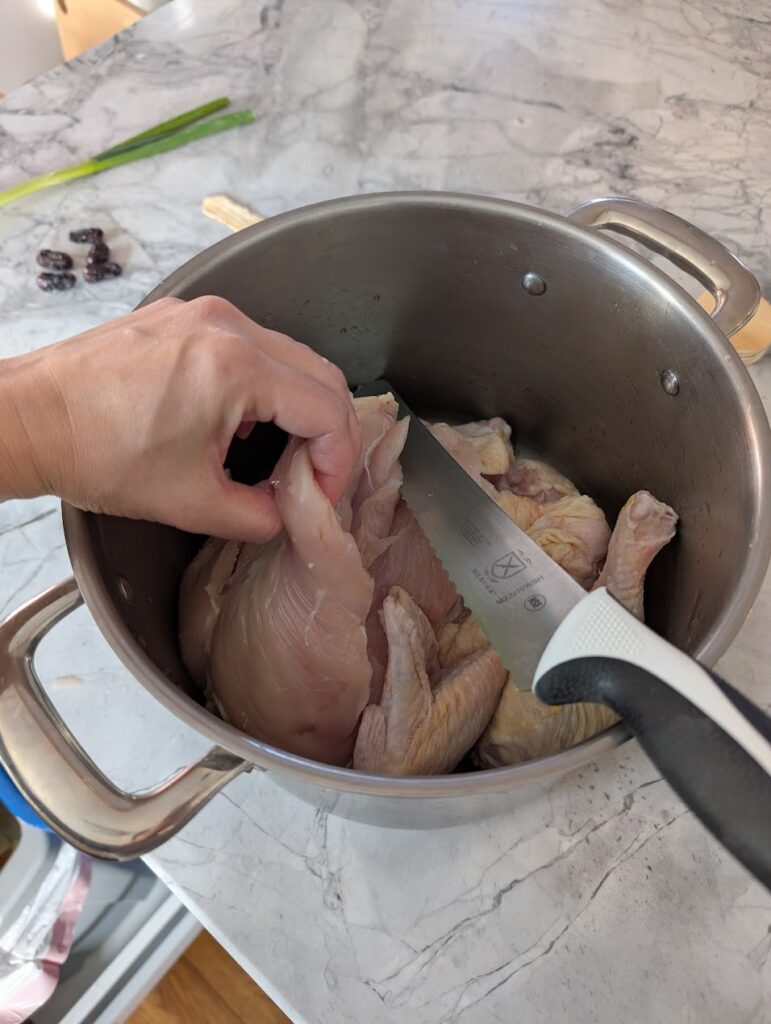
While this is a “whole chicken” soup, you don’t have to keep it in one piece. Removing the thighs and wings allows the chicken to sit lower in your stockpot. This means you need less water to cover the meat, resulting in a richer, more concentrated broth.
- My Personal Prep Tip: I usually remove the breast using a serrated knife and freeze it in a ziplock bag for another meal. The breast meat does not add much collagen or flavor to the stock, and it becomes overly tough when boiled for hours.
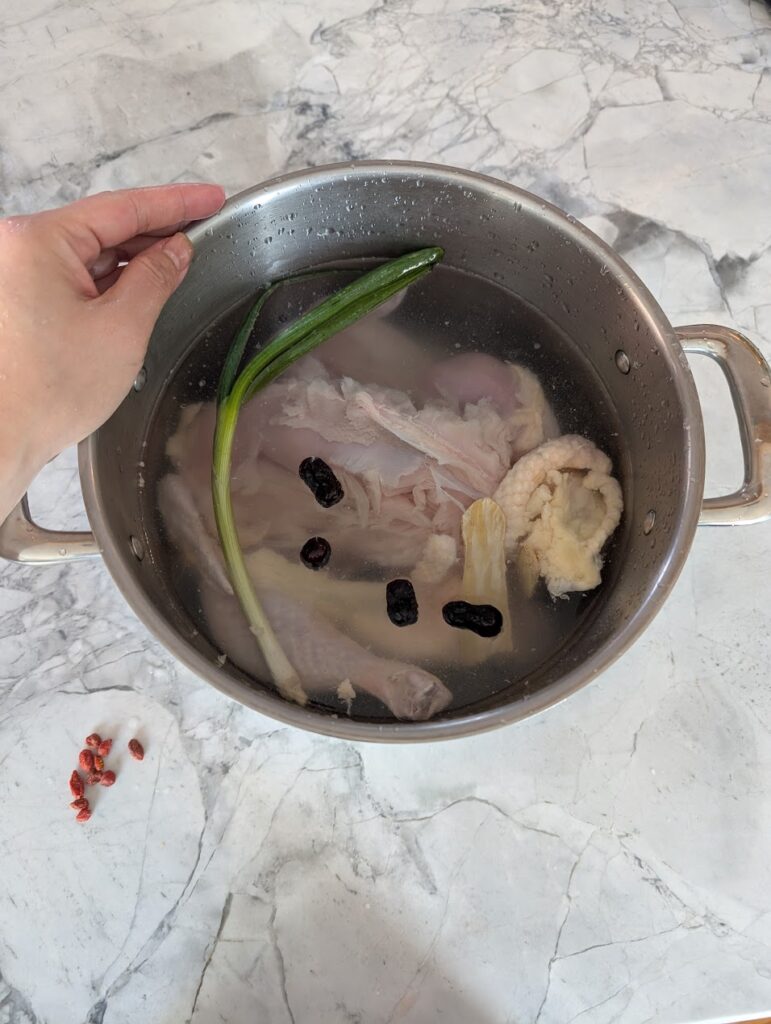
Place your aromatics (Dates, Astragalus, Ginger, Scallion) inside the chicken cavity for easy removal later. Add cold water until the chicken is submerged, with about one inch of water above the meat. This strikes the perfect balance—not so watery that it lacks flavor, but not so concentrated that it becomes overwhelming.
3. The Slow Simmer
Bring the pot to a boil over high heat. Carefully skim off the foam and impurities that rise to the surface.
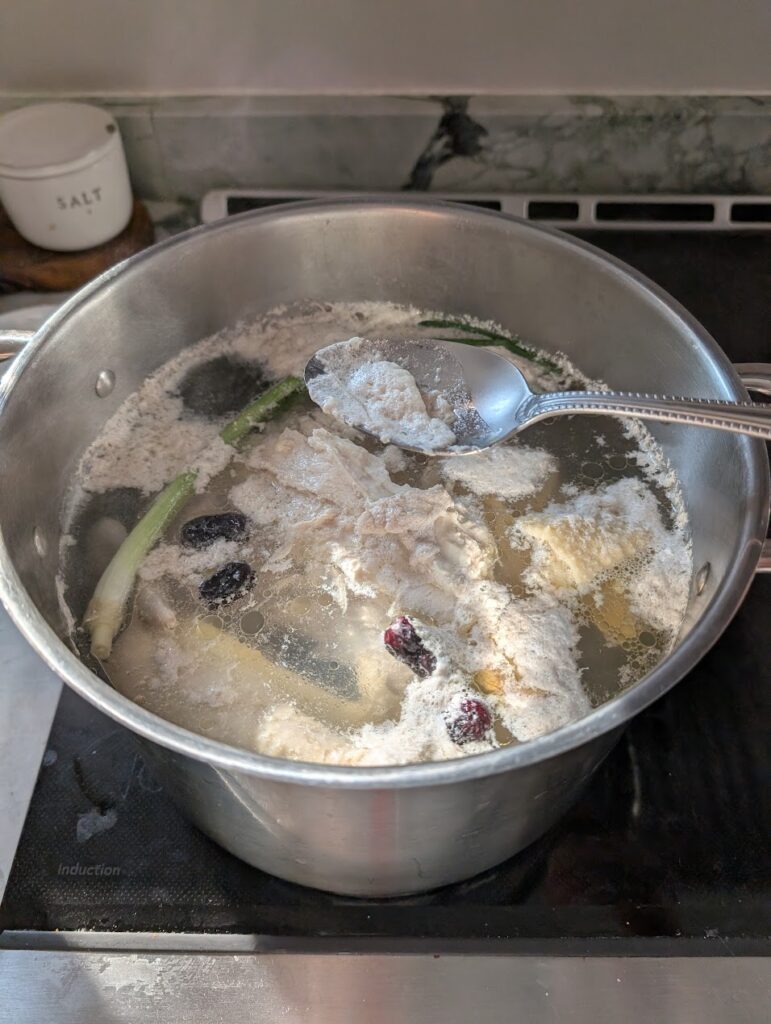
Reduce the heat to low and simmer until the meat is tender and falling off the bone—about 3 hours (my mom notes 2 hours is sufficient, but I have found that 3 hours is optimal for the best flavor). If you have a kitchen thermometer, simmering temperature is around 190°F.
4. Strain and Serve
Once the soup is finished cooking, use a strainer or colander to separate the broth from the chicken, bones, and herbs. Salt the broth to taste.
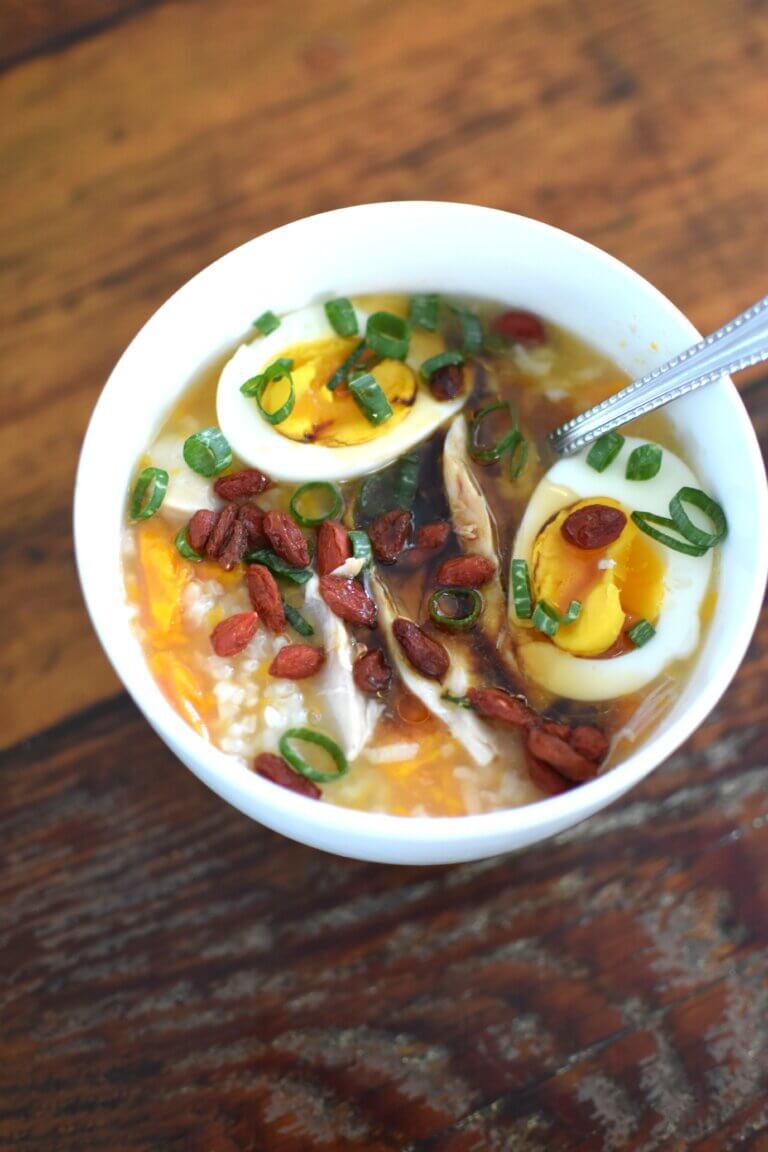
If you are eating the soup immediately, you can shred the chicken and place some in a bowl with the broth. You can also add noodles or rice and vegetables, and an egg. The red dates and astragalus should be taken out (they’ve already contributed most of their flavor and nutrients to the soup), but you can add back in some fresh red dates, halved and seeded, if you would like.
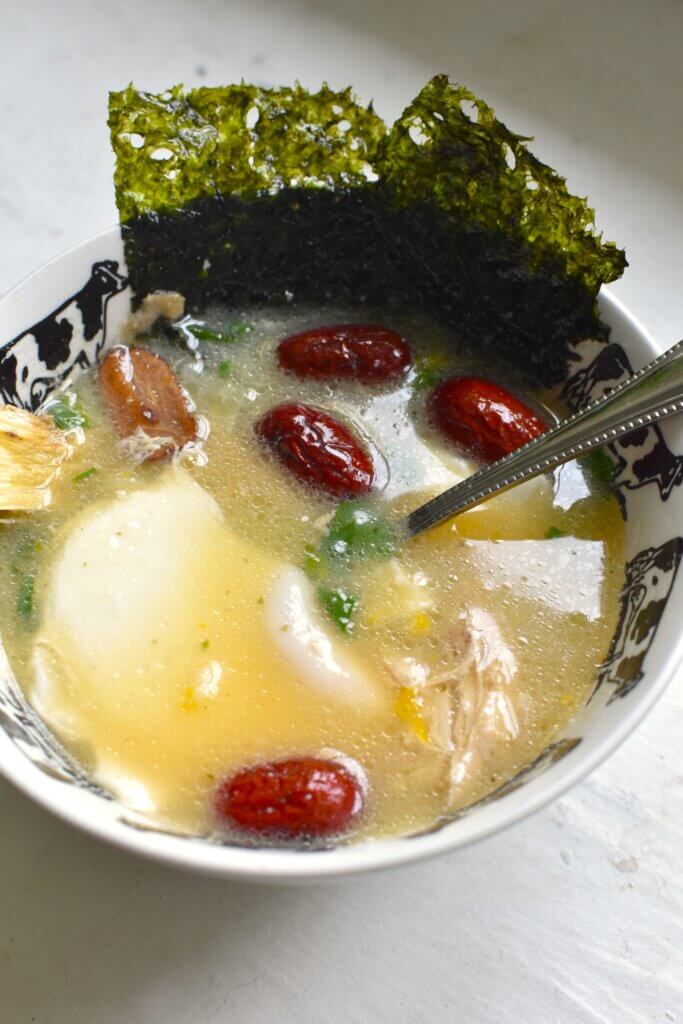
This recipe makes a lot of broth. You can refrigerate or freeze the leftovers and have it for several meals.
Freezer Tip
You can freeze the broth for postpartum meal planning.
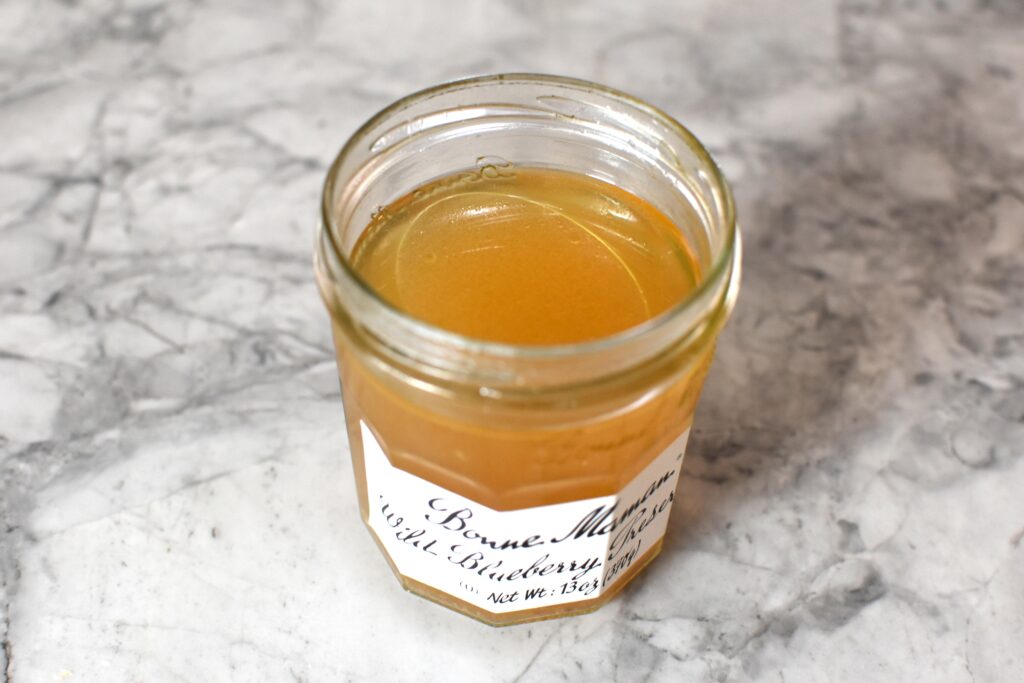
- Use wide-mouth mason jars or repurposed glass jam jars.
- Crucial tip: Always leave at least an inch of “headspace” at the top of the jar. Liquid expands as it freezes, and you don’t want your restorative broth to break the glass!
Keep a stash of these small jars in the freezer so you can easily warm a mug of pure, healing nourishment whenever you need it.
If you have leftover shredded chicken, you can freeze that in a ziplock freezer quart bag.
Astragalus Red Date Postpartum Chicken Soup
Equipment
- 1 large stock pot 6-8 quarts/liters
Ingredients
- 1 whole chicken 3-5 pounds (1.5-2.5 kilos), organic or pasture-raised
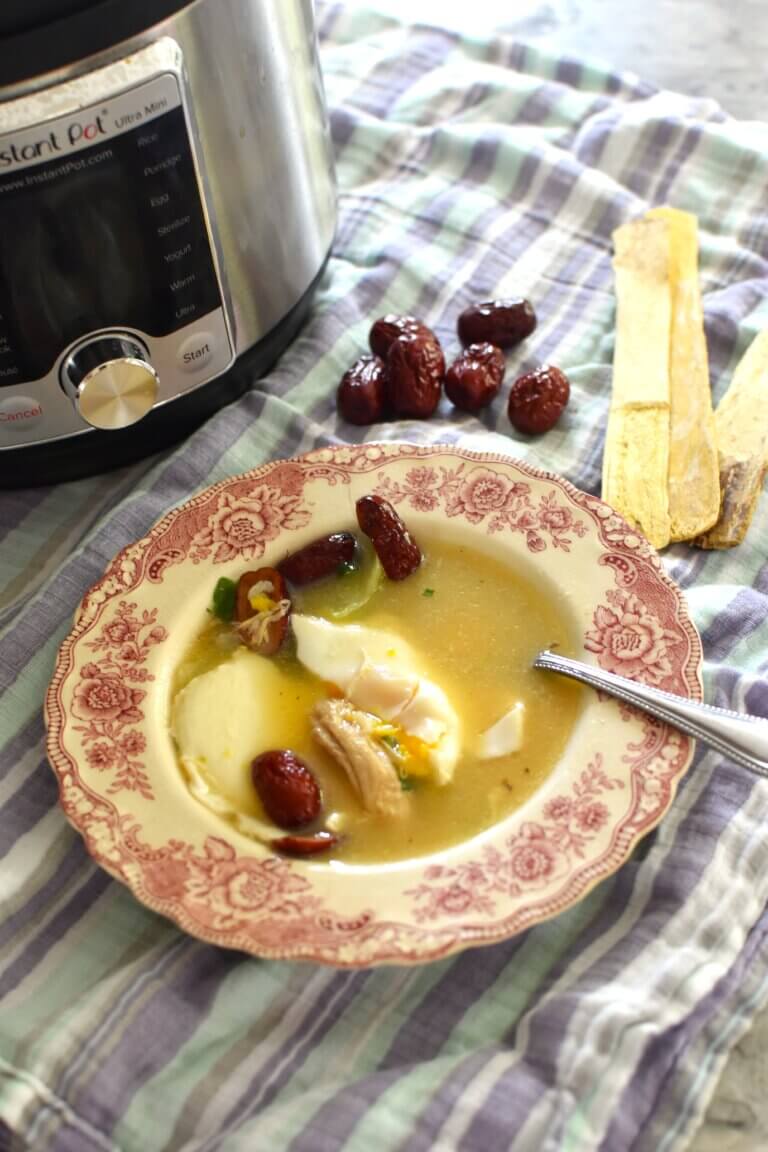
- 3-7 dried red dates also known as jujube
- 1 piece astragalus root about 10 grams (also known as huang qi)
- 10-12 goji berries optional
- 1 slice fresh ginger
- 1 sprig fresh scallion
- water (enough to cover 1 inch above chicken) 1 inch = 2.5 cm
- sea salt to taste
Instructions
- Clean the chicken: Remove internal fat, the tail, and loose skin. Rinse the cavity thoroughly with cold water until clear. Remove the raw breast meat to save for another meal.
- Prep the pot: Remove the wings and thighs to allow the chicken to sit flat at the bottom of a large stockpot. Arrange the chicken in the pot.
- Add the aromatics: Place the red dates, astragalus, ginger, and scallion inside the chicken cavity.
- Add water: Cover the chicken with cold water, ensuring the water level is about 1 inch above the meat.
- Boil and skim: Bring to a boil over high heat. Carefully skim off and discard the foam that rises to the surface.
- Simmer: Reduce the heat to low. Maintain a gentle simmer (around 190°F) for 3 hours, or until the meat falls off the bone
- Add Goji Berries (Optional): If using, drop the goji berries into the pot during the last 1 minute of cooking.
- Strain and serve: Strain the broth, discard the bones and herbs, and salt the broth to taste in individual bowls.
Notes
Pregnant and planning for postpartum? Download my free postpartum nutrition guide!
FAQ
Can I make this postpartum healing broth in an Instant Pot?
Yes — my Instant Pot herbal chicken soup is the weeknight version of this recipe: chicken thighs instead of a whole bird, 45 minutes at high pressure, five minutes of prep. Same herbs, same golden broth.
Can I drink this Chinese herbal chicken soup immediately after giving birth?
In traditional Zuoyuezi practice, it is generally recommended to wait about 4 to 7 days postpartum before consuming potent herbal tonics. During the first few days, your body is actively clearing initial lochia. Within the tradition, introducing warming herbs like astragalus too early is believed to increase bleeding. For days 1 through 3, stick to plain, clear, warm liquids — my week-one confinement foods are built for exactly this window — and introduce this broth at the end of your first week.
How do I transform the healing chicken bone broth into meals for my family?
You can add any variety of vegetables and starches to the broth to make it into a meal. I recommend going with what is seasonal (root vegetables and kale in the winter for example). It also makes a beautiful cooking liquid for congee. Try it as the base for my chicken and sweet potato congee.
Why is homemade bone broth better for recovery than store-bought chicken broth?
Store-bought broths are typically flash-cooked and diluted, so they carry far less gelatin and fewer of the amino acids (like glycine and proline) that a long simmer extracts from bones and connective tissue. They also contain none of the traditional botanicals. A homemade pot costs less per serving, too.
Where can I find astragalus root and dried red dates?
You can find them at most local Asian supermarkets, often in the dried goods or herbal medicine aisles. Astragalus is frequently labeled by its Mandarin name, “Bei Huang Qi” (北黄芪), and red dates as “Hong Zao” (红枣). If you don’t have a local market, they are easily sourced through reputable online herbal retailers. A full guide to sourcing the ingredients can be found here.


9 Comments