

A few weeks ago I posted something on Instagram that took off: red dates have more iron than a steak, and more vitamin C than an orange. Nearly 20,000 people saw it. In the caption, I noted that the iron in meat is heme iron and absorbs better than the iron in red dates, but a catchy hook travels faster than its own fine print, and the comments filled up with messages stating I was providing “misinformation.”
The commenters were right to point it out, because that fine print is the most useful thing to understand about iron. So let me give you the whole picture, the part that doesn’t fit in a caption, about how iron actually works in your body, and how to eat to improve your iron stores.
Iron is one of the most common nutrient shortfalls in women — more than one in three women under 50 is iron deficient. For the first six weeks after childbirth and during the menstruating years, it’s worth paying attention to, as the body is spending iron faster than usual.
You might be feeling tired and wondering if you are iron deficient. Unfortunately many symptoms of iron deficiency are non-specific: fatigue, brain fog, low mood, shedding more hair than usual…is this not just the fabric of early motherhood? Others are more specific: mild breathlessness, cold hands and feet, brittle or spoon-shaped nails, craving and crunching ice. If you think you might be iron deficient, consult a doctor for a simple ferritin blood test.
Please don’t self-prescribe iron supplements. Food is safe to lean into, but iron supplements are worth being thoughtful about. If you’re not actually low, you won’t feel better for taking them. You’ll just risk the side effects (iron is notorious for nausea, cramping, and constipation) and spend money and effort on something your body doesn’t need. And if you are low, the right dose and type depend on your numbers. Get a ferritin test first, and let your doctor guide any supplement.
I’m a registered dietitian, and I can help with the food side: how to build and protect your iron through what you eat.
Heme vs. non-heme iron: how are they different?
Dietary iron comes in two forms.
Heme iron comes only from animal flesh — meat, poultry, fish, and especially liver. Your body absorbs it efficiently, in the range of 25–40%, and that absorption is relatively unbothered by the rest of your meal.
Non-heme iron comes from plants — beans, greens, seeds, tofu — and also in eggs. It’s absorbed far less efficiently, often just 2–13% (averaging under 5%), and that rate swings widely depending on what you eat alongside it.
This is why the total iron on a nutrition label can be misleading. Compare two foods by how much iron you actually absorb:
- ½ cup of cooked soybeans (~4.4 mg iron, non-heme): you absorb roughly 0.22 mg.
- A 3.5 oz beef steak (~3 mg iron, heme): you absorb roughly 0.75 mg.
The soybeans have more iron on paper than the steak, yet you absorb only about a quarter as much. This isn’t an argument against eating plant-based iron sources — it’s the reason plant iron needs a strategy, which I’ll get to. It’s also why traditional postpartum confinement foods are meat and organ-meat heavy.
Tables of iron-rich heme foods and iron-rich non-heme foods
Here are solid iron-rich food sources of both the heme and non-heme variety.
Heme iron (animal sources — best absorbed)
| Food | Serving | Total iron | Absorbed (~25%) |
|---|---|---|---|
| Chicken liver, cooked | 3 oz | ~11 mg | ~2.8 mg |
| Beef steak, cooked | 3.5 oz | ~3 mg | ~0.75 mg |
| Sardines, canned | 3 oz | ~2.5 mg | ~0.6 mg |
| Chicken thigh | 3.5 oz | ~1.3 mg | ~0.3 mg |
| Egg | 1 large | ~1 mg | ~0.1 mg* |
NOTES: *Egg iron is non-heme despite eggs being an animal food, so it absorbs at the lower (~5–10%) rate — one reason eggs are a weaker iron source than their numbers suggest.
Non-heme iron (plant sources — pair with vitamin C)
| Food | Serving | Total iron | Absorbed (~5%) |
|---|---|---|---|
| Red dates (dried jujube) | ½ cup (~100 g) | ~5 mg** | ~0.25-0.75 mg** |
| Tofu, firm | ½ cup | ~3 mg | ~0.15 mg |
| Spinach, cooked | ½ cup | ~3 mg | ~0.15 mg |
| Black sesame seeds | 2 Tbsp | ~2.5 mg*** | ~0.13 mg |
| Black beans, cooked | ¾ cup | ~2 mg | ~0.1 mg |
| Dried goji berries | small handful | ~2 mg | ~0.1 mg |
| Broccoli, cooked | 1 cup | ~0.7 mg | ~0.035 mg |
NOTES: **Iron in dried jujube varies between databases; the USDA FoodData Central entry (FDC 168152) lists 5.09 mg per 100 g. Vitamin C can roughly double or triple non-heme absorption. Red dates are extremely high in Vitamin C, so the actual absorbed value may be closer to 0.75, so similar to steak.
***Whole black sesame seeds tend to pass through largely undigested, so you absorb less than the number suggests. Ground sesame or sesame paste — including the classic confinement food 黑芝麻糊 (black sesame porridge) — frees up much more of that iron.
How to absorb more non-heme iron: Vitamin C
Vitamin C is the biggest enhancer. Adding vitamin C to a meal can double or triple the non-heme iron you absorb from it; research suggests about 50 mg of vitamin C per meal hits the practical sweet spot, with bigger doses giving diminishing returns. In real terms: squeeze citrus, add bell peppers, tomatoes, broccoli, or kiwi to the same meal as your iron-rich foods.
The caveats: the boost is largest for plant-only meals and smaller when the meal already contains meat (the heme iron is already doing the work), and it’s a per-meal effect — vitamin C at breakfast won’t help the iron in your dinner.
The “meat factor.” Eating animal protein in the same meal also improves absorption of the non-heme iron sitting next to it. A little beef in a bean stew lifts the iron you get from the beans.
What to keep separate from iron meals
Coffee and black or green tea. The polyphenols and tannins are strong iron blockers — by some measures cutting non-heme absorption by half or more. Have them an hour or two before or after an iron meal, not alongside it. (Note that red date and ginger tea and other herbal teas do not block iron).
Calcium and dairy. Calcium competes with iron, so a big glass of milk, a calcium supplement, or a cheese-heavy plate will blunt absorption. Keep calcium supplements to a different time of day than your main iron meal. Also, if you are taking an iron supplement and a calcium supplement, take them separately.
The rest of the blood-building team: Folate, B12, and copper
Building blood is a team effort. Iron makes the hemoglobin that fills each red blood cell — but your body also needs folate and vitamin B12 to produce the cells in the first place, and copper to move iron to where it’s needed. Run short on any one of these and you can become anemic.
“Anemia” just means too few well-functioning red blood cells to carry oxygen, but you can get there by more than one route, and they leave different fingerprints on a blood test:
- Low iron makes red cells that are small and pale — there isn’t enough hemoglobin to fill them. (Doctors call this microcytic.) The fix is iron.
- Low B12 or folate makes red cells that are large and immature — the cells can’t divide and mature properly, so many are oversized and dysfunctional, and some die before they’re even released. (This one’s called megaloblastic or macrocytic.) The fix is B12 or folate, not iron.
This is another reason to check with a doctor if you feel you may be iron deficient instead of self-diagnosing.
The reassuring part is that whole foods bundle these nutrients together. Liver is the standout — not only the richest heme-iron food on the list, but also loaded with B12, folate, and copper at once. And the varied, nutrient-dense confinement foods — organ meats, eggs, leafy greens, sesame, beans — covers this cast naturally.
One caveat worth flagging: B12 is the one to watch if you eat little or no animal food. It’s found almost entirely in animal products, so vegans and many vegetarians can run low — and B12 deficiency has neurological consequences beyond anemia, so it’s worth testing for and, if needed, supplementing under a doctor’s guidance.
So what about red dates?
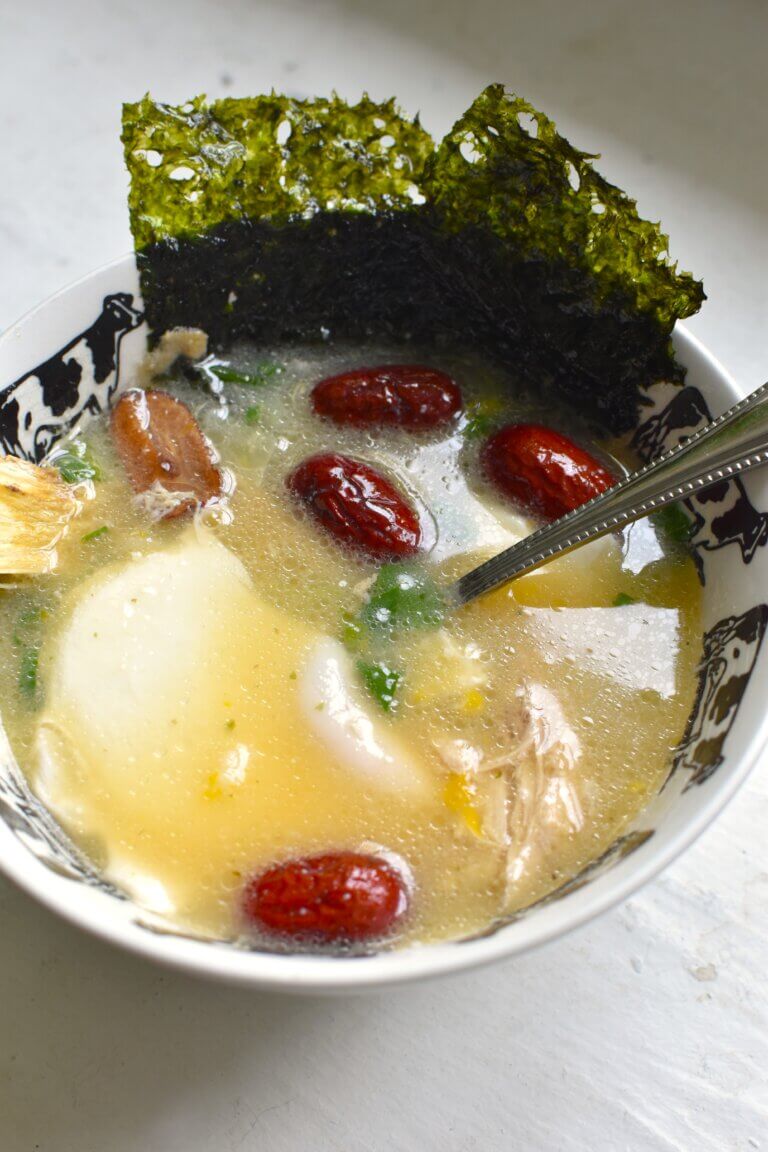
Red dates (红枣, dried jujube) are the heart of confinement food cooking — my mother adds them to nearly every confinement soup and tea, and tradition has prized them as “blood-building” for centuries. So what does the evidence actually say?
- Iron: Real, though variable depending on the source (USDA lists ~5 mg per 100 g; other databases report less). Non-heme, so absorption is around 5%.
- Vitamin C: Here red dates shine. The USDA entry lists about 218 mg of vitamin C per 100 g — significantly more than a cup of orange. That’s a meaningful absorption enhancer, and it means red dates come with their own iron-absorption helper built in.
- If we do the calculation, the absorbed amount of iron in steak compared to red dates factoring in Vitamin C tripling the amount absorbed, ends up about the same, at 0.75 mg per 100g.
- But that’s not the whole story. Emerging research — so far in cell and animal studies, not yet human trials — suggests jujube may support red blood cell production through mechanisms beyond its iron content, including stimulating erythropoietin (the hormone that tells your body to make red blood cells) and helping the body recycle the iron it already has.
Red dates are a vitamin-C-rich, culturally central food that pairs beautifully with the heme iron of the meats they’re simmered with, and modern research is just starting to understand why Asian traditions have valued them for blood building for centuries.
Iron-rich foods and meal ideas
Here’s a simple formula, then some ideas for iron-rich meals and snacks that are typical in a Chinese confinement food kitchen.
The formula: anchor with an animal source when you can (that’s your absorbable heme iron), add a vitamin-C food to the same meal, and let plant iron come along for the ride. Keep black and green tea and milk for between meals.
Warm meals (heme-anchored — the most efficient iron):
- Chicken liver congee with a side of stir-fried greens — concentrated heme iron, gently cooked, easy on a tired stomach.
- Beef and daikon soup, or a tomato-based beef braise — heme iron with built-in vitamin C from the tomato.
- Sardines on toast with a squeeze of lemon — fast, no cooking, surprisingly iron-rich.
- Pork and bell pepper stir-fry over rice — the peppers are one of the best vitamin-C foods there is.
Plant-forward meals (pair the iron with vitamin C to get more from it):
- Lentil or white bean stew with tomatoes — the tomato’s vitamin C lifts the non-heme iron from the beans.
- Tofu and edamame with a bright, citrusy sauce — soy foods are among the higher-iron plants, and the vitamin C helps you absorb more.
- Spinach or swiss chard sautéed with a finish of lemon, alongside whatever protein you’ve got.
Easy snacks:
- Black sesame porridge (黑芝麻糊) — the ground form, so the iron is actually available; warming and simple.
- A handful of dried goji — modest iron, its own vitamin C, no cooking required.
- Edamame with a squeeze of lime — protein, iron, and vitamin C in one bowl.
- Hummus with red pepper strips — chickpeas plus a top-tier vitamin-C dipper.
- Pumpkin seeds or cashews by the handful — convenient plant iron to graze on.
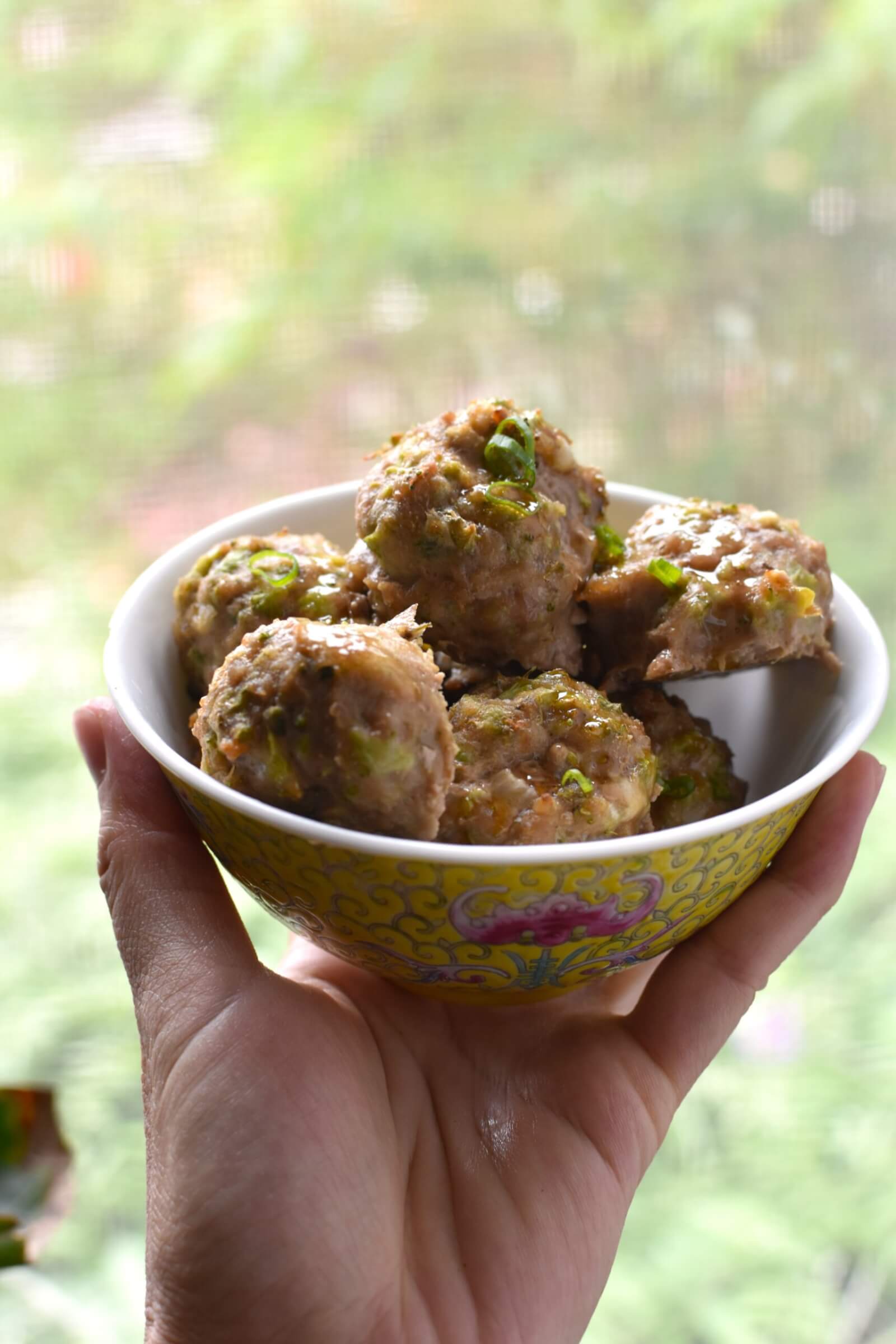
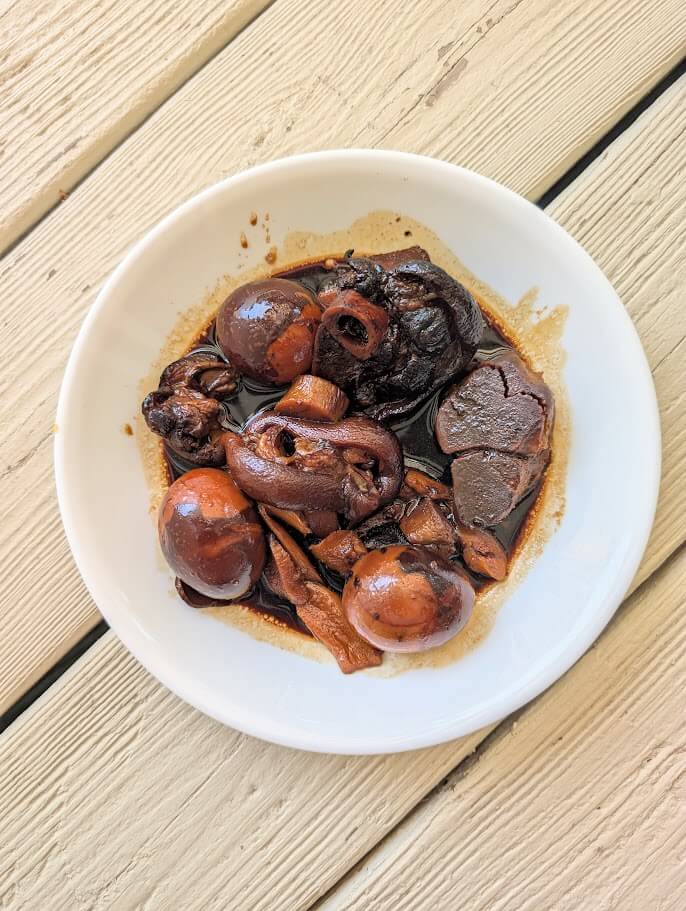
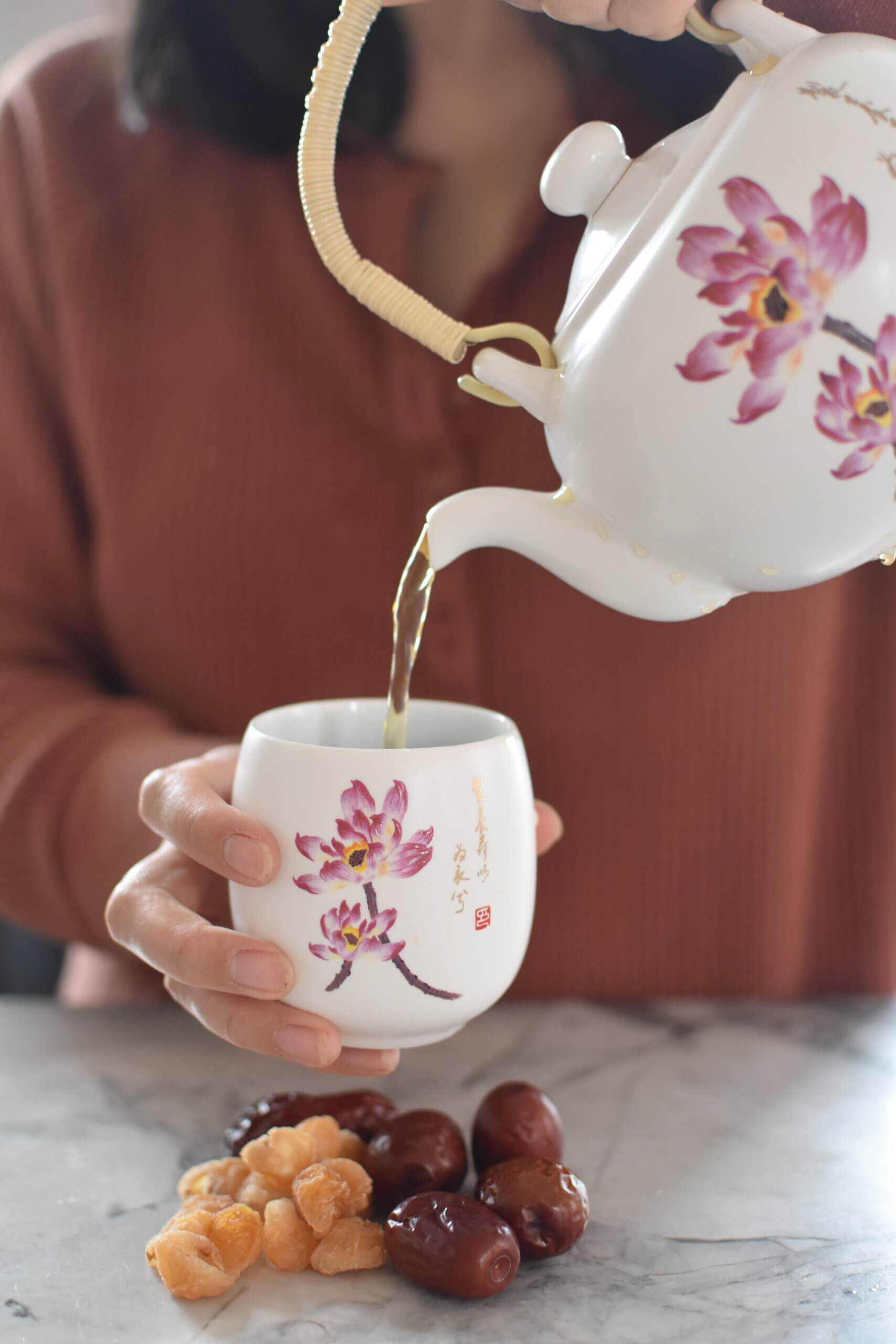
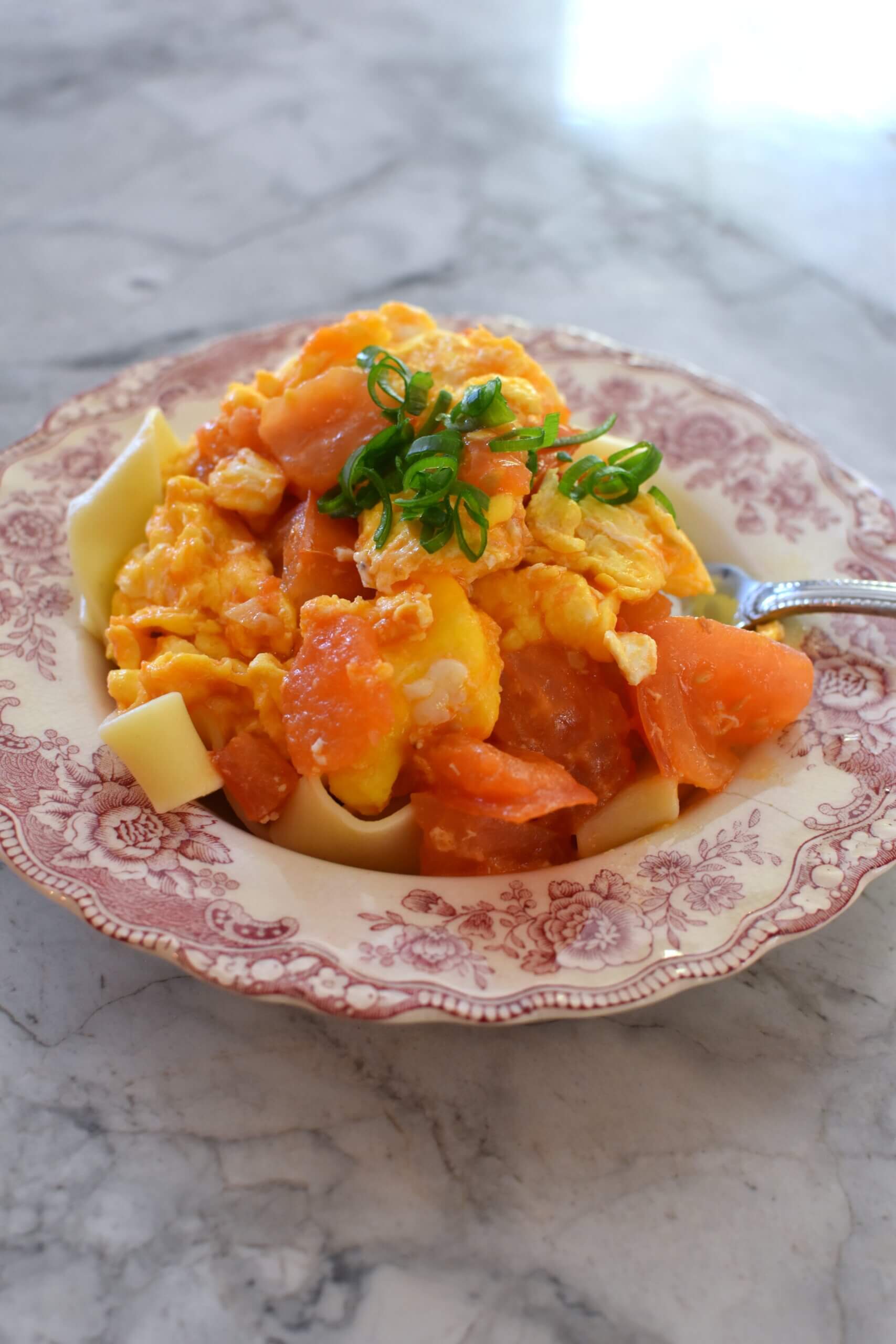
Here’s a reference table of plant (non-heme) iron sources from the USDA Dietary Guidelines for Americans. Remember: these are total iron numbers, and plant iron absorbs at the lower rate — so pair them with a vitamin-C food, and don’t be misled by a high number alone.
| Plant food (non-heme) | Standard portion | Total iron (mg) |
|---|---|---|
| Fortified ready-to-eat cereal | ½ cup | 16.2 |
| Fortified hot wheat cereal | 1 cup | 12.8 |
| Spinach, cooked | 1 cup | 6.4 |
| Lima beans (white), cooked | 1 cup | 4.9 |
| Soybeans, cooked | ½ cup | 4.4 |
| Swiss chard, cooked | 1 cup | 4.0 |
| Stewed tomatoes, canned | 1 cup | 3.4 |
| White beans, cooked | ½ cup | 3.3 |
| Lentils, cooked | ½ cup | 3.3 |
| Prune juice | 1 cup | 3.0 |
| Beets, cooked | 1 cup | 2.9 |
| Chickpeas, cooked | ½ cup | 2.4 |
| Kidney beans, cooked | ½ cup | 2.0 |
| Sesame seeds | ½ ounce | 2.1 |
| Cashews | 1 ounce | 1.9 |
| Black beans, cooked | ½ cup | 1.8 |
Source: U.S. Department of Agriculture & U.S. Department of Health and Human Services, Dietary Guidelines for Americans, food sources of iron. Values are total iron; non-heme iron is less absorbable, so pair these with vitamin C.
Frequently asked questions
Do red dates really have more iron than steak?
By weight, dried jujube can edge out a steak serving on total iron. Steak’s iron is heme (well absorbed); red dates’ iron is non-heme (poorly absorbed). However, red dates are high in vitamin C, which can triple the absorption of iron in plant foods. We did the calculations, and steak and red dates come out about equivalent in terms of total absorbed iron for the same weight of food.
Can I get enough iron from plants alone?
It’s possible but takes more strategy, because non-heme iron is absorbed less efficiently. Pair plant iron with vitamin C at every meal, keep coffee and tea away from those meals, and consider asking your provider to check your ferritin levels.
Should I take an iron supplement postpartum or for heavy periods?
That depends on your actual iron status, which is why a ferritin test matters. Food rebuilds and protects iron over time, but an established deficiency — and certainly anemia — often needs a supplement at a dose your clinician chooses. Heavy menstrual bleeding in particular can outpace what food alone replaces. But if you’re not low, supplementing won’t make you feel better — it just brings the side effects (nausea, cramping, constipation are common) without the benefit. Talk to your doctor if you are concerned.
Does cooking in a cast-iron pan help?
A little, especially with acidic foods like tomato-based dishes. It’s a minor bonus, not a replacement for iron-rich foods.
Does bone broth have iron?
Bone broth is not an iron-rich food. It’s nourishing in other important ways, including being a warm, gentle, easy-to-tolerate source of protein (around 9–10 g a cup, much of it collagen), fluids and electrolytes that support hydration, and small amounts of minerals like calcium and magnesium. But iron stays largely in the meat, not the liquid.
What foods should I eat for low iron from heavy periods?
The same strategy as postpartum: anchor meals with heme iron (red meat, chicken, fish, liver) since it’s the most absorbable, pair every meal with a vitamin-C food to boost the plant iron, and keep coffee and tea between meals rather than with them. If your periods are heavy enough to be causing low iron, it’s also worth talking to your doctor — both about checking your ferritin and about whether the bleeding itself can be reduced, since food alone may not keep up with a heavy monthly loss.
Does B12 help with iron absorption?
Not exactly. B12 (and folate) don’t help you absorb iron; they do a parallel job, building red blood cells alongside the iron. You need all three: run low on iron and you get small, pale red cells; run low on B12 or folate and you get large, immature ones. Both are anemia, but with different causes and fixes. The practical upshot: a varied diet matters more than chasing any single nutrient, and liver happens to deliver iron, B12, and folate all at once. If you eat little or no animal food, B12 is the one to have tested.
Want the full picture? My free postpartum nutrition guide provides an overview of all the nutrients and suggested foods you need for postpartum. Join my email list and I’ll send it your way.
This article is for general education and isn’t a substitute for individualized medical advice. Iron needs vary, and both too little and too much carry risks — please work with your healthcare provider on testing and any supplementation, especially during pregnancy, postpartum, or with heavy periods.
References
- U.S. Department of Agriculture, Agricultural Research Service. FoodData Central: Jujube, Chinese, fresh, dried (FDC ID 168152). Lists 5.09 mg iron and 218 mg vitamin C per 100 g. https://fdc.nal.usda.gov/food-details/168152/nutrients
- Mayo Clinic. Iron deficiency anemia — Symptoms and causes. https://www.mayoclinic.org/diseases-conditions/iron-deficiency-anemia/symptoms-causes/syc-20355034 — symptoms, causes, and the caution against self-treating with iron.
- American Medical Association. What doctors want patients to know about iron deficiency (2026). https://www.ama-assn.org/public-health/prevention-wellness/what-doctors-want-patients-know-about-iron-deficiency — prevalence in women (more than 1 in 3 women under 50 iron deficient), the ferritin <30 ng/mL threshold, and the reassurance that menstrual iron deficiency is usually benign.
- U.S. Department of Agriculture & U.S. Department of Health and Human Services. Dietary Guidelines for Americans, 2020–2025 — food sources of iron. https://www.dietaryguidelines.gov — plant (non-heme) iron food list and standard portions. Values listed are total iron, not absorbed iron.
- Hallberg L, Brune M, Rossander L. The role of vitamin C in iron absorption. Int J Vitam Nutr Res Suppl. 1989;30:103–108. PMID: 2507689. https://pubmed.ncbi.nlm.nih.gov/2507689/ — vitamin C as a dose-dependent enhancer of non-heme iron absorption.
- Cook JD, Monsen ER. Vitamin C, the common cold, and iron absorption. Am J Clin Nutr. 1977;30(2):235–241. PMID: 835510. https://pubmed.ncbi.nlm.nih.gov/835510/ — single-meal data on vitamin C and non-heme iron, including the smaller effect when meat is present.
- Heffernan A, Evans C, Holmes M, Moore JB. The Regulation of Dietary Iron Bioavailability by Vitamin C: A Systematic Review and Meta-Analysis. Proc Nutr Soc. 2017;76(OCE4):E173. https://doi.org/10.1017/S0029665117003445 — systematic review confirming vitamin C’s enhancing effect on iron bioavailability.
- DeLoughery TG, Jackson CS, Ko CW, Rockey DC. AGA Clinical Practice Update on Management of Iron Deficiency Anemia: Expert Review. Clin Gastroenterol Hepatol. 2024;22(8):1575–1583. https://doi.org/10.1016/j.cgh.2024.03.046 — iron supplement dosing (once-daily or alternate-day for better absorption), ferrous sulfate as effective as costlier formulations, and the role of IV iron. These are expert Best Practice Advice statements; the update notes that formal systematic reviews were not performed, so the statements do not carry graded evidence ratings.
- Koury MJ, Ponka P. New insights into erythropoiesis: the roles of folate, vitamin B12, and iron. Annu Rev Nutr. 2004;24:105–131. PMID: 15189115. https://doi.org/10.1146/annurev.nutr.24.012003.132306 — the roles of iron, folate, and B12 in red blood cell production and the distinction between iron-deficiency (microcytic) and B12/folate-deficiency (megaloblastic) anemia.
- World Health Organization. Anaemia (fact sheet). https://www.who.int/news-room/fact-sheets/detail/anaemia — folate, B12, vitamin A, and riboflavin deficiencies as additional nutritional causes of anemia.
- Chen J, Tsim KWK. A Review of Edible Jujube, the Ziziphus jujuba Fruit: A Heath Food Supplement for Anemia Prevalence. Front Pharmacol. 2020;11:593655. PMID: 33324222 (free full text). https://doi.org/10.3389/fphar.2020.593655 — proposed blood-building mechanisms (erythropoietin stimulation, iron recycling). These mechanisms are from cell and animal models; no human trials on jujube’s blood-deficiency effects exist yet.
- Collins JF, Prohaska JR, Knutson MD. Metabolic crossroads of iron and copper. Nutr Rev. 2010;68(3):133–147. PMID: 20384844 (free full text: PMC3690345). https://doi.org/10.1111/j.1753-4887.2010.00271.x — copper’s role in iron metabolism via the ferroxidases ceruloplasmin and hephaestin. The dietary-copper-to-iron-status link is established mechanistically and largely in animal models; copper deficiency is uncommon in people eating a varied diet.


10 Comments